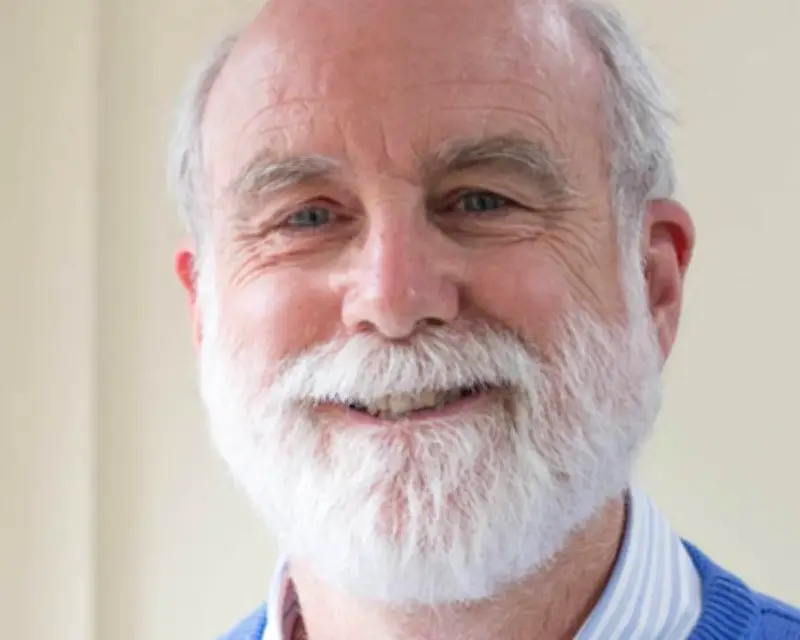
Colin Williams, an academic whose work helped shape the Good Friday agreement's position on respecting the Irish and Ulster Scots languages, has died aged 75.
Williams, a Welshman, had a particular interest in the Welsh language but his comparative work also took him to Canada, South Africa, the US and Ireland. Aspects of papers he wrote on language rights and cultural diversity for the 1998 Good Friday agreement became enshrined in its formal position on respecting the Irish and Ulster Scots languages.
Early life and education
Born in Barry, south Wales, to Islwyn, a planner for the British Transport Docks Board, and Irene (nee Haslehurst), a teacher, Colin was brought up in a bilingual (English and Welsh) household. After secondary schooling at Ysgol Gyfun Rhydfelen in Pontypridd, where he was head boy and excelled at sport, he gained a geography and politics degree at Swansea University in 1972, followed by a doctorate there with a thesis on national decline and nationalist resurgence in Wales.
Academic career
He began his career in 1976 as a geography lecturer at the University of Staffordshire and remained there until 1994, when he moved on to be research professor of sociolinguistics at Cardiff University until his retirement in 2015. Over the years Colin held a number of other academic appointments, including as a visiting professor at Pennsylvania State University (1982–83), a scholar at the Centre for the Study of International Conflicts at the University of Lund (1988), and as an adjunct professor of geography at the University of Western Ontario (1994–2023). In retirement he was a senior research associate and visiting fellow at the Von Hügel Institute at Cambridge University and an honorary professor at Cardiff University.
Personal reflections
I first met him in 1995 at a postgraduate studentship interview, convinced I would fare badly. Instead, his calm voice and unshowy kindness immediately put me at ease. Subsequently Colin asked of every piece of work I gave him: “So what?” It was not dismissal, but discipline, a reminder that writing should make its mark in the world.
He is survived by his wife, Meryl (nee Thomas), a library assistant whom he married in 1973, and their son, Rhodri.