Veronica Ryan's Retrospective: Organic Forms Clash with Everyday Detritus
In the heart of London's Whitechapel Gallery, a new exhibition titled Veronica Ryan: Multiple Conversations presents a comprehensive look at the career of the Montserrat-born British artist. As the 2022 Turner prize-winner, Ryan has built a reputation on exploring organic forms, but her latest works introduce a contentious element: everyday rubbish.
The Seed of an Idea Blossoms into a Career
Ryan's artistic journey began with a focus on natural motifs—kernels, pods, and seeds that symbolize growth and transformation. These elements have consistently informed her work, resulting in sculptures that burst with narrative and symbolic depth. Her early experiments with materials like lead have evolved into more recent creations using twine, bandages, and plastic, reflecting a shift toward themes of repair and global trade.
The exhibition, running from April 1 to June 14, offers a retrospective view, though it is presented in reverse chronological order. This curatorial choice places visitors face-to-face with Ryan's newest pieces first, which dominate the gallery space with their unconventional presence.
New Works: Recycling or Rubbish?
Upon entering, viewers encounter large installations that challenge traditional aesthetics. Long, colored sacks dangle from the ceiling, weighted down by plastic bottles and seed pods, evoking a minimalist aesthetic reminiscent of Ruth Asawa but with a gritty, recycled twist. Cardboard avocado trays are stacked into geometric forms, ceramic-cast plastic bottles occupy corners, and teabags are arranged in grids on walls.
Ryan repurposes this detritus to comment on global consumption, migration, and exploitation. For instance, avocados and mango seed pods symbolize the movement of goods across borders, while bandages and string represent healing. However, the effectiveness of these messages is debated. Some pieces, like her multicolored ceramic cocoa pods and a giant bronze magnolia seed, communicate their ideas with clarity and confidence. In contrast, others—such as objects wrapped in twine or sacks filled with plastic—risk appearing as mere rubbish without explanatory context.
Artistic Intent vs. Interpretation
A central tension in the exhibition lies between Ryan's stated refusal to assign specific meanings to her work and the need for viewers to rely on material lists to decode the newer pieces. This dichotomy raises questions about artistic accessibility. As one critic notes, art that requires a handout to be understood may fall short of its communicative goals, much like a joke that needs explaining loses its humor.
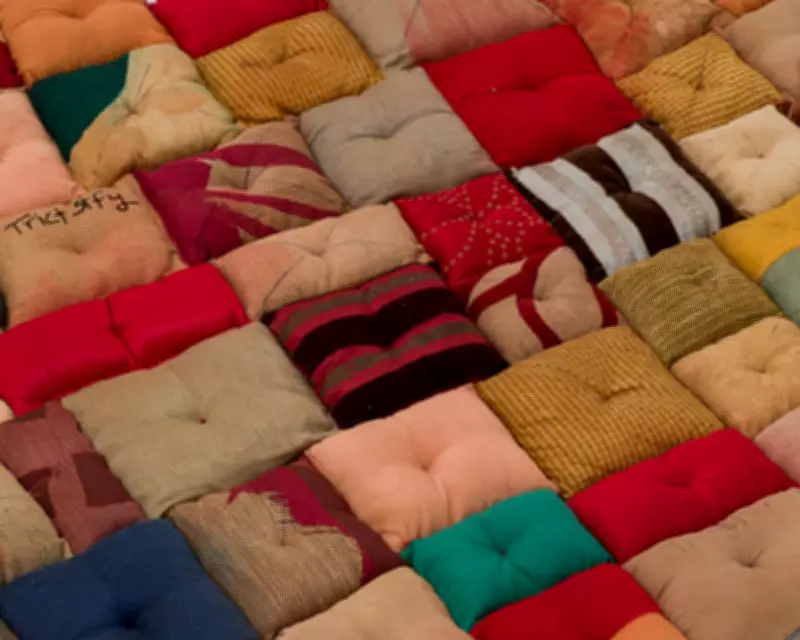
Despite this, Ryan's earlier works upstairs receive widespread acclaim. Bronze seed forms rest on metallic pillows, soursop pods nestle on marble slabs, and lead sheets feature organic slits. These pieces skillfully blend Caribbean symbolism with influences from modernists like Barbara Hepworth and Henry Moore, offering a powerful critique of colonialism within the art world.
A Legacy of Transformation
Throughout her career, Ryan has demonstrated a knack for transforming toxic or discarded materials into aesthetic statements. Her use of lead, for example, turns a hazardous substance into something sculptural and meaningful. This approach underscores her broader mission: to reshape the material world into a reflection of healing and self-image.
Veronica Ryan: Multiple Conversations ultimately presents a artist at a crossroads, balancing her celebrated organic roots with provocative new directions. While the seeds of her ideas continue to bloom beautifully, the detritus in her recent work may distract from, rather than enhance, her profound messages.