Dean Sameshima's Wonderland: Documenting LA's Hidden Queer Sex Clubs
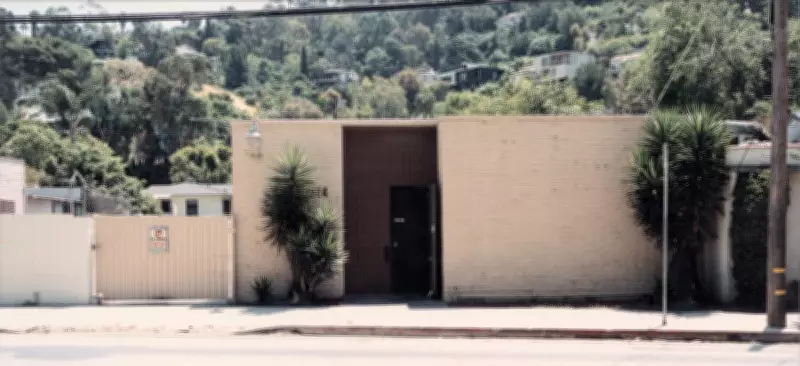
At first glance, the photographs appear to depict ordinary urban buildings, captured with a formal, deadpan aesthetic. Each image is framed by thick black utility cables, poles, barbed wire fences, graffiti, and flyposters, with glimpses of cerulean California sky and palm trees in the background. The streets are clean, devoid of people, and strangely silent. These are the works of American artist Dean Sameshima, part of his series titled Wonderland, taken between 1995 and 1997.
The Hidden World of Silver Lake's Queer Spaces
These photographs document Silver Lake's queer sex clubs and bathhouses, illegal safe spaces hidden in plain sight where the community could meet and hook up. The buildings lack windows—if they exist, they are boarded up, shuttered, or blacked out. In only one image, a door is left mysteriously open, revealing a security door, latticed iron bars, and a neon arrow sign pointing inward. The titles provide the only clues to the activities inside, such as "12 stalls, 1 leather bunk bed, outdoor garden, 1 water fountain, 1 barber's chair, glory-hole platform, Chinese decor."
Sameshima was in his early twenties when he took these pictures, during a time when the AIDS pandemic had devastated Silver Lake's queer community. His images convey a sharp sense of precarity and wistfulness, a foreboding that these buildings would be effaced, disappearing like the bodies that once occupied them. The titles indicate that at least three clubs closed in 1995, and Sameshima photographed them to mitigate grief and loss.
Daylight Disguises and Nocturnal Realities
In daylight, these sites of illicit nocturnal activities—warehouses, industrial spaces, and stores—appear unremarkable and perfunctory. One club sits beside residential homes, raising the question: did the neighbors really not know? Another is painted a sludgy grey with no signs or markings. You could easily walk past them, unaware of their hidden purposes. These pictures serve as devotional documents, anchored to a specific time and place, yet they resist the prying eyes of outsiders and the shaming gaze of heteronormative society.
The exhibition features seven sex club photographs, hung at intervals with long pauses between them, mimicking the experience of driving through Los Angeles. The prints stretch horizontally, offering wide, panning vistas that evoke the view from a car window. They represent blank spaces in the urban landscape, parentheses in the city's architecture and history, concealed by necessity.
Public Parks and Private Passions
Hidden around the corner is a suite of photographs documenting famous cruising spots in Griffith Park and Harbor City Recreational Park. Unlike Kohei Yoshiyuki's sensational flash pictures of sexual encounters in Tokyo's parks, Sameshima takes an unsensational, prosaic approach. Shot in warm daylight with no people present, these images highlight the quiet, natural solace of these spaces, shrouded by shrubbery and dappled light. They could be mistaken for picnic spots, yet they bristle with tension between visibility and safety, public life and private passion.
By removing the sex from cruising, Sameshima allows these sites to simply exist within the everyday. A tiny, telling detail in one picture—a discarded blue condom wrapper among the stones—hints at the activities that occur there after dark.
A Nuanced Portrait of Queerness
Wonderland showcases Sameshima's slow, unshowy approach to documenting communities, emphasizing the importance of communal spaces as islands of freedom and autonomy. His work contrasts with Catherine Opie's brash, loud portraits of California's queer community from the same era. While Opie's images are unapologetic and often unflattering, Sameshima deals in subtleties and shadows, finding power in the unseen and sad poetry in a condom wrapper.
This exhibition offers a more nuanced, open-ended picture of queerness, presence, and belonging, celebrating the fleeting, radical nature of pleasure—even when it takes place in the bushes. Dean Sameshima: Wonderland is on display at Soft Opening in London until May 23, providing a poignant record of lost and beloved safe spaces.