Forgotten Pioneers: Bauhaus Female Photographers' Radical Vision in Berlin Exhibition
The images are iconic, yet the women behind the camera have often faded into obscurity. A groundbreaking exhibition in Berlin is set to change that, focusing on the pioneering 'new vision' of female photographers from the Bauhaus movement, including Marianne Brandt, Lucia Moholy, and others. Titled New Woman, New Vision: Women Photographers of the Bauhaus, this show at the Museum of Photography in Berlin, running from 17 April to 4 October, is the first comprehensive examination of their wide-ranging influence.
Unconventional Perspectives and Artistic Innovation
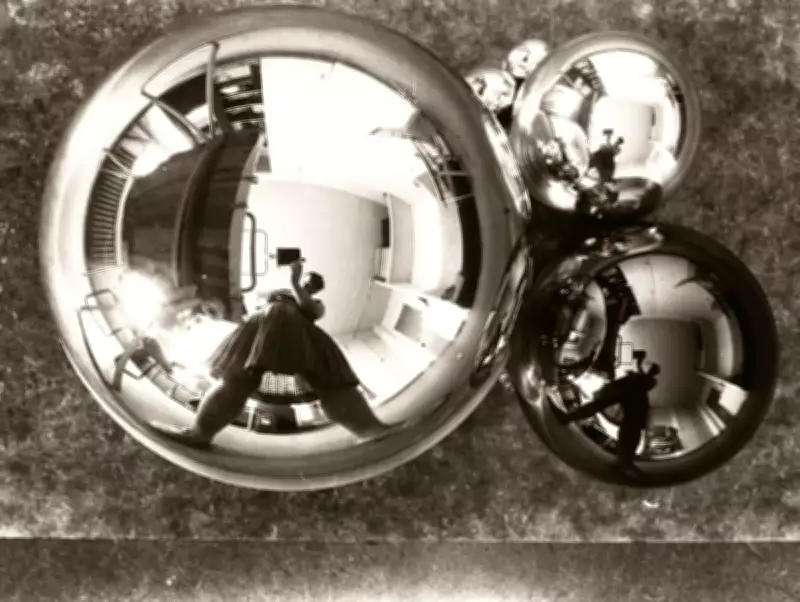
Female photographers at the Bauhaus pushed the boundaries of a new medium, observing the world through camera lenses and capturing subjects from unusual angles. Their work encompassed abstract experiments, architectural photography, and figurative portraits. For instance, Marianne Brandt's Self-Portrait in the Studio in the Sphere (c. 1928-1929) exemplifies this innovative approach with its unconventional perspectives.
During the Weimar Republic (1918-1933), a period of social and cultural upheaval in Germany, women's roles were transforming. With newly granted voting rights, many sought financial independence and professional fulfillment. Photography offered artistic freedom and income, becoming a tool for female self-empowerment. By the late 19th century, it had emerged as a significant occupational field for women, seen as a handcraft rather than an academic discipline, thus providing early career opportunities.
Institutional Training and Rising Numbers
Institutions like the Berlin Lette Association and the Teaching and Research Institute for Photography in Munich began offering courses for women, leading to a steady increase in female photographers during the Weimar Republic. The Bauhaus Dessau established a photography course in 1929, where nearly half the students were women, receiving professional training. Even before this, female photographers played a central role at the Bauhaus, with figures like Paula Stockmar and Lucia Moholy creating promotional images for the school's products.
The advent of small-format cameras after 1925 sparked a surge in interest among students. Female students began documenting their surroundings with new and unusual perspectives, though many of these photos have become world-famous while their creators were forgotten. This exhibition explores how these photographers presented themselves against the evolving societal image of women, often referencing the 'new woman' ideal and translating it into the modern imagery of the new vision movement.
Artistic Techniques and Social Commentary
In portraits, landscapes, nature studies, and still lifes, students experimented with photographic design elements such as textures, materiality, directed lighting, and image sharpness. Architectural photography broke away from its documentary function through unusual perspectives, extreme high- and low-angle shots, and closeups, transforming into artistic and sometimes abstract compositions. Photos captured everyday life, social inequality, and political upheaval, with many photographers forced into exile, safeguarding their work under changing political circumstances.
Reflecting on these photographers, the term 'woman' is not a homogenous group but a historical attribution mirroring social norms of the time. Their biographies vary widely in personal convictions and relationships, but they shared traditional gender roles that limited career opportunities, worsened under Nazism and postwar western Europe. In a male-dominated art world, their works were marginalized, leading to a structurally induced invisibility still felt today.
Contemporary Relevance and Ongoing Struggles
Recent studies, such as one by the Berlin initiative Fair Share!, show that works by female-perceived artists, especially mothers, are presented and collected less often, with lower market prices and funding. As long as gender equality in the art world remains elusive, exhibitions like this are necessary to combat structural forgetting, not to emphasize distinction but to restore visibility. These works demonstrate how Bauhaus female photographers used the camera as an artistic and social instrument for self-determination, experimentation, and documenting realities, with methods that remain integral to contemporary art.