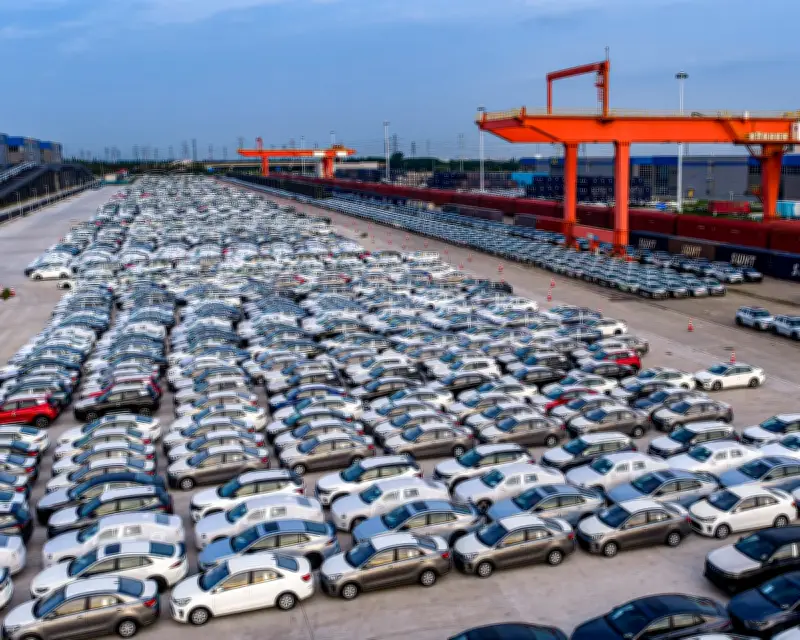
China's monthly car exports surpassed 1 million units for the first time in June 2026, as overall overseas shipments from the world's second-largest economy rose 27%, according to official Chinese customs data. The stronger-than-expected trade performance keeps China on track to match or beat last year's record trade surplus of $1 trillion (£748bn), achieved despite previous tariff measures.
Surge in Chinese auto sales abroad
Sales of Chinese brands ranging from BYD to Jaecoo are booming, eroding the market shares of long-established automakers, particularly in Europe. The EU has previously accused China of “weaponising” trade as foreign policy, and the latest export surge risks heightened tensions with both the US and the EU.
Analysis by the Mercator Institute for China Studies (Merics) in Berlin shows that China ran a €900m-a-day (£767m) goods surplus with the EU in the first half of 2026. Exports to the EU increased 12.7% year on year, pushing the surplus to 1.225tn yuan (£135bn).

Electric vehicles and hybrids under scrutiny
Exports of electric vehicles and hybrid cars, which escaped the EU's 2024 tariffs on Chinese EVs, have put the European industry under huge pressure. Recent warnings highlight a potential collapse in employment in the sector. Volkswagen, Europe's largest car manufacturer, plans to reduce its 670,000-strong workforce by up to 100,000 as part of wide-ranging restructuring plans presented to its supervisory board last week. While proposals to close four plants were not approved, their future remains under discussion as part of what CEO Oliver Blume called the “most comprehensive realignment in the company’s history”.
Rafael Jimenez Buendía, a trade expert who analysed the figures for Merics, said the export surge into the EU beat its own forecast of record sales. Merics had expected China's exports to the EU to reach a new first-half record of 2.12tn yuan, but the data released on Tuesday put it 45bn yuan ahead, at 2.165tn yuan.
Global AI boom fuels chip exports
China's export rise was also fuelled by orders for chips amid a global AI boom, with data showing exports of 32bn integrated circuits. The country's high export figures have been partly attributed to continued suppressed domestic demand, fuelling fears of a repeat of the exports surge seen in the 2000s, often described as “China shock 2.0”.
According to a recent report by Gavekal Dragonomics, a consultancy, the ratio of annual exports to total manufacturing sales hit 24% over the first four months of this year, the highest level since China's accession to the World Trade Organization in 2001. In 2019, the ratio stood at 18.3%, rising to 22.3% last year. “That would be considered high for a small export-focused country; for the world’s second largest economy, it is remarkable,” the report said.