
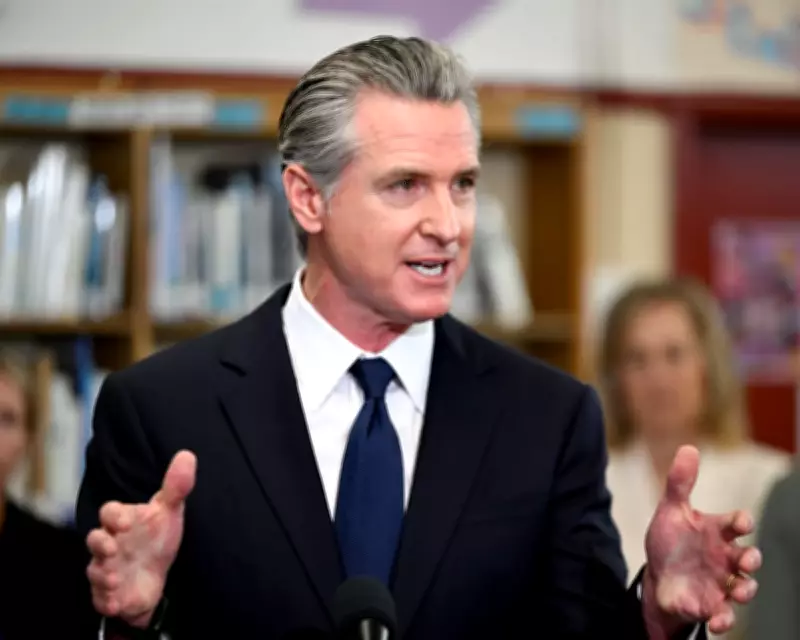
California Takes Stand Against Trump with Sweeping AI Regulations
In a bold move that directly challenges former President Donald Trump's deregulation agenda, California Governor Gavin Newsom has signed an executive order establishing new artificial intelligence standards for companies seeking state contracts. The order, signed on Monday, gives California agencies just four months to develop comprehensive AI policies focused squarely on protecting public safety and individual rights.
Safety Requirements for AI Companies
Under the new regulations, artificial intelligence firms hoping to do business with the state of California must demonstrate concrete policies to prevent their technology from distributing child sexual abuse material and violent pornography. Companies will also need to show how their AI models avoid incorporating "harmful bias" and detail specific measures aimed at preventing "unlawful discrimination, detention, and surveillance."
The executive order further directs state officials to develop best practices for watermarking AI-generated or manipulated images and videos, addressing growing concerns about deepfakes and digital misinformation.
Newsom's Innovation vs. Safety Balance
"California's always been the birthplace of innovation," Governor Newsom stated in his announcement. "But we also understand the flip side: in the wrong hands, innovation can be misused in ways that put people at risk. California leads in AI, and we're going to use every tool we have to ensure companies protect people's rights, not exploit them or put them in harm's way."
The governor's position represents a significant departure from the Trump administration's approach to artificial intelligence regulation. In December, the White House issued a national policy framework that actively discouraged states from passing AI regulations, arguing that "excessive state regulation thwarts" innovation.
National Context and State-Level Action
California's regulatory push comes amid growing nationwide concern about artificial intelligence's potential dangers. According to recent reports, states across the country have passed more than 100 laws addressing AI concerns, including measures to shield children from potentially harmful chatbots and to prevent AI companies from using copyright-protected material without permission.
These state-level actions directly contradict Trump's December executive order, which stated: "To win, United States AI companies must be free to innovate without cumbersome regulation." The former president's order went further, directing the Justice Department to establish an "AI Litigation Task Force" specifically tasked with challenging state AI regulations.
Broader Implications for AI Industry
California's regulatory approach addresses multiple concerns that have emerged alongside rapid AI development. The industry has repeatedly raised public safety questions while simultaneously sparking worries that expensive artificial intelligence technology could degrade labor value and eliminate jobs across multiple sectors.
As the nation's most populous state and a global technology hub, California's regulatory stance could influence how other states approach artificial intelligence governance. The four-month timeline for developing detailed policies suggests the state intends to move quickly in establishing what could become a national model for AI regulation.
The conflict between California's safety-focused approach and the Trump administration's deregulation agenda highlights the growing political divide over how to govern emerging technologies that increasingly impact daily life, business operations, and national security.




