
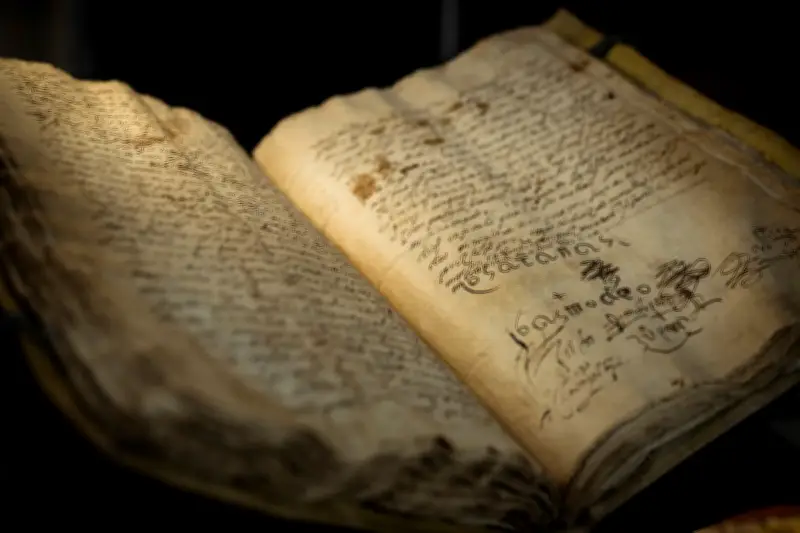
Australian secondhand booksellers are increasingly concerned that their rare and valuable titles may be destroyed to feed the insatiable appetite of generative AI companies, following a wave of suspicious bulk orders that do not match typical customer patterns. The fear stems from the practice of “destructive scanning,” where physical books are purchased, their spines sliced off for efficient page scanning, and the remains pulped.
Court case exposes 'destructive scanning'
The alarm was raised after a copyright lawsuit against AI company Anthropic in the United States revealed that the firm engaged in destructive scanning to obtain training data. Unsealed court files showed that Anthropic bought physical books, cut off spines to scan pages quickly, and then pulped the remains. The judge ruled this lawful under US copyright law, deeming it “transformative use.”
This practice is now understood to be widespread among generative AI companies, with intermediaries stepping up to facilitate the process. Australian booksellers have reported receiving orders from Zoom Books, a Canadian company describing itself as a book recycler, which they suspect may be linked to the AI supply chain.
Vendors report unusual orders from Zoom Books
Multiple vendors confirmed to Guardian Australia that they had received orders from Zoom Books, often through large secondhand marketplaces like Abebooks or Biblio. The orders were price-insensitive and appeared random, including niche titles, “bottom-end” stock, and decades-old books.
Delfina Manor, who runs Good Reading Secondhand Books in Benalla, Victoria, received three full boxes of orders from Zoom Books in May. She had to ask the company not to order in such volume again, as it was overwhelming. “They ordered, paid in advance, and they didn’t quibble over the postage … it would have been about 30 to 40 books, and so finding them, packing them, making sure you hadn’t missed one out … It was just driving me nuts,” Manor said.
John Sainsbury, owner of Melbourne’s Sainsburys Books, confirmed a slew of orders from Zoom Books around the same time. The orders were random, including a 1970s manual on soil mechanics, a 2010 book on New Zealand cycling, a 1982 collection of Early Australian Poetry, and a local history of Hawthorn. The poetry book sold for $9 after sitting on the shelf for 20 years.
Booksellers grapple with ethical dilemma
Tim White, who runs independent bookshop Books for Cooks, says the issue raises “an interesting tension.” “If it’s a $20 book of which there’s … 500,000 copies in Australia, I wouldn’t cry,” he said. “If it’s a book that has that storytelling element to it, or it’s a one-off, it’s horrific.”
Nick Dawes, who runs Grant’s Bookshop with his wife Jenny, estimates they have about 500,000 books in their warehouses. “If somebody wanted to come and buy all my books and cut them up, well … I’d be unhappy at one level, but I’d be happy at another,” Dawes said. “But if somebody said to me, look, this is the only known copy, I’m going to cut it up, then I’d say, I think I’d rather not send it to you.”
Rare bookseller Gwenyth Todd from Chatelaine Books finds the practice “physically abhorrent” and screens buyers to ensure books don’t go “to the wrong home.” “To me books are more than just objects,” she said.
Companies respond
An Anthropic spokesperson said the company has never bought from Zoom Books, but acknowledged that “sourcing books is a widely used approach for training large language models across the AI industry.” Anthropic procures its books from mainstream commercial markets, the spokesperson added, and “none of our data acquisition programs buy and destroy rare or antiquarian books.”
Zoom Books’ co-founder, Manroop Gill, said in a recent LinkedIn post that the company had been “expanding aggressively” in recent months. Zoom Books previously denied destructively scanning books, with a spokesperson telling Guardian Australia: “We acquire secondhand books and resell them intact. We do not digitize books. Our priority is always reuse, and when a book can no longer be rehomed, it is responsibly recycled.” The company declined to disclose if it sold intact books to AI companies for destructive scanning, citing confidentiality agreements.




