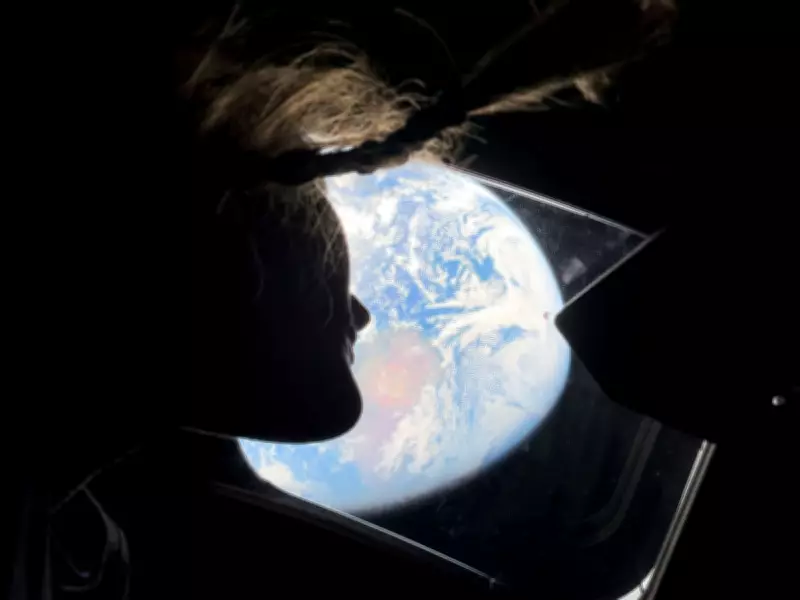
Artemis II Crew Enters Moon's Sphere of Influence Ahead of Historic Flyby
NASA's Artemis II mission has achieved a significant milestone as the four astronauts aboard the Orion spacecraft have entered the moon's "sphere of influence," where lunar gravity now exerts a stronger pull on the capsule than Earth's gravitational force. This critical transition occurred precisely four days, six hours, and two minutes into the mission, with the spacecraft positioned approximately 39,000 miles from the lunar surface and 232,000 miles from Earth.
Preparing for Historic Lunar Encounter
The crew is now preparing for Monday's key milestone: a journey to the far side of the moon that will take them deeper into space than any humans in history. "We're all extremely excited for tomorrow," declared Lori Glaze, NASA's deputy associate administrator for Exploration Systems Development Mission. "Our flight operations team and our science team are ready for the first lunar flyby in more than 50 years."
This mission represents humanity's return to lunar exploration after more than half a century, continuing where the Apollo program concluded in 1972. While Apollo missions flew about 70 miles above the lunar surface, the Artemis crew will maintain a distance of just over 4,000 miles during their closest approach. This strategic positioning will enable them to observe the moon's complete spherical surface, including previously difficult-to-see polar regions.
Unprecedented Lunar Observations
During the approximately six-hour flyby, astronauts will conduct visual observations with both naked eyes and onboard cameras. They will witness lunar far side views that remained too dark or challenging for the 24 Apollo astronauts who preceded them. The mission has already yielded remarkable imagery, including a recently published photograph showing the distant moon with the distinctive Orientale basin visible—a geological feature sometimes called the moon's "Grand Canyon."
"This mission marks the first time the entire basin has been seen with human eyes," NASA confirmed about the bullseye-shaped crater that orbiting cameras had previously photographed.
Communication Challenges and Scientific Objectives
As Orion passes behind the moon, mission controllers anticipate a planned 40-minute communications blackout when the lunar surface blocks radio signals to NASA's Deep Space Network. "I think it's important to remember that we don't always know exactly what they're going to see," noted Kelsey Young, lead scientist for the Artemis II mission, during a Sunday press conference.
The astronaut crew—Americans Christina Koch, Reid Wiseman, and Victor Glover, along with Canadian Jeremy Hansen—has already conducted a manual piloting demonstration and reviewed their detailed lunar flyby plan. This includes specific surface features they must analyze and photograph during their orbital journey around the moon.
Testing Systems and Setting Records
On mission day five, astronauts tested their bright orange "survival" suits, which serve critical functions during takeoff, re-entry, and potential emergency situations like cabin depressurization. NASA Administrator Jared Isaacman emphasized during a CNN interview: "This is the first time astronauts have ever flown on this spacecraft before. That's what we're most interested in getting data from."
While the Artemis II crew will not land on the lunar surface, they are poised to break the record for farthest human distance from Earth during their lunar pass. "They will be on the far side of the moon, they will eclipse that record, and we're going to learn an awful lot about the spacecraft," Isaacman explained.
Building Toward Future Missions
The data collected during this mission proves crucial for subsequent Artemis missions, particularly Artemis III scheduled for 2027 and the planned lunar landing of Artemis IV in 2028. As the astronauts awoke for their fifth mission day, former Apollo 16 astronaut Charlie Duke delivered a ceremonial wakeup call, reminding them: "Below you on the moon is a photo of my family. I pray it reminds you that we in America and all of the world are cheering you on."
With the Orion spacecraft now nearly 215,000 miles from Earth and 65,000 miles from the moon according to NASA's mission dashboard, humanity watches as these explorers prepare to write the next chapter in lunar exploration history.