London's Centuries-Old Shipping Insurance Market Confronts Modern Warfare Threats
The historic heart of global maritime insurance at Lloyd's of London is grappling with an unprecedented modern challenge as drone and missile attacks threaten hundreds of commercial vessels stranded in the Gulf region. For nearly three weeks, the crucial Strait of Hormuz has effectively been closed to the more than one hundred gas and oil tankers and container ships that typically transit daily through this narrow maritime channel.
Critical Shipping Artery Paralyzed by Conflict
Pressure is mounting to safely reopen the strategic waterway to allow approximately one thousand vessels and their crews currently trapped in the Gulf to resume their journeys. This paralysis has disrupted the global flow of fuel, chemicals, and essential goods. According to analysts from Lloyd's List Intelligence, a total of twenty-three vessels had been attacked between the start of the conflict and Thursday, including near misses and ships sustaining minor damage. Several crew members have been killed in these incidents.
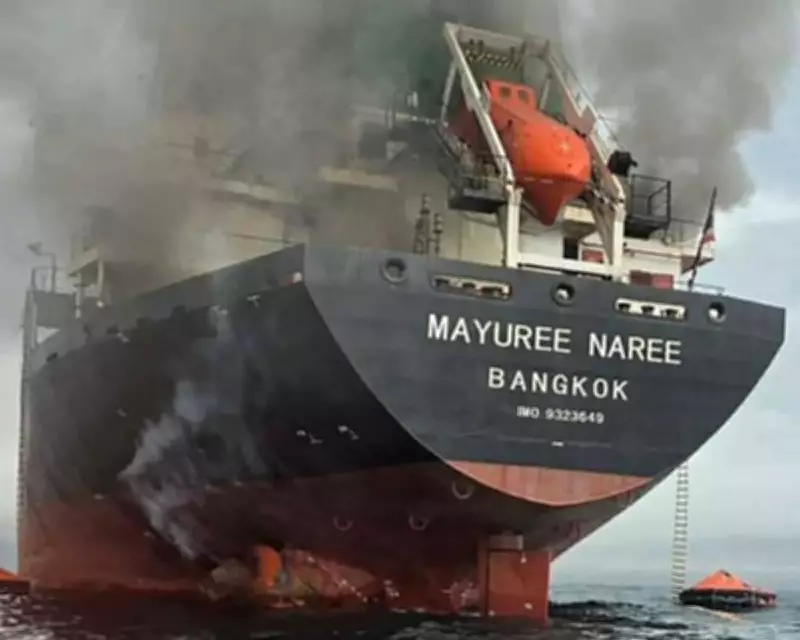
The Thai bulk carrier Mayuree Naree was photographed near the Strait of Hormuz following an attack, illustrating the dangerous conditions facing commercial shipping. While Lloyd's of London insists shipping insurance has remained available throughout the conflict at what they term the "right price," brokers acknowledge there has been minimal demand for coverage in the strait recently. The overwhelming majority of shipowners have opted to leave their vessels anchored in the Gulf or waiting in regional ports rather than risk transit.

War Risk Premiums Skyrocket as Danger Escalates
During the current Middle East conflict, war insurance premiums have soared dramatically since the outbreak of hostilities. According to David Smith, head of marine at broker McGill and Partners which operates in the Lloyd's market, premiums have risen to between 3.5% and 7.5% of a vessel's value. This represents a substantial increase from just 1% to 1.5% a week earlier and a mere 0.25% before the war began.
However, insurance costs are not the primary factor preventing companies from moving their vessels out of the perilous region. Smith identifies what he calls the "fear factor" as the dominant concern. Silke Lehmköster, former container ship captain and current fleet managing director at German shipping company Hapag-Lloyd, relayed the danger faced by the company's six vessels and one hundred fifty crew members stuck in the Gulf. Her seafarers have reported seeing drones whiz past, along with explosions and significant smoke. One Hapag-Lloyd cargo ship was recently hit by shrapnel, causing a small fire that the crew managed to extinguish without injuries.
Ancient Insurance Market Faces Modern Warfare Realities
For Lloyd's, this represents just the latest crisis in centuries of global turmoil. The insurance market's origins trace back to a London coffee house owned by Edward Lloyd in 1688, where sailors, merchants, and shipowners gathered to exchange maritime intelligence. The centerpiece of the underwriting room within the distinctive Richard Rogers-designed marketplace on London's Lime Street is the bell salvaged from the wreck of the HMS Lutine, which sank off the Dutch coast in 1799 with its cargo of gold and silver insured by Lloyd's.
Since those early days, Lloyd's experienced its greatest maritime loss when the Titanic sank in 1912, insured risks during the Second World War, and made enormous payouts following the 9/11 terror attacks in 2001. Richard Meade, editor-in-chief of Lloyd's List Intelligence, notes there is a "huge buildup of risk" in the Gulf region. "We are still not at the stage where ships are being profiled in these attacks, as far as we can tell. Some are falling into the category of collateral damage or hits to sustain the closure of the strait," he explained.

Search for Solutions Amid Growing Danger
Despite the danger for seafarers who are forced to spend their time below deck, shipping companies have outlined several conditions that would need to be met before they would have confidence to order their crews to attempt a transit of the strait. "We would need an end of this escalation, so that there are no drones, no missiles, no whatsoever flying, and a clear message from everyone that they would stop," Lehmköster told the US network CBS.
It remains unclear what exact conditions would alleviate shipowners' fears and allow traffic to restart. Various measures have been proposed, including establishing a safe maritime corridor, providing naval escorts, or obtaining security guarantees issued by Iran. The threat to vessels in the Gulf differs significantly from other dangers faced by commercial shipping in recent years, such as piracy.
David Appleton, a senior leader at the trade union Nautilus International, explained that while piracy situations could be mitigated by crews through measures like armed guards, specific operational procedures, and route planning, these approaches are ineffective against drone and unmanned vehicle attacks. "You would have armed guards on board in certain places, you would have operational procedures where you'd avoid certain areas or you would travel at certain speeds so you weren't vulnerable to attacks. But none of this applies to the current situation," he stated.
International Response and Proposed Corridors
The United Nations shipping agency responsible for regulating international safety has called for creating a humanitarian corridor in the Gulf to evacuate commercial vessels and seafarers from high-risk areas. This followed an extraordinary meeting of countries in London this week convened by the International Maritime Organization. However, the IMO has not established a timeline for implementing the corridor, and Iran's cooperation remains uncertain. Iran's extensive southern coastline stretching approximately twelve hundred miles would present significant monitoring challenges.
Iran has suggested it may offer security guarantees to certain ships based on factors such as the nationality of their owners or the origin and destination of their cargo. Tehran aims to reroute vessels through what it terms a "safe corridor" through the Strait of Hormuz, close to the Iranian coast. This route would allow Iranian authorities to visually verify vessels and grant approval to proceed, though whether payment will be required remains unclear.
"At this stage the idea that this approval guarantees safe passage should be treated with extreme caution," Meade cautioned. The United States, the United Kingdom, and other European nations have discussed plans to provide military escorts for merchant vessels, but the situation is now considered too dangerous. Some shipping companies have privately deemed these proposals unrealistic given the large number of vessels anchored in the Gulf.
Insurance brokers have indicated that effective use of naval escorts could significantly help reduce insurance costs as London's ancient maritime insurance market strives to address the latest challenge in its lengthy and storied history. The centuries-old institution that has insured shipping risk for more than three hundred thirty years now confronts warfare technologies its founders could never have imagined, testing the resilience of global maritime commerce in an increasingly volatile world.