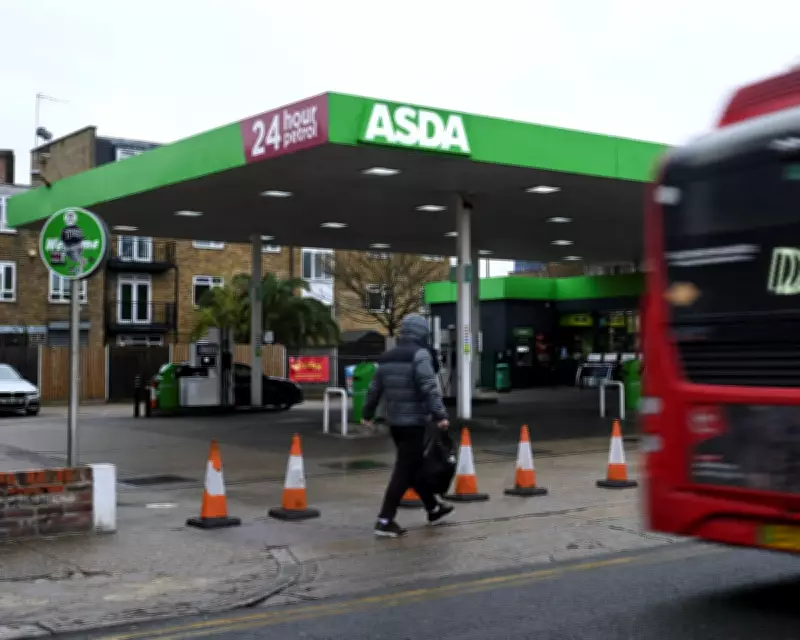
Asda Issues Warning Over Fuel Supply Disruptions
The executive chair of Asda, Allan Leighton, has issued a stark warning about temporary shortages at some of the supermarket chain's petrol pumps. This comes as the ongoing conflict in the Middle East continues to squeeze fuel supplies across the United Kingdom. The situation has already driven average petrol prices above 150p per litre for the first time since May 2024, creating significant challenges for both retailers and motorists.
Supply Chain Pressures Intensify
Leighton emphasized that Asda, which ranks as the UK's second-largest fuel retailer, has experienced substantially increased demand from drivers over the past four weeks. This surge coincides with the escalation of hostilities between the US, Israel, and Iran that began on February 28th. "Our fuel volumes are up quite significantly and clearly demand has been outstripping supply. Supply is tight and we are all trying hard on that," Leighton stated during a recent briefing.
He clarified that these shortages have been isolated to "the odd pump" at a limited number of Asda forecourts, typically occurring when customers arrive during delivery waiting periods. "We can expect to see that continue," Leighton added. "The spikiness at the moment makes this tricky for us, as spikes can lead to temporary shortages. These are temporary and are addressed very quickly."
Price Surges and Market Volatility
The conflict's impact on global oil markets has been profound. Iranian retaliatory strikes and Tehran's effective closure of the Strait of Hormuz—a critical shipping channel for oil—have disrupted both production and transportation. On Friday, the average price of petrol in the UK climbed to 150.11p per litre, according to data from the RAC. Diesel prices have risen even more sharply, reaching an average of 177.68p per litre.
These figures represent a dramatic increase from pre-conflict levels, when petrol averaged 132.83p per litre and diesel stood at 142.38p. The global oil price jumped 3.5% to nearly $112 per barrel on Friday, despite former US President Donald Trump's pledge to delay strikes on Iranian energy infrastructure for ten days. This market volatility suggests that elevated fuel costs will persist in the coming weeks.
Industry and Government Responses
Leighton firmly rejected allegations that fuel retailers might be "profiteering" from the crisis through price increases. He noted that Asda's profit margins are actually under pressure from higher fuel costs, stating, "People ask where the money is going and the government are getting a lot of money off the back of this."
Fuels Industry UK, representing the sector, maintains that petrol and diesel supplies remain "stable" nationwide. A spokesperson explained, "Companies are monitoring the fuel supply situation closely and reporting regularly into the energy department on the status now and for the weeks ahead. Supply remains stable in the UK and our members are working hard to ensure that remains the case." The Department for Energy Security and Net Zero (DESNZ) declined to comment but is understood to have confidence in the UK's diverse and resilient fuel supply network.
Impact on Motorists and Easter Travel
Simon Williams, the RAC's head of policy, highlighted the immediate consequences for consumers. "With the long-awaited four-day Easter weekend almost within touching distance, the cost of getting away by car is going to be noticeably higher this year," he warned. "Drivers on long journeys will need to plan very carefully where they refuel."
This situation evokes memories of September 2021, when a nationwide shortage of HGV drivers led to queues at petrol stations in London and Kent, despite no actual fuel shortage. The current disruptions, however, stem directly from geopolitical tensions affecting global oil markets rather than domestic logistics issues.
Prime Minister Keir Starmer has indicated that the government would "step in" if fuel companies attempted to exploit the crisis and "rip off customers." As the conflict continues to influence oil prices and supply chains, both retailers and policymakers face mounting pressure to ensure stability at the pumps while addressing the economic impact on UK motorists.