Trump's Policies and Rhetoric Cripple US Border Towns as Canadians Boycott
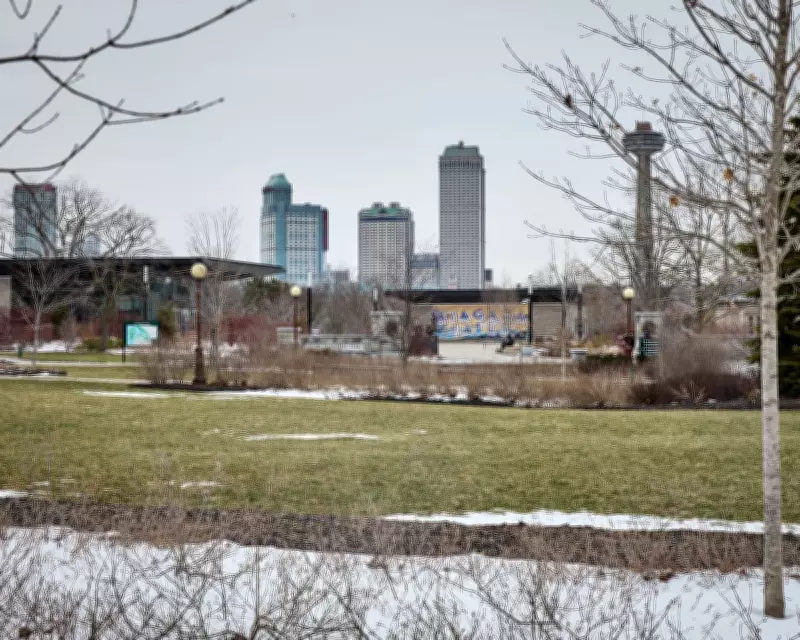
On a warm March weekend in Lewiston, New York, bakery owner Aimee Loughran is putting the finishing touches on a state trooper badge-shaped cake for a local officer's retirement party. This should be the last task of a busy Saturday at her Just Desserts shop, located just 20 minutes north of the rushing waters of Niagara Falls. However, the usual bustle of tourists, including Canadians whose homes are visible from the banks of the nearby Niagara River, has vanished.
Dotted with cafes, restaurants, and historic buildings from the 1800s, the Lewiston strip is typically a magnet for visitors. Yet, local demand for Loughran's cakes and pastries has not compensated for a dramatic slump in tourist spending, triggered by a year-long boycott by Canadians. Angered by Donald Trump's hefty tariffs and annexation threats, compounded by fears of border detentions and Immigration and Customs Enforcement crackdowns, Canadians have stayed away, refusing to spend their dollars in border towns like Lewiston.
"All of our sales on the strip have gone way down," Loughran said. This has resulted in a 30% drop in revenues at her bakery, forcing the 41-year-old single mother to cut spending both at work and at home. "Especially as a single mom, it's very tough," she added.
Widespread Economic Pain Across the Region
Lewiston's once-bustling antiques sellers are also suffering. Judy, a 73-year-old former teacher who co-owns Antique to Chic with eight other enthusiasts, is losing hope that sales—which dropped 20% last year—might rebound soon. "I'm angry that the Canadians don't want to come here any more. And I don't blame them," she said. "I was thinking yesterday, I wish I didn't live in this country, because I don't like it anymore. I don't like the news that I'm hearing. I don't like the [Iran] war ... It's too much for me to handle."
The Canadian backlash is a significant worry for businesses and politicians across the Niagara region, which has historically relied on visitors from provinces like Ontario and Quebec to shop, sightsee, gamble, and watch Buffalo Bills football games. Niagara's pain is cascading throughout the country, with Canadians thinking twice about crossing the border and planning trips to the rest of the US.
With no warming of relations between Washington and Ottawa in sight, and Trump continuing to call Prime Minister Mark Carney a future "governor" of a future state of Canada, border town locals are trying to adapt. For Niagara Falls' regional tourism agency, Destination Niagara, this has meant making the tough decision to stop advertising to Canadians entirely and instead focus on luring Americans from other states. "Our dollars are so limited," said John Percy, Destination Niagara chief executive. "They're important to us, but we [have to] concentrate on trying to bring visitors in."
Historical Reliance on Canadian Visitors
Niagara Falls has heavily depended on Canadian day-trippers and weekend shoppers, particularly outside of tourist season. A favourable foreign exchange rate and much lower sales tax meant Canadians would cross the border regularly for cheaper essentials like milk, bread, and gas, as well as to shop at US-brand stores.
Clothes shopping "across the line" was so popular in the 1990s that Percy recalls putting donation bins in mall parking lots to gather Canadians' cast-offs. "They would come over and change clothes, literally in the parking lot, and dump their clothes ... and drive away with new clothes in their car and their suitcase, with tags pulled off," he said.
That shopping fervour continued into the 2010s, with the local Fashion Outlets mall expanding in response to Canadian demand. "You'd go in that parking lot, and you would think you were in Ontario because every license plate was a Canadian plate. And it was the same thing with our hotels," said local hotelier Frank Strangio. "They would come over, spend the weekend, get a room, spend the night, go out to dinner, go shopping, and it was great. And then they'd go home."
The Impact of Trump's Policies and Rhetoric
But that has all changed. A stronger US dollar and rising inflation stateside meant Canadians were already cutting back on cross-border spending. Trump's aggressive anti-Canadian rhetoric and trade policies were the final straw. "They're not coming any more," Strangio said. "Now you're seeing boarded-up stores. What I'm afraid of is that big huge mall in the middle that is part of our tax base is shut down...and that's a trickle effect," he noted, adding that he has had to hire fewer hotel staff in the off-season due to a drop in Canadian visits.
There was a 21% drop in Canadians entering New York state in 2025, with more than 3 million fewer visits than the previous year, according to reports citing New York Governor Kathy Hochul's office. Personal vehicle crossings in the Buffalo-Niagara Falls area alone declined by 16.3%, a drop of 717,118 last year, as shown by Bureau of Transport Statistics figures.
Meanwhile, a recent poll by the Globe and Mail newspaper found that only 9% of Canadians agreed that the US was a "trustworthy ally," and 51% of those polled had cancelled American trips in reaction to comments by Trump. "I've never seen patriotism from that market in such a short amount of time," Percy said. "And rightly so. I mean, if the tables were turned, we would be in the same position, if not worse."
And Canadians who are still crossing the border are doing so in secret. "They will not tell their neighbour or friends or family that they're coming to the US," Percy said. "They'll hide."
Political and Community Responses
Niagara Falls Mayor Robert Restaino, who has family and friends across the border, says he "winced" every time Trump made disparaging comments about Canadians. "Hearing that they would be the 51st state and that Wayne Gretzky should be governor, and that the country would be nothing without us ... I just saw no upside. You want to talk about our Nato allies all paying their fair share? I get that ... But these other things, these personal opinions, they accomplished nothing and really just sort of set a bad tone."
This compounded pain over the tariff fallout, which had already sparked criticism from Congress. New York Senator Chuck Schumer visited Niagara Falls last summer, where he lambasted Trump's trade war, saying tariffs were a "a dagger aimed at the heart of upstate New York and at working families," warning that tariffs were effectively a tax on "every citizen of America and western New Yorker."
As for Restaino's pivot, he is banking on sports being a more sustainable source of tourism that can withstand political strain. The city is currently planning a $200 million investment into a 6,000-seat events centre, which he hopes will host cross-border games for minor league, college level, or youth sports teams, be it in hockey, basketball, volleyball, or lacrosse.
While there are rumblings of international boycotts of US-hosted games of the upcoming FIFA World Cup this summer, Restaino said he takes some comfort from the Olympics, where many nations "don't like each other ... and yet when it came to sports, everybody was just kind of trying to get through."
Long-Term Concerns and Future Outlook
But whether Canadian sports fans play ball remains to be seen. Roughly 10-15% of Buffalo Bills season ticket holders are Canadian, the team said in September. However, hotelier Strangio has noticed overnight stays from Canadian fans have dropped. "Every time there's a home Bills game, we get people from all over that come over and stay in our hotel because they want to see the Falls and make it a whole trip. And there are less Canadians than there used to be."
The fear now is over the long-term effects. "Every bit of market share that we lose internationally takes us that many more years to regain," Percy warned. This is particularly worrying when taxes are drawn from tourism dollars. "Those taxes in these communities that are affected, affect its police force, their fire and safety, streets, sidewalks ... It's the number-one industry in Niagara county. It's number two in New York state now."
And there is no quick fix, at least not under this administration, according to Restaino. "At some point, our federal government has to humbly recognise that misstep. I don't know that that's possible in this current dynamic."
Back in Lewiston, the shift has been stark. A plaque at the nearby "Peace Park" commemorating the once-strong relationship between bordering communities declares: "This unfortified boundary between Canada and the United States of America should quicken the remembrance of more than a century old friendship between these countries. A lesson of peace to all nations." Today, some locals worry that old friendship is lost.
Kathleen Stefik, a 59-year-old Trump voter, said she personally feels the hostility from Canadians and has curbed her own trips to Canada in response. While she agrees with some of Trump's policies, including on immigration, she acknowledges that his rhetoric about Canada has been damaging. "What a jerk ... shut up, just stop. Be a president, act like a president."