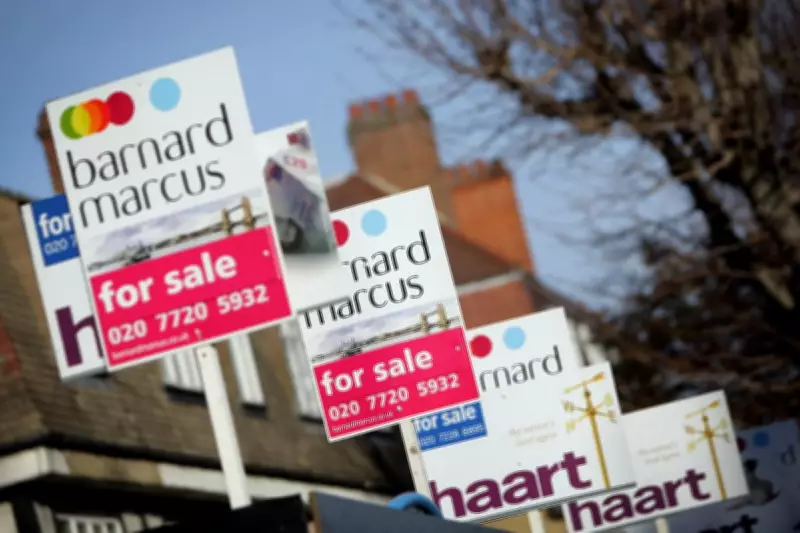
UK House Prices Show March Recovery Amid Economic Uncertainty
House prices across the United Kingdom demonstrated a notable recovery in March, gaining momentum after a sluggish beginning to the year. However, property experts are issuing warnings that the ongoing conflict in Iran could significantly "cloud" this positive trajectory, creating substantial uncertainty for the market's future.
Nationwide Data Reveals Price Growth Acceleration
According to the latest house price index from Nationwide, UK property values experienced a 2.2 percent year-on-year increase in March. This represents a substantial acceleration from the one percent growth recorded in February. On a monthly basis, prices rose by 0.9 percent, indicating strengthening market conditions before geopolitical tensions began affecting investor confidence.
Regional variations revealed a mixed picture across the country. The Outer South East and East Anglia both registered year-on-year declines of 0.7 percent and 0.4 percent respectively. In contrast, London's property market, which had shown signs of weakening in recent months, rebounded with a 1.7 percent annual increase in March, up from 0.7 percent growth the previous month. The capital achieved the strongest price growth in southern England, with average house prices reaching £538,181 during the first quarter of this year.

Economic Shock from Middle East Conflict
Robert Gardner, Nationwide's chief economist, commented on the market dynamics, stating: "The pickup in house price growth suggests that the market had regained momentum after the slowdown recorded around the turn of the year. However, the sharp rise in global energy prices in response to developments in the Middle East represents a significant shock to the global economy, clouding the outlook."
Nationwide emphasized that the property market outlook has shifted "dramatically" since the beginning of 2026, with the Iran conflict introducing new economic variables that could potentially reverse recent improvements in housing affordability.
Interest Rate Expectations and Mortgage Market Impact
The conflict has fundamentally altered interest rate expectations across financial markets. While the Bank of England had been anticipated to implement two interest rate cuts this year, multiple rate increases are now forecast. This shift has prompted lenders to offer more long-term mortgage interest rates, potentially affecting housing affordability for prospective buyers.
Gardner further explained: "If sustained, this could reverse some of the improvement in housing affordability that has taken place in recent years. With consumer sentiment also likely to be dented by the uncertain outlook and the prospect of rising energy costs, housing market activity is likely to soften."
The Iran war has already prompted lenders to withdraw mortgage products from the market, with available deals shrinking by approximately one-fifth since the conflict began. Despite this contraction, mortgage approvals increased in February from a two-year low in January, leading some lenders to suggest that disruption from the Iran war might be short-lived.
Experts Divided on Long-Term Impact
Property analysts remain divided regarding the conflict's potential long-term effects on the housing market. Tom Bill, head of residential research at Knight Frank, cautioned that the full impact has yet to materialize: "The impact from the Middle East conflict on the housing market is still in the post. The fact mortgage offers last for six months means the effect of higher borrowing costs will filter into the market this spring and summer, putting downwards pressure on prices and transaction volumes."
Nathan Emerson, chief executive of estate agent body Propertymark, offered a more measured perspective: "It's a positive sign that confidence is returning, but sustained growth will depend on stability in borrowing costs and a consistent flow of motivated buyers entering the market."
The property market now faces a complex balancing act between recovering momentum and navigating the economic uncertainties created by international conflict, with experts closely monitoring how these competing forces will shape housing trends in the coming months.