
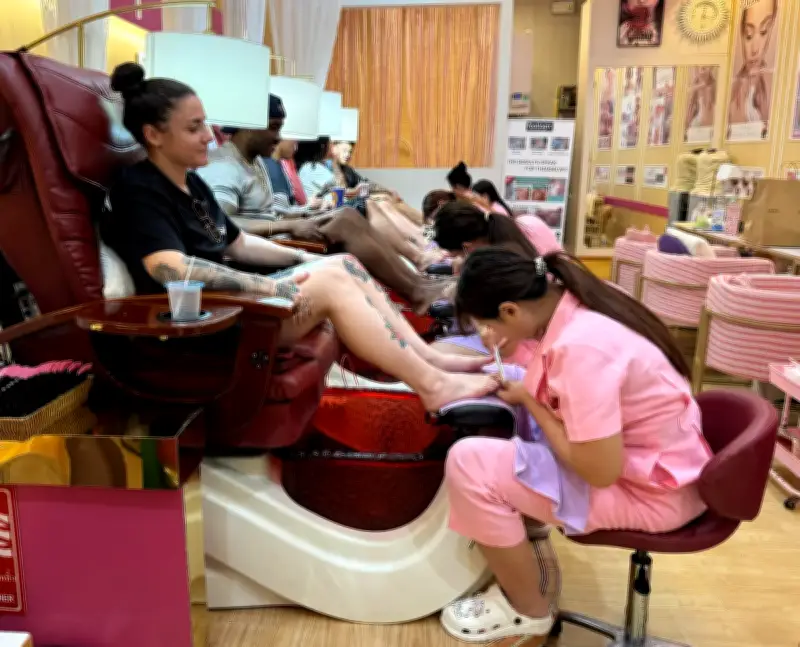
On Thursday morning, sailors from the USS Abraham Lincoln filled every burgundy lounger at Colour Nail salon in Pattaya, opting for pedicures after a record 286-day uninterrupted deployment. The salon worker Arisa Suekkanya said she was “excited” that the US military chose Thailand as their first port of call, with more sailors waiting outside for their turn.
Record deployment and living conditions
The aircraft carrier's deployment has been marked by reports of deteriorating living conditions and poor mental health onboard, including attempted suicides, which drew global headlines and criticism of Donald Trump's war against Iran. The ship's captain acknowledged a lack of fresh fruit and vegetables but dismissed reports about living conditions as largely exaggerated.
Adam, on his first deployment, compared the living situation to “being stuck in your bedroom with all your family,” but said building relationships with fellow crew and “finding your people” made the difficulties worthwhile. He described eating “uncooked beef” and sliced, uncooked potato, saying he “almost choked” on the food. Another crew member, Marco, attributed the decline in living standards to the battle conditions of Operation Epic Fury, noting that restocking would have put them at risk. Trent admitted the hardest part was “pushing through, keeping the mentality,” while Dane said “a load came off my shoulders” upon returning to dry land. Lester acknowledged it was “tough but we had a job to do,” adding, “I ate to my heart's content. Me and Thai food might be best friends after this.” Another unnamed serviceman hinted at the toll: “Some people adapt to it but not everyone.”
Simple pleasures and local business boom
Despite Pattaya's reputation for its red light district, many sailors sought more prosaic desires. Tim was in the Vans store, looking for “the simple stuff like new socks.” David bought his wife a Hello Kitty soft toy from H&M, noting this was his fourth deployment. Adam ordered two burgers at Burger King and planned to order a tailored suit and explore Thailand's east coast.
Local businesses have welcomed the visitors with signs and incentives, such as Tito Fashion offering suits “specially for US Navy ready in 24 hours” and Thai restaurant Imm-Oon Na giving 10% off for valid military ID. In the mall, Nike, Victoria's Secret, and Starbucks reported spikes in sales. Pattaya's mayor, Poramet Ngampichet, estimated that if each American spends $100-150 per day, the visit could generate about $100m Thai baht ($3m).
Economic impact and restrictions
However, not all businesses benefit equally. Emma Moontee, who runs a gift stall at a night market, said she had sold only one fridge magnet to a sailor. The crew has been advised to avoid the beer bars on Soi 6 after sunset, but Walking Street remains open, with venues like Sapphire Club offering 10% off to US service members. Pattana Prasomsup at M's Mojito noted a “good boost” from 10 crew who visited on Wednesday night, though they appeared cautious about interacting with bar girls.
Pattaya's transformation from a quiet fishing village to a sex tourism hub was driven by US soldiers during the Vietnam war, with many workers migrating from Isan and neighbouring countries. Puangbubpha Duangsri at American Eagle said they made over 200,000 baht on Wednesday, compared to the usual 70,000 baht, and by lunchtime Thursday had already surpassed $100,000. “Can they stay an extra week?” she asked.




