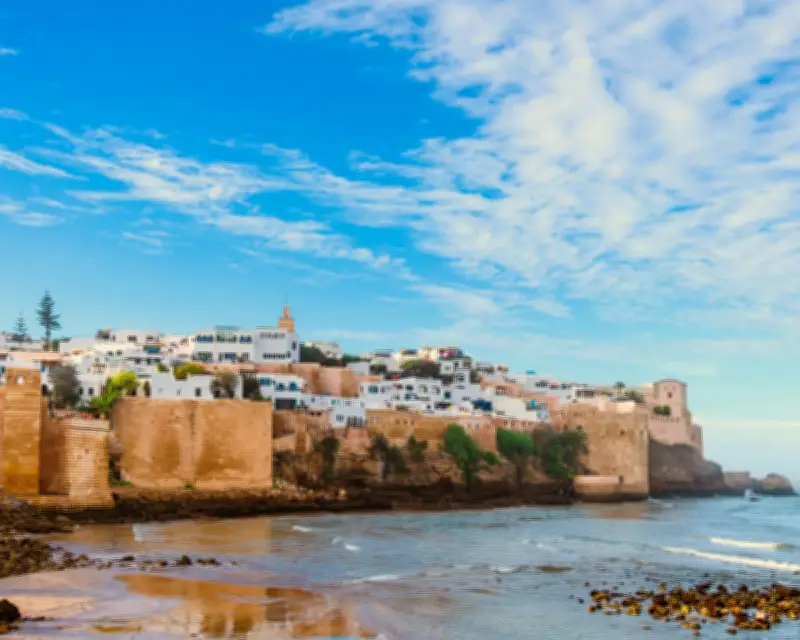
Rabat, Morocco's capital, has been designated the 2026 Unesco World Book Capital, a year-long celebration featuring over 300 events. But beyond the literary program, this ancient seaside city offers a rich tapestry of history, culture, and gastronomy that makes it a compelling destination in its own right.
A City of Contrasts: From Ville Nouvelle to Ancient Medina
Rabat became Morocco's capital in 1912 during the French protectorate. The Ville Nouvelle, laid out in the 1920s, contrasts sharply with the medieval medina nearby. Visitors can explore the solar-powered Mohammed VI Museum of Modern and Contemporary Art, where the permanent exhibition 'Shifting Horizon(s)' showcases works by Mohamed Melehi and Lalla Essaydi, whose provocative photograph from the 'Bullet Revisited' series critiques violence against women.
The medina, a maze of narrow streets, bustles with vendors selling mint, slippers, strawberries, and sabon beldi, a traditional olive-based soap. The atmosphere is busy yet calm, with no aggressive sales tactics, a customer service style that feels almost French.
The Kasbah of the Oudayas and the Beach
Following the scent of the ocean, visitors reach the Kasbah of the Oudayas, a former royal citadel with whitewashed houses and stunning views. After checking into a riad, a short descent leads to a modest beach where locals play football and volleyball. At sunset, a lone surfer can be spotted in the distance, seeking the perfect wave.
At the beachside Relais Marin restaurant, the tagine—a slow-cooked stew of lamb, almonds, and prunes—is a must-try, mopped up with khobz, Moroccan flatbread. The flavors are bold and satisfying, leaving diners wanting more.
Cafe Culture and the Chellah
The next morning, the Cafe des Oudayas, adjacent to the Andalusian Gardens, offers mint tea, biscuits, and a prime vantage point. From here, one can witness local life, including a boy's dramatic dive from a 30-metre rock into the Bou Regreg river below, a spectacle that draws both cheers and teasing.
A spontaneous electric tuk-tuk ride, one of 60 in the city, took a detour past St Peter's Cathedral and a nightclub called Amnesia, where the king is rumored to have danced as a prince. The final destination, the Chellah, a medieval necropolis with Roman ruins, features a cafe serving traditional couscous with seven vegetables and a rich broth.
Literary Connections and Practical Tips
For those seeking a beer, Le Dhow, a bar on a boat near the kasbah, offers refreshment and conversation. A British student at the Université Internationale de Rabat shared, "It's been fine. Some men have said hello. One asked for a photo. To be honest, I've experienced a lot worse in Worcester."
While the World Book Capital events remain somewhat opaque, Rabat's charm is undeniable. A final visit to Bouquiniste El Azizi, a humble bookshop in the medina, reveals a copy of Bridget Jones's Diary, left for another reader to discover—a fitting metaphor for the city's literary spirit. As a sign in the shop reads, "Les livres prennent soin de nous" (Books take care of us).
Ben Aitken, author of 'Shitty Breaks: A Celebration of Unsung Cities,' recommends visiting Rabat not just for its literary designation but for its excellent food, culture, and seaside beauty. Whether exploring ancient ruins, savoring tagine, or soaking in the sunset, Rabat offers a memorable escape.