
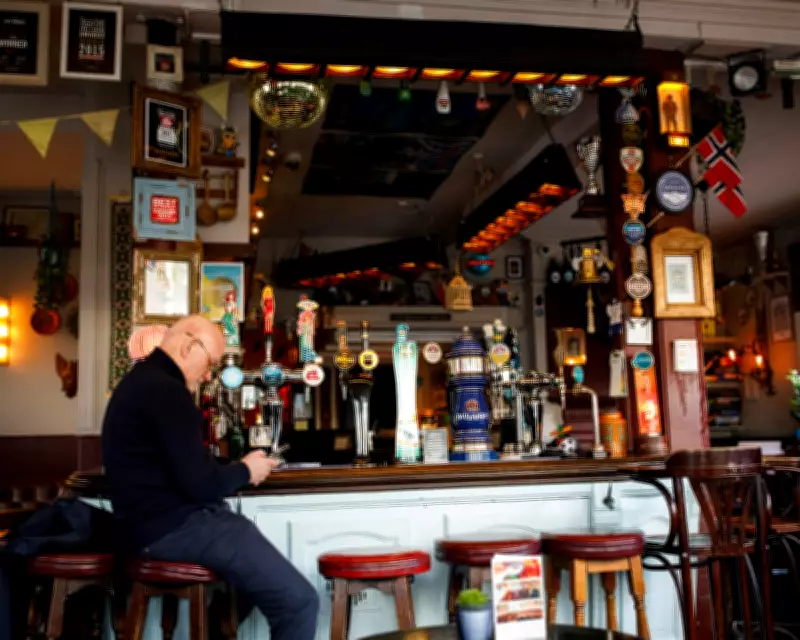
London Pub Implements Child Ban as National Debate Over Family-Friendly Spaces Heats Up
The landlord of the Kenton pub in Hackney, east London, recently made the controversial decision to ban children from the establishment entirely. This move reflects a growing trend across the United Kingdom, where public houses are increasingly restricting or prohibiting young patrons, citing concerns over safety, changing atmospheres, and potential loss of traditional trade.
Readers Share Divergent Views on Child-Free Pubs
In response to this developing situation, we gathered perspectives from individuals across the country regarding adult-only pubs. While many respondents expressed support for child-free venues, emphasizing the importance of maintaining adult-only spaces, a significant portion indicated they would reconsider if children were "properly supervised by parents." Conversely, others remained adamant that pubs should remain open and welcoming to everyone, regardless of age.
"These Kids Would Rather Be Down the Park"
Sean, a 58-year-old resident of Worthing, shared his experiences, noting that while he "loved everything about fatherhood when the kids were little," he also "relished" adult company in pubs. He pointed out that parents today have numerous options for family entertainment and questioned why pubs should accommodate unsupervised children. "I don't mind children being in the pub," Sean explained, "my problem is when they're not supervised: some parents treat it like a creche."
He recounted incidents of "kids knocking glasses over with footballs and riding scooters up and down the pub," adding that confronting parents often leads to arguments. Sean observed, "I look at these kids with their footballs and scooters, and think: they'd rather be down the park." While acknowledging that pubs have evolved, he believes they have overly catered to families at the expense of their traditional clientele.
"If Kids Are in the Pub, People Are Generally Friendlier"
Phil Smith from Reading offered a contrasting viewpoint, highlighting that his teenage children have regularly joined him at pubs since they were young. "There's nothing better than a weekend where there is a proper mix of people of all ages in the pub," Smith stated. "It makes it more lively and people are generally friendlier than if it was just blokes."
He emphasized that children and dogs often foster a sociable environment, facilitating conversations among adults. Smith also noted that pubs can serve as educational spaces where children learn social behaviors, such as manners and polite conversation. For him, pubs are fundamentally community spaces where families should gather and interact.
"Pubs Are Adult Spaces"
Isobel, a 40-year-old Londoner, argued that children should only be permitted in pubs under specific conditions and times. She cited family meals like Sunday lunch as acceptable but opposed the presence of young children beyond 7 p.m. Isobel, who does not have children herself, expressed frustration with parents who rely on screens and tablets to occupy bored children, suggesting they use headphones to avoid disturbing others.
She challenged the notion that reservations about children in pubs indicate societal antipathy toward youth, stating, "This is demonstrably untrue. Our society is considerably more accommodating of children now than it has ever been." Isobel clarified, "We are also not talking about public spaces in general, but specifically pubs, which are principally adult spaces."
"Pubs Are by Definition Public Houses"
William, a 40-year-old English teacher and father of two from Tunbridge Wells, advocated for welcoming children in pubs. "Pubs are, by definition, public houses and should reflect the values of a home: welcome to all, warm, a place for discussion, community and bonding," he asserted. He warned that barring children could be seen as sexist, as primary caregivers are often women, thus restricting their access.
While promoting pubs as community places, William stressed the importance of respect for others. He takes his young children to pubs to expose them to a wider range of people, comparing the experience to football as a great equalizer.
"We Enjoy Taking Our Kids to the Pub but They Have to Stay Seated"
Clare, an architect from Newcastle with three children, believes children should be allowed in pubs provided parents assume responsibility. She seeks out family-friendly venues that offer food, children's menus, and activities like coloring books. Clare emphasized the importance of good behavior, instructing her children to remain seated to avoid hazards for staff carrying hot food and drinks.
To keep her children engaged, Clare brings activities such as play-dough or allows limited tablet use. She typically visits pubs in the afternoon or early evening, ensuring they depart before bedtime. Clare suggested, "If people want to go out for a quiet drink and not be around children, then they can go later in the day."
This ongoing debate highlights the complex balance between preserving traditional pub atmospheres and embracing family inclusivity, with establishments like The Audley in Belgravia, London, describing itself as family-friendly while requiring under-18s to be accompanied by an adult, and The Alma in Crystal Palace prohibiting children below ten.




