
Jeremy King Reflects on The Ivy's £1bn Sale and His New Venture Simpson's in the Strand
In an exclusive interview, Jeremy King, the legendary restaurateur behind iconic London establishments like The Ivy and The Wolseley, opens up about the recent billion-pound sale of The Ivy brand and his latest project, Simpson's in the Strand. King, often hailed as the UK's greatest restaurateur, discusses his journey, the emotional connections people have with his restaurants, and his unwavering philosophy on the hospitality industry.
The Emotional Power of Dining: Tears and Tales at Simpson's
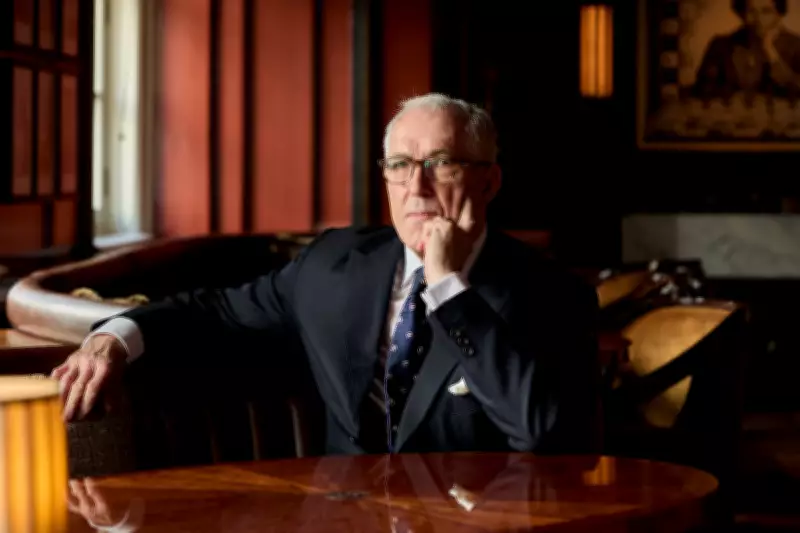
"People come in crying," says Jeremy King from a banquette at Simpson's in the Strand, his newly reopened British restaurant. He recounts how guests often share heartfelt stories, such as memories of fathers or godfathers bringing them to the venue. This display of emotion is not unusual for King, who has witnessed similar reactions at Le Caprice, which he ran for 38 years. He attributes this to a deep human desire to belong, a feeling he strives to foster in all his establishments.
King, along with former business partner Chris Corbin, has been instrumental in shaping London's dining landscape since the 1980s. Their formula combined opulence with affordability, attracting A-list celebrities and critics alike. King believes that making fine dining accessible is key, stating, "If a restaurant becomes really expensive, it often becomes very boring. A lot of the most interesting people are the less affluent."
Simpson's in the Strand: A Sensitive Revival of History
The reopening of Simpson's in the Strand, which closed in 2020 after over a century of operation, marks a significant moment in London's culinary scene. King describes the dining room as "effectively Edwardian," retaining original features like oak panelling, triple-height ceilings, and a tableside carvery experience. The redesign is so authentic that it has led to amusing misunderstandings, such as a guest claiming to have sat in a booth that didn't exist during the period they mentioned.
Despite his success, King admits to feeling like an outsider at times. "I've never felt that I've belonged," he says, reflecting on what some might call imposter syndrome. This humility contrasts with his ability to attract high-profile regulars like Princess Diana and Laurence Olivier to his restaurants over the years.
King's Restaurant Secret: Holding Nerve and Prioritizing Affordability
When asked about his secret to success in a competitive market where half of new restaurants close within two years, King emphasizes the importance of holding nerve. He criticizes competitors for lacking this quality and highlights affordability as another crucial element. At Romano's, a restaurant within Simpson's, he offers three courses for £25, a strategy that has proven effective in the past.
He recalls resistance from investors during the opening of Brasserie Zedel, where he insisted on selling soup for £2.25. Despite board ambushes and warnings about his "vanity project," King held his nerve, and the restaurant gained cult status. He prefers instinct over data-driven marketing, lamenting that modern business often overlooks intuition. "I get presented with all sorts of marketing and return on investment advice, and often it's wrong," he asserts.
Simpson's and the Return to Fun in Dining
King believes that great food doesn't need to be fussy. "People think what's required is fussy food," he says, describing overly elaborate plates. Instead, he advocates for high-quality ingredients cooked simply, a philosophy that aligns with Simpson's analogue charm, such as the option to tip the meat carver with cash. He credits designer Shane Brady for creating spaces that withstand scrutiny without shouting for attention.
Throughout the interview, King shares colorful anecdotes, from racing cars with Princess Diana to handling bomb threats at Le Caprice. He remains positive about the future of hospitality, despite challenges like reduced drinking, medication trends, and rising costs. "It's painful, but it's going to be very positive," he says, drawing on past experiences to navigate current difficulties.
The Ivy Sale: A Transitional Moment Without Regrets
King addresses the recent sale of The Ivy for over a billion pounds, a stark contrast to the £12 million he and Corbin received when they sold it in 2003. He expresses no regret, stating, "It doesn't worry me cause I couldn't have done it. It's not in my capability to have taken that brand and rolled it out." He acknowledges that things change and views the sale as a natural transition, having only returned to The Ivy once for old time's sake.
In 2022, King was ousted from Corbin & King after a bidding war, leading him to establish Jeremy King Restaurants, which now operates Simpson's alongside newcomers Arlington and The Park. He remains resilient, focusing on his work and the belief that London is as fashionable today as it was in the 1970s. "I never for a second feel that it's safe," he concludes. "I just keep working at it."




