
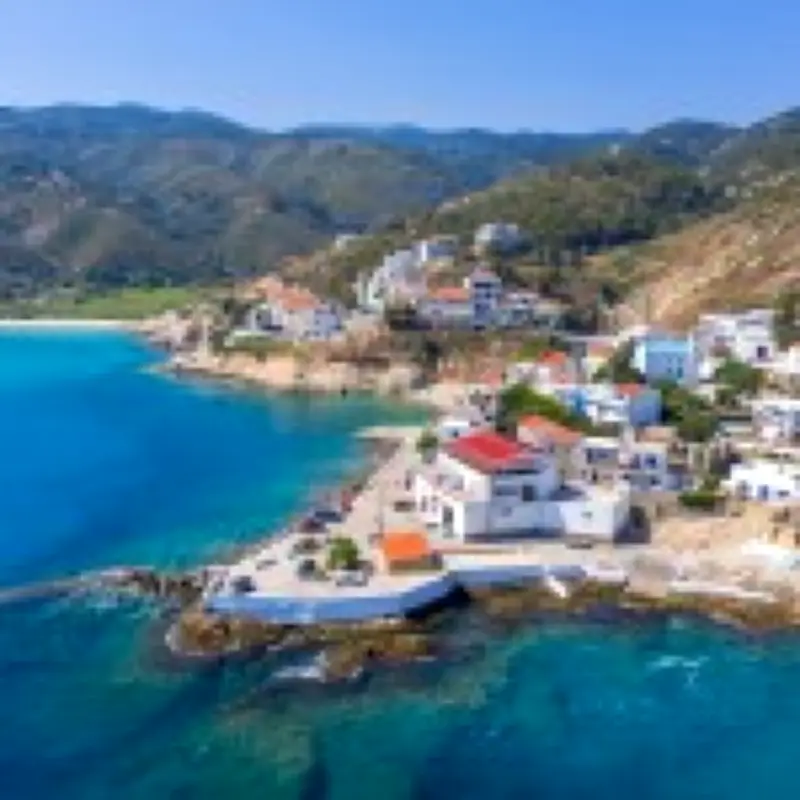
Ikaria, a Greek island in the Aegean Sea, is experiencing a surge in tourism interest, with industry insiders reporting a 72% increase in demand for Greece following Christopher Nolan's epic retelling of Homer's 'The Odyssey'. While Ithaca, the island at the story's center, garners attention, Ikaria—a Blue Zone where people often live to 100 or more—remains shrouded in mystery, offering therapeutic hot springs, authentic villages, and azure waters.
Mythical and Mystical: The Legend of Icarus and Dionysus
The island's name derives from Icarus, who, according to legend, flew too close to the sun with wax and feather wings, melted, and plunged into the Aegean. His body washed ashore on an unnamed island, later named Ikaria in his honor. Visitors can see the Rock of Icarus, located about 50 meters off the coast of Vaoni beach, featuring a local statue and a nearby outdoor stone amphitheater used for cultural events like the Icarus Festival every July and August, with world music concerts and art exhibitions.
Ikaria is also tied to Dionysus, the ancient Greek god of wine, who was born on the island and raised near Mount Drakano, home to the 4th-century BC Tower of Drakano. This mythological connection is said to have helped winemaking thrive on the island.
A Blue Zone: Secrets to Longevity
Ikaria is one of the world's Blue Zones, where residents live unusually long and healthy lives. The local phrase 'siga siga'—meaning 'slowly slowly'—reflects a lifestyle focused on living in the moment. This cultural identity was shaped by history: during the Greek Civil War (1946-49), some 13,000 communist exiles, including poets and intellectuals, lived on the island, giving it the name 'red rock' and fostering a free-thinking, creative spirit.
Physical activity is integral, with the rugged terrain forcing daily uphill walks. Locals enjoy midday rests and a Mediterranean diet of legumes, potatoes, whole grains, extra virgin olive oil, and local red wine. Hot thermal springs, used since Roman times, and the Halarari Gorge—a protected nature reserve with waterfalls and rock pools—contribute to wellness.
Island Culture: Villages, Festivals, and Beaches
To experience local life, visitors should explore villages like Christos Raches, known as the 'village that never sleeps,' where shops and cafes stay open late. Throughout the island, 'Panagiria'—traditional feast days celebrating Saints' name days—start in the afternoon and continue until morning with live music, dance, and wine. In August, there are 15 feasts on the calendar, from Agios Dimitrios to Faros.
Beaches are a highlight, with Seychelles Beach offering a hidden cove with white pebbles, and Nas Beach featuring the 2,400-year-old ruins of the Temple of Artemis by the Chalares River gorge.
Getting There and Practical Tips
There's no direct route to Ikaria, keeping it off the beaten path. Options include flying to Athens and taking a domestic flight, costing around £230 via Ryanair or Olympic Air and taking 7 hours, or taking a ferry from Athens for about £56, also 7 hours. The cheapest option is flying from London Stansted to Samos for around £74 with Jet2, then a one-hour ferry for about £6. With its unique blend of myth, longevity, and culture, Ikaria offers a rare travel experience.




