
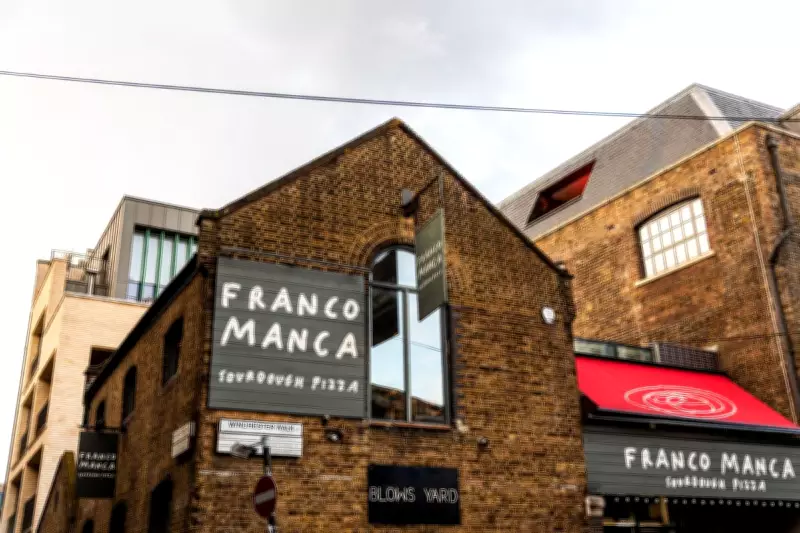
Franco Manca Shuts 16 Restaurants in Major Restructuring, Citing 'Disproportionate' Tax Burden
The popular pizza chain Franco Manca has announced the closure of 16 restaurants across the United Kingdom, blaming what it describes as "disproportionately high" taxes facing the hospitality industry. This structural overhaul is expected to cost hundreds of jobs as the company enters a formal restructuring process.
Tax Pressures Force Hospitality Shake-Up
Franco Manca, which was founded in London in 2008 and is now owned by private equity firm Fulham Shore, has pointed to high Value Added Tax (VAT) rates, significant increases to national insurance contributions, and rising minimum wage requirements as primary factors behind the difficult decision. The chain joins a growing list of UK hospitality businesses that have been forced to scale back operations in recent years, with many attributing their struggles directly to escalating tax burdens and operational costs.
Fulham Shore chief executive Marcel Khan confirmed that the pizza chain will enter a Company Voluntary Arrangement (CVA), a legal mechanism that allows businesses to negotiate with creditors to repay debts over an extended period. The company appointed advisory firm Alvarez & Marsal in February to oversee the process, with reports suggesting a potential sale of the brand is being considered.
225 Jobs at Risk as Locations Close
While Franco Manca operates approximately 70 restaurants nationwide, it remains unclear which specific locations will be shuttered. However, company officials estimate that as many as 225 positions could be eliminated through the closures. Khan emphasized that no restaurant is "immune" to the current economic pressures facing the hospitality sector, even those establishments that are "doing all the right things" operationally.
The executive specifically criticized what he characterized as disproportionately high VAT rates in the UK compared to other European nations, along with recent hikes to national insurance and the national living wage. Khan also expressed frustration with the government's refusal to extend targeted business rates relief to restaurants, noting that Chancellor Rachel Reeves recently provided a £300 million emergency package to pub owners while excluding restaurants and hotels from similar measures.
Industry-Wide Criticism of Government Policy
"As a result of these external cost pressures, we have to make sure that we are putting our business on a sustainable footing for long-term growth and development," Khan stated. "This is why we have taken the difficult decision to undertake a CVA for Franco Manca, which will see a minority proportion of our restaurants closing where they are no longer sustainable in this cost environment."
Khan added that the company is "deeply saddened" by the closures and pledged to support affected employees throughout the transition process. Fulham Shore, which also operates The Real Greek restaurant chain, was acquired by Japanese restaurant group Toridoll for £93 million in 2023. Toridoll's portfolio includes European noodle chain Wok to Walk and Japanese udon chain Marugame Seimen.
Broader Hospitality Sector Concerns
The Franco Manca announcement follows similar criticism from other restaurant industry leaders. Last week, John Vincent, founder of the fast-casual chain Leon, accused the government of effectively "killing" the restaurant industry through excessive taxation. Vincent, who repurchased his company last year, oversaw the closure of 20 Leon restaurants shortly after regaining control.
"The high street is dead," Vincent declared. "I spoke to the guy that owns one of the biggest competitors of Leon. He said restaurants are done. Everyone knows restaurants are done. This is not the market that's doing this. This is the government. It's not the consumer that doesn't want to eat in restaurants."
These developments highlight mounting tensions between hospitality businesses and government policymakers over tax structures and support measures. As restaurant chains continue to navigate challenging economic conditions, industry observers anticipate further consolidation and restructuring across the sector in coming months.




