
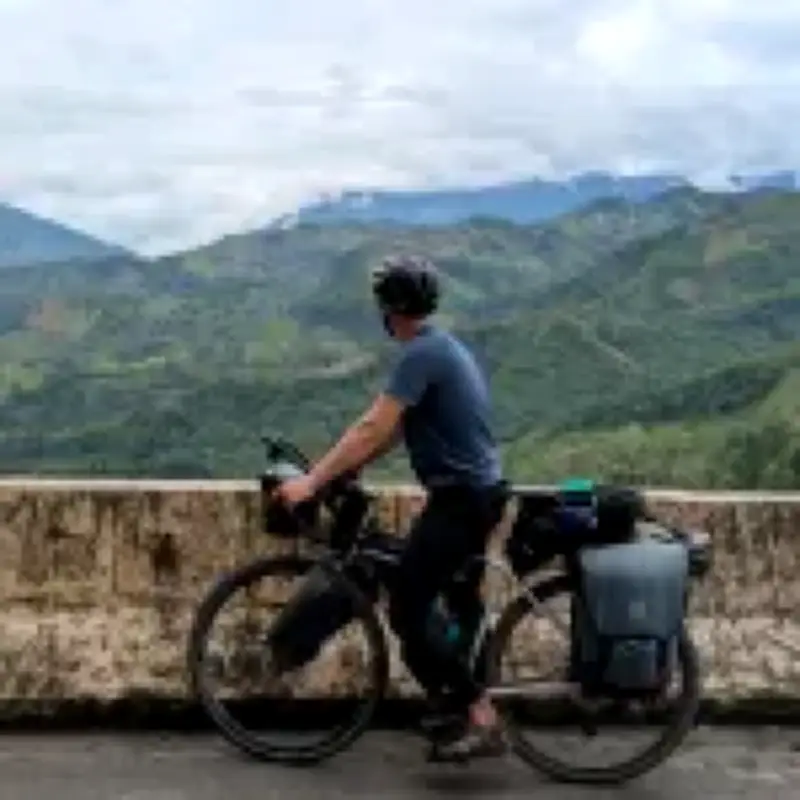
After eight months and 14,000 kilometres of cycling through Colombia, Ecuador, Peru, and Bolivia, a British couple has shared their honest verdict on a year-long bikepacking adventure from Bogotá to Ushuaia. Eline and Jonny, who left their jobs and flat in Bristol, describe the journey as “slow tourism at its best,” despite facing torrential rain, altitude sickness, and a few moments of doubt.
From Bristol to Bogotá: The Start of a 14,000km Journey
The couple began their trip in Bogotá, Colombia’s capital, on January 16, with just three changes of clothes, two bikes, a tent, and a dream. Their mission: to cycle from Colombia to Patagonia, the southernmost tip of Chile and Argentina, with an endpoint of Ushuaia, the southernmost city on Earth. They were inspired by online videos of bikepacking, which combines off-road cycling, lightweight camping, and self-supported travel.
Early in the journey, they experienced the warmth of local hospitality. In a remote Colombian village, a woman named Soyla invited them into her home, offering a shower and fresh fruit. “People might not have much here,” they noted, “but whatever they have, they’ll share.”
Planning and Packing: Lessons Learned on the Road
Before leaving the UK, the couple joined a WhatsApp group called ‘Cycling South America’ for route recommendations and shared experiences. They also used Warmshowers, a platform connecting bikepackers with locals offering a bed, garden space, or advice. They quickly learned to pack light, ditching camp chairs and pillows in favour of rock faces and clothes as cushions.
Non-negotiables include water, a water filter, and a stove. But the most important item, they say, is a Garmin inReach Mini, a satellite communicator that enables two-way texting, GPS sharing, and 24/7 emergency rescue anywhere in the world.
Highlights and Challenges: From UNESCO Cities to Altitude Sickness
The route has taken them through Cuenca, a UNESCO World Heritage city in Ecuador, and Cajas National Park, a high-altitude reserve famous for glacial lakes. In Peru, they cycled through the surf town of Máncora and visited Cusco, the historic capital of the Inca Empire and gateway to Machu Picchu. They have also crossed Bolivia’s Salar de Uyuni, the world’s largest salt flat, spanning over 3,860 square miles.
But the journey hasn’t been all scenic. On one of their first days in mountainous Colombia, they were lashed by torrential rain and had to cross a flooded rocky road on the edge of a cliff. A local man on a motorcycle stopped, hoisted their bikes onto his shoulders, and waded across, in what they called “the most heroic moment we’ve ever witnessed.” They also had to abandon the Peru Great Divide, a 1,600km dirt-road route, due to altitude sickness at 16,372 feet above sea level.
Costs and Food: An Affordable Adventure with Street Food Delights
Despite the challenges, the trip is affordable. One-way direct flights from the UK to Colombia in January average around £510 with Iberia. Hotels cost as little as £5 a night, and wild camping is free. Street food is a highlight, with meals outside cities costing around £2 per person. They’ve indulged in pork chicharron and trucha frita, which they describe as “delicious, greasy, and full of calories.”
Time Out recently ranked Lima, Peru’s capital, as the world’s best city for food in 2026, and the couple notes that street food is big business there. Bikepacking, they argue, offers a deeper experience than traditional backpacking, allowing travellers to see the “in-between” that others miss from a bus window. “It’s more about the journey than the destination,” they said.
The couple is not alone in this trend. Searches for adventure tourism have surged by 75%, and the Adventure Travel Trade Association estimates the global adventure travel market is valued at £871.6 billion. The bikepacking market alone is valued at £1.06 billion, with sites like Bikepacking.com recording millions of monthly visits.




