
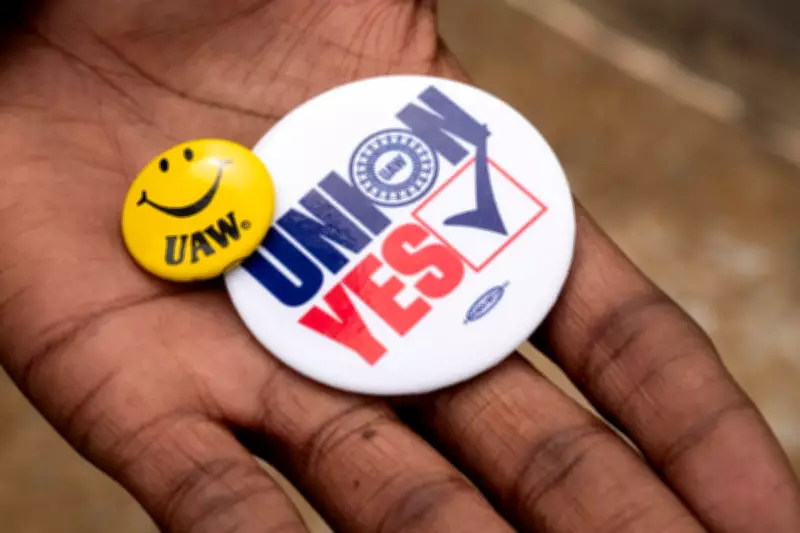
Union Members in Office: A Simple Fix for America's Broken Politics
American politics appears hopelessly fractured, with extreme polarization, massive PAC money flooding elections, and the growing influence of the wealthy creating a sense that no one can steer the country toward stability. However, a groundbreaking report from the Center for Working-Class Politics proposes a surprisingly straightforward solution: elect more union members to public office. This research, sponsored by Arizona State University's Center for Work and Democracy, highlights how candidates from labor union backgrounds could restore faith in the political system.
The Power of Union Candidates
The forthcoming report, co-authored by Jared Abbott, Benjamin Y Fong, Fred DeVeaux, Dustin Guastella, and Sam Zacher, examines the broad political impact of candidates with union experience. It finds that these individuals embody what many Americans desperately seek: politicians who speak their language, champion working people, and offer practical solutions to mend a broken system. Despite unions' long history in politics, their influence has waned due to a surge in individual donor and independent expenditure spending over the past two decades. In response, many unions have adopted a defensive stance, primarily backing incumbents perceived as the lesser evil, but this approach overlooks their greatest asset: their members.
Addressing the Representation Gap
One key reason voters, particularly those aligned with the Democratic Party, disengage from politics is a lack of relatability with candidates. Research indicates that working-class candidates constitute only 8–14% of Democratic and 5–8% of Republican congressional candidates, even though roughly half of Americans hold manual labor, service, or clerical jobs. These figures have remained stagnant since 2010, unlike improvements in gender and racial diversity. Consequently, most candidates emerge from elite circles and often fail to connect with working-class voters.
Union candidates bridge this gap by sharing similar social backgrounds with their constituents and prioritizing workplace issues on the campaign trail. The report reveals that union candidates discuss pro-worker themes 159% more frequently than non-union candidates, explaining their stronger resonance with voters. Moreover, once elected, they consistently support progressive, pro-worker legislation at higher rates than their counterparts, regardless of party affiliation or district demographics, building credibility and inspiring confidence.
Enhanced Legislative Effectiveness
Candidates and officeholders with union backgrounds also demonstrate greater effectiveness in advancing their agendas. Interviews with union politicians show that their experience in labor movements—navigating diverse factions to achieve common contract goals—provides an advantage in legislative negotiations. These leaders can quickly identify anti-worker provisions and ensure legislation considers the impact on ordinary people.
Overcoming Barriers to Entry
Despite these benefits, union candidates remain scarce. Between 2010 and 2022, less than 5% of congressional candidates reported any union-related background, with only 55 out of 1,200 candidates in 2022 having ties to unions, often weak or brief. The primary obstacle is financial, as most union candidates lack the means to support themselves during campaigns, which demand full-time attention incompatible with regular jobs. Solutions include contract provisions to protect jobs and new funding mechanisms to enable these candidates to run.
Success Stories and Future Prospects
Encouragingly, some labor federations are making strides. In New Jersey, the AFL-CIO Labor Candidate Program trains and runs about 50 union-member candidates annually, achieving a 75% win rate. Similarly, the Alaska AFL-CIO Allman Labor Candidate School, established in 2022, has run approximately 12 candidates with a 66% win rate. These successes suggest that investing in such programs could yield significant returns. As former U.S. Representative Andy Levin of Michigan noted, unions spend millions on campaigns; redirecting just 2% toward electing their members could transform the political landscape.
The positive effects extend beyond union members, as high union density in an area correlates with better wages and working conditions for all workers. Electing union candidates would advance worker interests broadly, regardless of voters' union affiliation. Previous research confirms that working-class Americans across the political spectrum desire candidates who relate to them socially, focus on economic and job issues, and exhibit credible leadership. The labor movement is rich with such individuals—it's time to empower more of them to run for office.




