
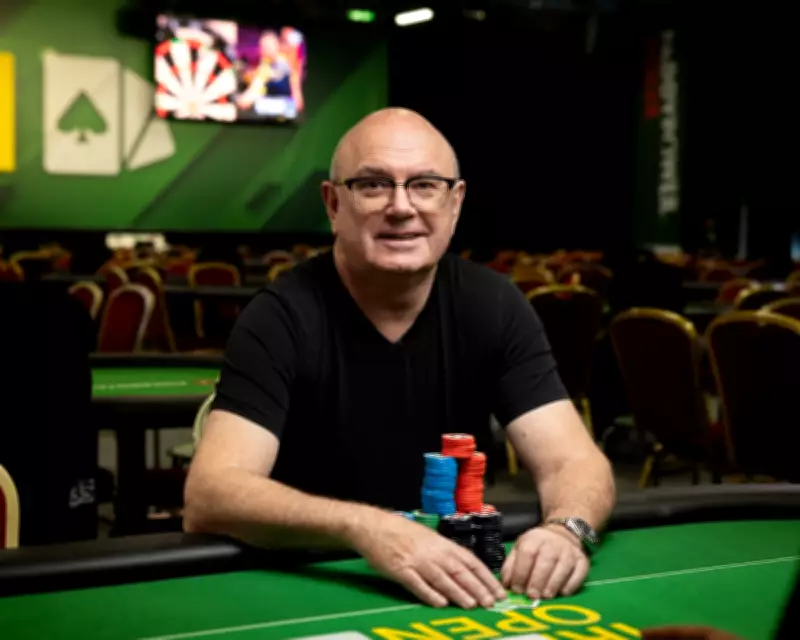
From Tech to Poker: A Londoner's Unlikely Career Shift After 60
Gary Fisher, a London resident, has embarked on a remarkable journey, transitioning from a tech professional to a full-time poker player after turning 60. His partner encouraged him to take the game seriously, noting his natural talent but lack of study. Fisher heeded the advice, diving into online courses, hiring a coach, and committing to rigorous practice. Today, he competes internationally, with recent tournaments in Cyprus, Marrakech, Amsterdam, Tallinn, and Paris, and is currently participating in the Irish Open in Dublin before heading to Melbourne.
Winning Big and Chasing Recognition
So far this year, Fisher has earned $200,000 (£150,000) in prize money, contributing to a lifetime total of $1.1 million. He ranks 755th globally and is among the top 40 players in the UK. For Fisher, success isn't just about the money; it's about recognition and mastery. He compares his drive to that of top golfers, who aim for world number one status, with earnings serving as a metric rather than the ultimate goal. He cherishes moments when peers congratulate him on achievements, such as his third-place finish in Tallinn.
The Discipline Behind the Game
Fisher's approach to poker is methodical and disciplined. On tour, he maintains a healthy lifestyle, avoiding alcohol, prioritizing sleep, exercising regularly, and using hydration salts during long matches. Games can be grueling, lasting up to 12 hours daily for weeks, requiring constant focus. He wears a simple black T-shirt, avoiding hats or sunglasses to keep his mannerisms open and communicative. Before each game, he researches opponents to develop strategies for every hand, blending mathematical reasoning, psychology, and logical analysis.
A Background in Science and Business
Growing up in Kingston upon Thames, Fisher was poor at card games but excelled in maths, later studying physics at university. He worked as a software engineer, appreciating physics for its ability to simplify complex concepts into elegant mathematical constructs. After an MBA at 31, he pursued business strategy at IBM, management consultancy, and eventually started his own tech business in his fifties. He sees poker as an extension of this analytical mindset, reducing complex game theory into actionable strategies.
Lessons in Patience and Future Aspirations
Fisher acknowledges that patience and discipline were not always his strengths, leading to past mistakes in work and relationships. Poker has taught him to build these qualities, helping him stay calm during challenging moments. He no longer seeks consultancy work, viewing himself as early in his poker career with much to achieve. His goals include winning a major title and a million-dollar prize, driven by a passion for the game's intellectual challenges.
Fisher's story highlights how a career change later in life can lead to unexpected success and personal growth. As he continues to compete, he embodies the idea that it's never too late to pursue a new path.




