
The Rise of the Portfolio Career: How Gen Z is Redefining Work
A profound transformation is sweeping through the American workforce, with Generation Z leading a seismic shift away from traditional single-career paths. According to recent Harris Poll research, a staggering 57% of Gen Z Americans now maintain side hustles, compared to just 21% among baby boomers. This movement represents more than just extra income—it's a fundamental reimagining of what constitutes a fulfilling career in today's volatile economic landscape.
Financial Bedrock Meets Creative Freedom
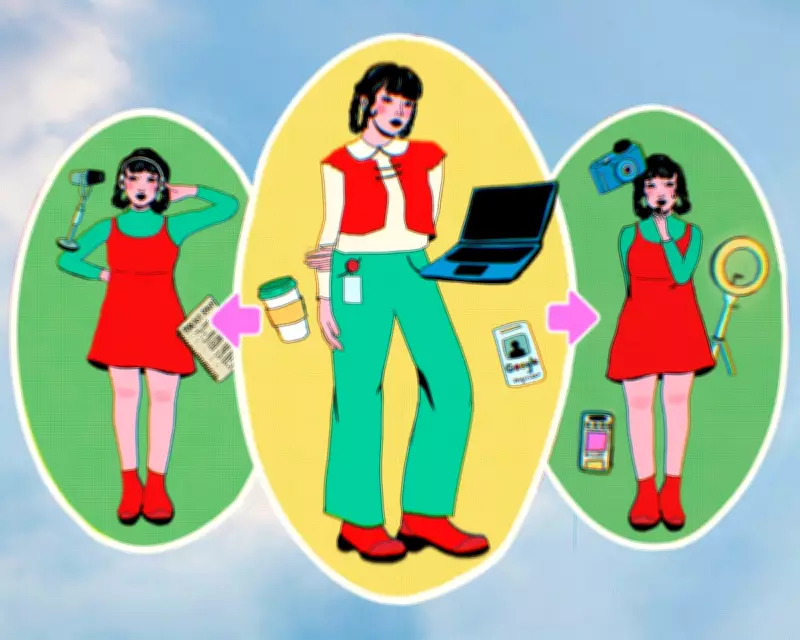
Young professionals are increasingly adopting what Citizens Bank's president of business banking, Mark Valentino, calls a "portfolio of careers." Rather than pouring all their energy into one traditional job, they're using their primary employment as financial foundation while directing passion and ambition elsewhere. Aashna Doshi, a 23-year-old software engineer at Google, exemplifies this approach. Beyond her role in security and artificial intelligence, she publishes social media content about tech life in New York City and records podcasts—sometimes managing all three endeavors in a single day.
"In my side hustles I can finally offer myself an outlet to be creative and express myself without any constraints," Doshi explained. "This is probably the biggest thing: I can represent myself as an individual with all these ambitions, skills and passion versus 'Aashna is a software engineer at Google.'"
Economic Uncertainty Fuels the Hustle Culture
The driving forces behind this trend are multifaceted:
- Job market instability: With over 150,000 tech layoffs across 550 companies last year alone, young workers are seeking safety nets
- Financial pressures: In cities like New York where annual living costs approach $64,000, supplementary income is increasingly necessary
- Generational disillusionment: Traditional pathways to success—college degrees leading to steady white-collar jobs—have proven unreliable for many
Daniel Zhao, chief economist at Glassdoor, observes that "All the traditional pathways to success haven't borne out, and now they are left with debt and a tough job market." This reality has pushed young Americans to diversify their income streams rather than relying on a single employer for financial security.
Passion Projects as Psychological Anchors
For many Gen Z workers, side hustles provide more than just financial benefits—they offer crucial psychological fulfillment. Sen Ho, a 25-year-old stationery store employee who creates digital illustrations in his spare time, represents this dimension perfectly. "If I wasn't doing my side hustle, I would be very lost in life," he confessed. "It is what keeps me going."
Ho's journey began in middle school when he sold sketches to classmates for candy money. What started as pocket change has evolved into a significant supplementary income source. "Compared to my retail job, my side hustle gives me a sense of accomplishment," he noted. "It's more challenging, creative and mentally stimulating and I can have a real impact."
The Double-Edged Sword of Constant Hustling
This new work paradigm comes with significant challenges. Ho describes a reality where "I am never off the clock"—transitioning directly from his retail job to client outreach and social media promotion for his art business. The constant juggling act can lead to exhaustion, as Doshi discovered when she initially tried splitting her time evenly among her various roles and felt "drained and burnt out as if fighting demons."
Yeong Yuh Lee, a 23-year-old freelance illustrator recently laid off from her full-time animation job, now relies entirely on her side hustle while searching for new employment. "I don't know what I would've done if I didn't hustle for clients outside of my in-studio job," she revealed, highlighting how side gigs have become essential safety nets in an era of generative AI disrupting creative industries.
Corporate America's Reckoning
As this trend accelerates, business leaders warn of impending workforce challenges. Valentino predicts "a big gap in the workforce in the next 10 years" unless employers adapt. "The onus is on corporate employers to figure out how to attract young people into jobs where they feel passionate, where there's a mission and a sense of purpose, where there's flexibility," he emphasized.
Zhao suggests that forward-thinking companies should embrace employees' side projects, provided no conflicts of interest exist. "A happy workforce is ultimately an engaged workforce," he argued, noting that the scrappy determination required for successful side hustles translates into valuable workplace characteristics.
An Irreversible Cultural Shift
This movement appears to be more than a passing trend. With barriers to entry for new ventures at historic lows and digital platforms enabling monetization of diverse skills, the very definition of "career" is undergoing permanent transformation. As Valentino concluded, "I do see there being a change in terms of what we define as a 'career' moving forward."
The Gen Z side hustle revolution represents a fundamental renegotiation of the work-life contract—one where financial stability, creative expression, and personal fulfillment are no longer mutually exclusive but increasingly interdependent in America's evolving economic landscape.




