
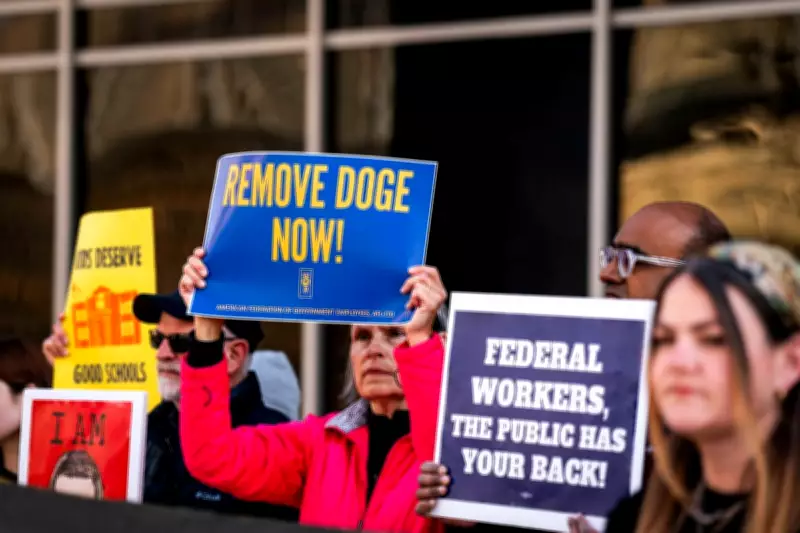
Federal Workers Grapple with Job Market Fallout After Trump-Era Cuts
In the wake of significant workforce reductions initiated under the Trump administration, federal employees in Washington DC are confronting a daunting employment landscape. Over a year since the implementation of sweeping cuts, many highly qualified workers find themselves struggling to secure new roles, with some reporting applications to hundreds of positions without success.
Personal Stories of Struggle and Uncertainty
Maggie, a former employee at the US Office of Personnel Management, faced a critical decision in early 2025. Offered a buyout amid widespread federal downsizing, she accepted to maintain health insurance through her pregnancy, only to lose her job shortly after giving birth. "I had 10 days after having my baby before I lost my job technically, and then I lost my insurance at the end of October," she recounted, highlighting the personal toll of the cuts. Maggie has since applied to numerous jobs but remains hindered by bureaucratic delays, including waiting for an ethics letter from her former agency.
Charles Melton, who spent two decades at the US Department of Agriculture, took an early retirement offer but continues to assist former colleagues with job searches. "We just got thrown away like garbage," he expressed, reflecting the frustration among affected workers. Another anonymous worker, who relocated from Michigan for a role at the National Oceanic and Atmospheric Administration, saw their probationary position cut and has applied to over 250 jobs without finding adequate employment in DC.
Operational Impacts and Agency Challenges
The reduction in federal staffing has led to operational strains across multiple agencies. Customer service at the Social Security Administration has deteriorated, with staff reassigned to handle phone lines, while the Department of Veterans Affairs reports ongoing staffing issues affecting healthcare services. Federal labor enforcement and inspections have seen significant declines, and agencies like USAID and the Consumer Financial Protection Bureau have faced severe disruptions, impacting global health initiatives and consumer protections.
A current Department of Education worker described their agency as a "skeleton of what it used to be," emphasizing the decimation of years of dedicated work. Many remaining employees, driven by a commitment to public service, continue to uphold critical functions despite increased workloads and hostile conditions. "They're sticking with it because they care, because they're good people, doing good work," noted an anonymous federal employee.
Administration Response and Future Outlook
The White House declined to comment, referring inquiries to the Office of Personnel Management (OPM) and the Office of Management and Budget, which did not respond to requests. In a statement, OPM Director Scott Kupor defended the workforce reshaping, stating it aims to build a government that works for the American people by streamlining operations and modernizing talent management. However, affected workers argue the cuts have led to inefficiencies and a loss of institutional knowledge, with Melton warning, "I don't think the American public realizes how much has been lost yet."
As federal workers navigate this challenging job market, the long-term effects of the reductions on government efficiency and public services remain a pressing concern, underscoring the human and operational costs of large-scale workforce changes.




