
The AI Exodus: White-Collar Professionals Fleeing to Trades Amid Job Insecurity
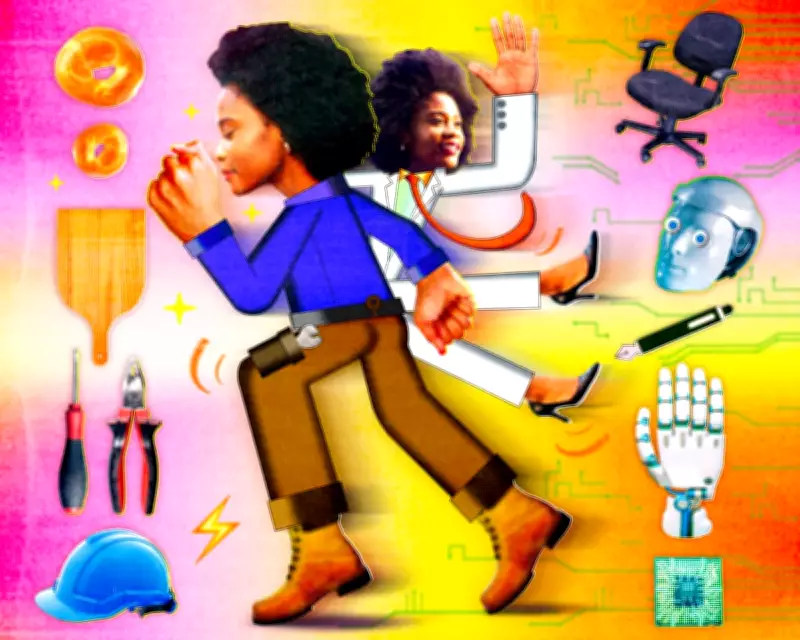
As artificial intelligence continues to reshape the professional landscape, a growing number of white-collar workers are making a dramatic career pivot. Faced with rising AI-driven job losses in sectors like writing, editing, and law, these individuals are abandoning their traditional career paths to retrain in more hands-on, trade-based professions. This shift represents a fundamental rethinking of job security in the age of automation.
From Words to Wellness: A Writer's Journey to Therapy
Jacqueline Bowman, a 30-year-old California-based writer, had dedicated her life to the written word since childhood. After studying journalism and building a freelance career in content marketing, she found her work evaporating in 2024 as clients embraced AI tools. "I started to get clients telling me how great it was that they didn't need writers anymore," Bowman recalls. Offered AI editing work at half her previous rate, she discovered the role required double the time due to extensive fact-checking and rewriting of AI-generated content.
By January 2025, Bowman could no longer afford health insurance, prompting her to accelerate her wedding plans to access her partner's coverage. Recognizing writing was no longer viable, she remembered a psychology elective from college and is now retraining as a marriage and family therapist. "It's not AI-proof," she admits, "but there will be people who want human connection after AI has impacted their lives." Though relying on loans and her husband's support, she considers herself fortunate to have this retraining opportunity.
Academic Editing to Artisan Baking: A Swedish Transition
Janet Feenstra, a 52-year-old American living in Malmö, Sweden, made a similar transition from academic editing to baking. Having worked as a freelance editor and university language specialist since 2013, she saw the writing on the wall as institutions began discussing AI adoption. "I felt scared. I'm divorced with two children and need financial security," she explains.
Enrolling in culinary school, Feenstra faced significant challenges: moving to a smaller flat, her sons living full-time with their father, and accepting lower pay for physically demanding work. After five months in a bakery where she hand-rolls dough and enjoys workplace camaraderie, she has secured a new flat with room for her children. "White-collar work isn't all it's cracked up to be," she reflects, "but adjusting to being seen as working-class requires rethinking our job-based identities."
The UK's Vocational Training Surge
This trend is reflected in UK education statistics. Angela Joyce, CEO of London's Capital City College, reports steady growth in trades-based qualifications across engineering, culinary arts, and childcare. "We're seeing a definite shift away from traditional academic routes," she notes, attributing this partly to AI concerns and graduate unemployment. A 2023 Department for Education report confirmed professional occupations are particularly exposed to AI, especially in finance, law, and business management.
Safety Professional to Electrician: A Preventative Move
Richard, a 39-year-old chartered occupational health and safety professional from Northampton, made a preemptive career change after 15 years in his field. Observing AI's potential to automate policy writing and safety systems, he worried organizations might prioritize cost-cutting over safety. Retraining as an electrical engineer, he took a significant pay cut but believes trades offer greater resilience against automation. "You need roles requiring high dexterity and problem-solving," he advises, though acknowledges even trades might eventually face AI disruption.
Expert Perspectives on AI's Labour Market Impact
Carl Benedikt Frey of Oxford's Internet Institute suggests manual work remains harder to automate but cautions against overreacting to hypothetical scenarios. "We're beginning to see AI impact entry-level work," he says, though other factors like interest rates contribute. He has revised his famous 2013 prediction that 47% of jobs were at automation risk, noting technologies like self-driving cars have developed slower than expected.
Dr Bouke Klein Teeselink of King's College London, whose October 2025 study identified software engineering and management consultancy as particularly vulnerable, maintains historical perspective: "Technological advances haven't caused mass unemployment before, but AI might be different as humans lose their absolute advantage." He recommends developing AI collaboration skills.
Adapting Through Entrepreneurship and Compromise
Some are embracing AI rather than fleeing it. Birmingham entrepreneurs Fayyaz Garda and Arun Singh Aujla, both 25, are launching an AI consulting business to help companies implement automation for tasks like email outreach while preserving human management roles. Others face difficult compromises: Paola Adeitan, 31, abandoned her solicitor ambitions despite law degrees, fearing AI's impact on entry-level legal roles, while Bethan, 24 from Bristol, returned to painful hospitality work after her university IT helpdesk job was replaced by an AI kiosk.
The Physical and Emotional Toll of Career Transitions
Those switching to trades confront physical challenges. Richard notes younger electricians recover faster from injuries and work longer hours, while Feenstra considers bakery work's sustainability as she ages. The emotional impact extends to parenting: Feenstra struggles to advise her sons on career paths when even her own choices feel uncertain. "How am I supposed to advise them when I don't know if what I'm doing is right?" she questions.
Enduring Human Elements in an Automated World
Experts identify areas likely to remain human-centric. Klein suggests ballet, theatre, and football will continue valuing human performers, while Frey emphasizes social skills and expertise will grow in importance for guiding AI effectively. However, questions remain about developing expertise if entry-level roles disappear and about broader economic impacts if widespread job losses occur.
As Frey concludes: "It matters greatly if significant disruption happens in five years or twenty. While there are reasons for concern, we're not yet at the point where everyone will be out of work." For now, professionals like Bowman, Feenstra, and Richard are taking matters into their own hands, trading office chairs for therapy rooms, bakeries, and construction sites in search of stability in an uncertain future.




