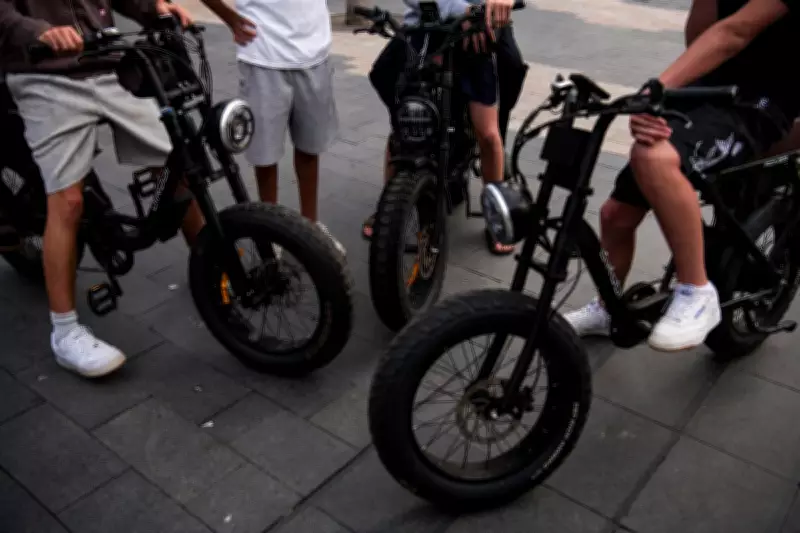
New data from a major Sydney hospital has revealed a dramatic surge in e-bike related injuries, with presentations doubling in just one year and sparking warnings from trauma specialists about a potential public health emergency.
Trauma Cases Skyrocket at St Vincent's Hospital
St Vincent's Hospital in Sydney's CBD has released concerning statistics showing that e-bike related presentations to their emergency department reached 200 cases in 2025. This represents a 100% increase from the 103 cases recorded in 2024 and a staggering 350% jump from the 45 presentations documented in 2023.
Dr Tony Grabs, Director of Trauma at St Vincent's Hospital, emphasised the severity of these injuries, noting that approximately half of the patients required surgical intervention. "You can break ribs. You can have air leaking out of your lung. You can have a rupture of your bowel because something's hit it – you might require a big operation on the stomach or you might need tubes placed into your chest," Dr Grabs explained.
Patterns of Injury and Risk Factors
The hospital's data reveals several concerning patterns among e-bike injury cases:
- More than half of patients reported travelling at speeds exceeding 25km/h
- Over 50% of injuries occurred during nighttime hours
- Alcohol and other substances were frequently contributing factors
- More than half of 2025's patients required hospital admission
- Nearly 10% of admitted patients needed intensive care treatment
Dr Grabs highlighted that these injuries often prove more severe than those sustained on traditional bicycles due to the higher speeds involved. "People riding at higher speeds who hit something stationary like a car or a wall undergo a 'de-acceleration' that can drive handlebars into the stomach or chest," he noted.
Demographic Trends and Hospital Response
While the St Vincent's data captures patients aged 15 and older, the Sydney Children's Hospital network has reported similar increases in paediatric e-bike injuries. The majority of adult patients at St Vincent's are in their 30s, though medical staff report anecdotally that patients are getting progressively younger.
The hospital is planning to collect more detailed data in future, including specific information about the types of e-bikes involved in accidents. Early observations suggest rental bikes and illegally modified models feature disproportionately in serious incidents.
Broader Australian Context
This surge in e-bike injuries extends far beyond St Vincent's Hospital, with New South Wales recording 233 injuries and four fatalities in just the first seven months of 2025 – already surpassing the 226 injuries documented throughout all of 2024.
Queensland has faced similar challenges, with preliminary police data indicating 239 e-bike crashes in 2025, including four fatal incidents. The national scale of this issue prompted Australia's health minister to recently describe the situation as "absolutely devastating."
Regulatory Changes and Safety Measures
In response to growing safety concerns, regulatory changes have been implemented across Australia. Following relaxed import standards in 2021, authorities tightened requirements in late 2025, mandating that road-legal e-bikes must:
- Have motors that only activate when the rider is pedalling
- Be restricted to maximum speeds of 25km/h
- Operate with power limited to 250 watts
New South Wales has aligned with these standards, reducing permitted power from 500 watts to 250 watts. However, enforcement remains challenging, particularly regarding illegally modified bikes that can reach much higher speeds.
Medical Perspectives on Prevention
Dr Grabs emphasised the particular danger of head injuries in e-bike accidents, noting that while chest and abdominal injuries can often be treated surgically, "the one we can't really control much is the head injury. We have to wait and see whether they come out of having a serious head injury."
The trauma specialist also highlighted the deceptive power of e-bikes, particularly for inexperienced riders. "You don't understand the power of an e-bike until you get on one," he warned, citing cases where individuals have suffered serious injuries during their first e-bike experience, sometimes after consuming alcohol.
As e-bike popularity continues to grow across Australian cities, medical professionals are calling for increased public awareness about their potential dangers, particularly when operated at high speeds, during nighttime hours, or by inexperienced riders. The data from St Vincent's Hospital serves as a stark reminder of the serious health consequences that can result from e-bike accidents, prompting renewed focus on safety education and regulatory enforcement.