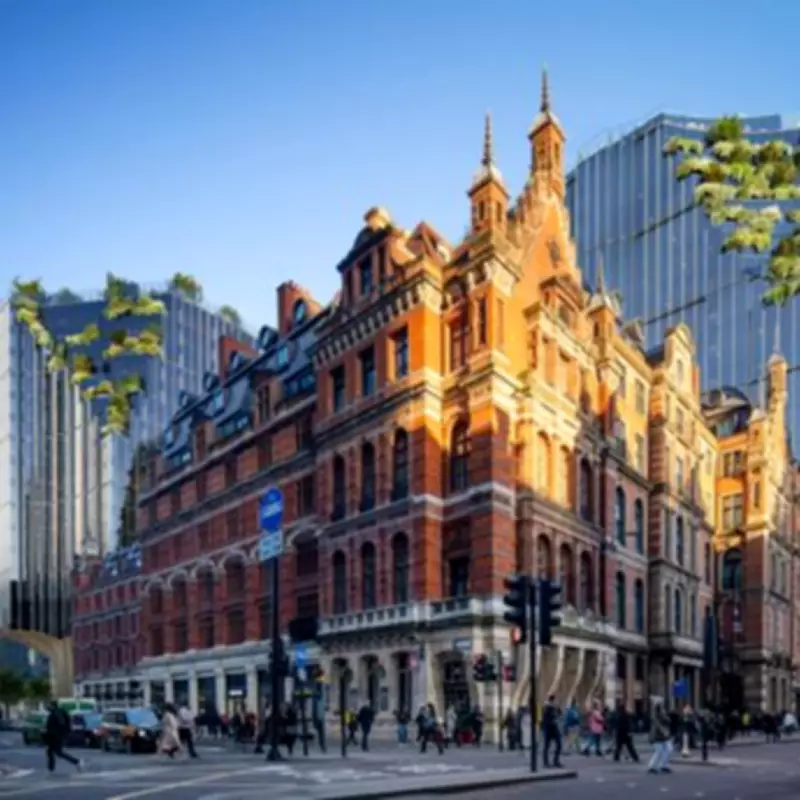
Controversial Liverpool Street Tower Scheme Moves Closer to Reality
Planning officers have formally recommended approval for Network Rail's highly contentious £1.2 billion redevelopment of Liverpool Street Station, setting the stage for a crucial vote by City of London Corporation councillors on February 10. The proposal, which has sparked significant opposition from heritage groups and local residents, would see a substantial 19-storey office block constructed above the Grade II-listed Victorian station.
Heritage Concerns Versus Modernisation Needs
The ambitious scheme has generated substantial controversy, with more than 2,000 formal objections filed against the plans compared to approximately 1,100 expressions of support. Heritage organisations have been particularly vocal in their opposition, arguing that the development would cause substantial harm to the historic station's character and significance.
Griff Rhys Jones, President of The Victorian Society, has been campaigning vigorously against the proposals, stating that London "deserves better" than the current designs. He emphasised that Liverpool Street, as Britain's busiest station with 98 million visitors recorded in 2025/26, should function as "more of a gateway to the railway age and a triumphant station" than what Network Rail has proposed.
The Twentieth Century Society has expressed serious concerns about the impact on the station's listed status and the surrounding Bishopsgate Conservation Area. In a detailed submission, caseworker Gus Wray noted that while improvements to operational efficiency and accessibility were necessary, the organisation remained "not convinced that the only way to deliver this essential work is through a development of this scale on this site."
Balancing Preservation with Progress
Network Rail's proposal represents the second attempt to secure approval for redeveloping the crucial transport hub, which serves as a key gateway into the Square Mile and connects multiple transport networks including the Underground and Elizabeth Line. The company argues that constructing the office tower is essential to fund vital station upgrades, including improved accessibility and increased capacity to accommodate projected passenger growth to 158 million by 2041.
In their recommendation report, planning officers acknowledged that the scheme would "entail the loss of significant historic fabric, causing harm to the station's significance." However, they concluded that the substantial benefits in terms of enhanced capacity, accessibility improvements, and environmental upgrades around Liverpool Street Station justified approval.
The officers wrote: "Ultimately, the proposal would significantly upgrade Liverpool Street Station and deliver density in a suitable and sustainable location; as such, it would advance the strategic and business objectives of the City, uniquely so in view of the transformational transport benefits flowing from the proposal."
Alternative Proposals and Wider Objections
Notably, Historic England provided comments on the scheme but did not formally oppose it, while other significant heritage voices raised substantial concerns. St Paul's Cathedral expressed "deep concern" about potential harm arising from the development, with Surveyor to the Fabric Oliver Caroe questioning whether all options had been meaningfully explored to eliminate potential damage.
Campaigners have warned that the redevelopment could cause up to ten years of disruption to services including the London Overground, adding to concerns about the project's wider impact. Meanwhile, an alternative proposal developed by John McAslan + Partners, the architects behind King's Cross Station's successful redevelopment, has gained support from heritage groups including SAVE Britain's Heritage.
This alternative scheme claims to involve almost no demolition, generate fewer CO2 emissions, and cost significantly less than Network Rail's proposal while still providing necessary office space. John McAslan explained that their approach seeks "to embrace the past, present and future in a way that celebrates transport architecture by retaining and protecting the station's historic fabric and also future-proofs it."
The Path Forward
Ellie Burrows, Managing Director for Network Rail Eastern Region, welcomed the planning officers' recommendation, stating: "The City's recommendation for approval has recognised the clear need to transform Britain's busiest station. With passenger numbers forecast to reach 158 million by 2041, it is time to act."
She emphasised that the proposals would "improve accessibility, capacity and the everyday experience for those who rely on Liverpool Street" while creating "a future-ready station that delivers for the long-term and becomes a destination in its own right."
If approved by the City of London Corporation, the plans will progress to London Mayor and Communities Secretary Steve Reed for final consideration before official approval can be granted. The decision represents a critical moment in balancing heritage preservation with the practical necessities of modernising Britain's busiest railway station for future generations.