
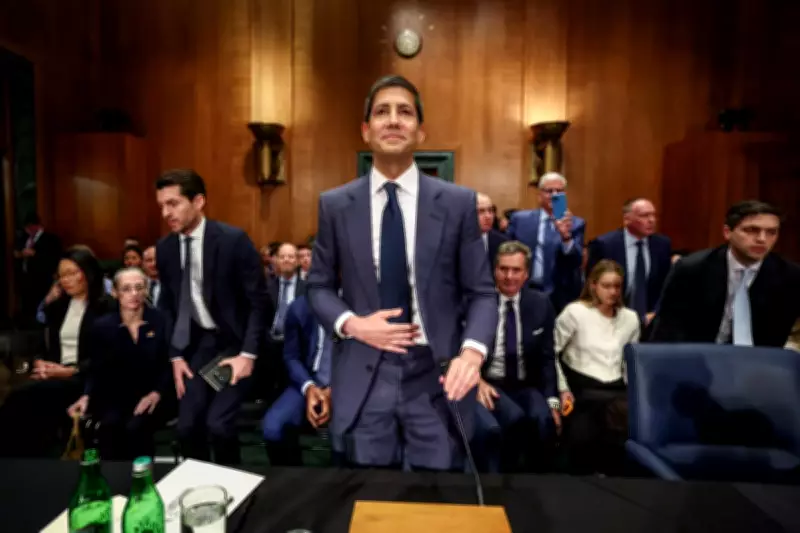
The US Senate is expected to confirm Kevin Warsh this week as chair of the Federal Reserve, as Donald Trump continues his campaign to influence the world’s most important central bank. Warsh would succeed outgoing Fed chair Jerome Powell, marking a significant shift in the leadership of an institution that holds immense sway over the US economy.
Warsh's Background and Stance on Interest Rates
Kevin Warsh served on the Fed’s board as a governor from 2006 to 2011, earning a reputation as an “inflation hawk” during the 2008 recession. He advocated for higher interest rates to combat rising prices. However, since Trump began his second term, Warsh has aligned himself with the president’s view that interest rates are too high. In a Wall Street Journal op-ed last November, he called the Fed’s leadership “broken” and described the institution as one “whose reach has extended far beyond its grasp”.
Political Divisions and Independence Concerns
The confirmation vote is expected to be split along party lines. Democrats criticize Warsh as Trump’s “sock puppet”, especially after the president pushed past traditional boundaries between the White House and the nonpartisan Fed. During his Senate testimony, Warsh pledged to be an “independent actor” as Fed chair, but resisting White House pressure may prove challenging given Trump’s legal assault on the central bank for not complying with his wishes. When questioned by Democrats, Warsh refused to answer whether Trump lost the 2020 election.
Trump's Battle with the Fed
Trump’s conflict with the Fed escalated into a criminal investigation against outgoing chair Jerome Powell, whom Trump accused of fraud over budget overruns in renovations at the Fed’s headquarters. The Justice Department ended its investigation after a Republican senator threatened to hold up Warsh’s nomination. Powell announced last month that he would remain on the Fed’s board as a governor until the renovation inquiry is “well and truly over with transparency and finality”.
In his final press conference as chair, Powell noted Warsh’s testimony about withstanding political pressure and said he would “take him at his word”. However, Powell also made pointed remarks about the current risk to the Fed’s independence, which is crucial for economic health. “The institution is being battered over these things. We’re having to resort to the courts to enforce our ability to make monetary policy without political considerations,” Powell stated. “I’d like to think we can get out of that era and go back to respecting what the law says and what custom has been.”
The Fed’s influence spans from the job market to mortgage rates, and its decisions are closely watched by investors on Wall Street. Warsh’s confirmation comes at a turbulent time, as the central bank faces intense scrutiny from Trump for not lowering rates further.




