
Navigating Economic Anxiety in an Era of Global Crises
When confronted with large-scale world crises, many individuals, including experts, advocate for a surprisingly simple approach: do nothing. This philosophy aligns with traditional advice during market volatility—avoid checking investments and resist making impulsive changes. Similarly, when facing a bear in the wild, the recommended response is to stand still, unless specific circumstances require noise-making. This avoidant mindset hinges on the comforting notion that "it'll probably be fine," yet recent events challenge that optimism.
The Cold Reality of Current Crises
This week, as Tehran mocked U.S. peace talk pretenses, a chilling alternative emerged: what if this time is different? With ongoing war in Iran and a deepening energy crisis, fears of soaring interest rates reminiscent of the 1970s have resurfaced. Media headlines amplify anxiety, from the Financial Times warning of borrowing costs at 18-year highs to Telegraph columnists discussing petrol stockpiles. NPR's question about whether the Iran war could trigger World War III adds to the gloom, while a New York Times piece by a former hedgefunder turned Treasury official predicts a crisis worse than 2008.
Beyond media reports, city traders have shifted expectations, now pricing in four quarter-point interest rate rises by 2026—a stark reversal from earlier predictions of rate cuts this year. Interest rates serve as a canary in the coalmine, signaling potential broader economic shocks. Even traditional escape fantasies, like moving to Australia, have been undermined by European Commission President Ursula von der Leyen's warning that distance offers no protection in today's interconnected world.
Historical Context and Modern Realities
Some voices offer perspective, recalling that UK interest rates reached 17% in 1979, yet people survived. However, the financial landscape has drastically changed. In 1979, the average loan was £11,000, with borrowers typically taking on two to two-and-a-half times their annual salary. Today, the average mortgage in London approaches £300,000, while first-time buyers nationwide face averages of £210,000, against a median full-time UK salary of £39,039 in 2025.
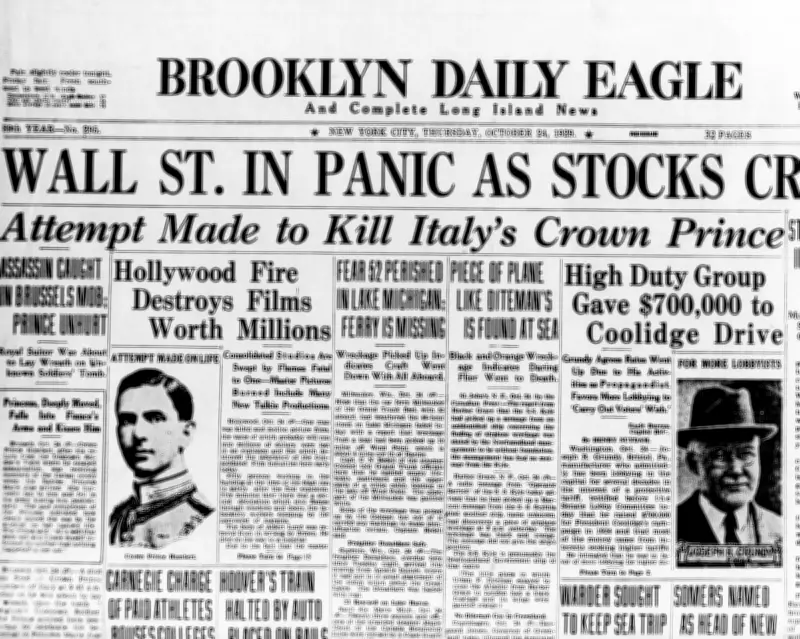
Recent history provides mixed lessons. The COVID-19 pandemic delivered a brutal economic shock, yet financial systems recovered. The U.S. stock market reached new highs within five years of the 2008 crisis. However, the 1929 crash offers a sobering counterpoint, with the stock market taking two decades to recover after losing 90% of its value.
Personal Strategies for Uncertain Times
At the individual level, options are limited. Short of withdrawing cash and hiding it under the bed, people face two choices: abruptly halt major life decisions—such as buying a house or changing careers—until clarity emerges, or proceed with caution, accepting that paralysis rarely helps. The latter approach embraces anxiety while maintaining momentum, grounded in the hope that "it'll probably be fine."
Ultimately, whether influenced by expert recommendations or personal temperament, the response to crisis often boils down to a balance between fear and action, with history as both a warning and a guide.




