
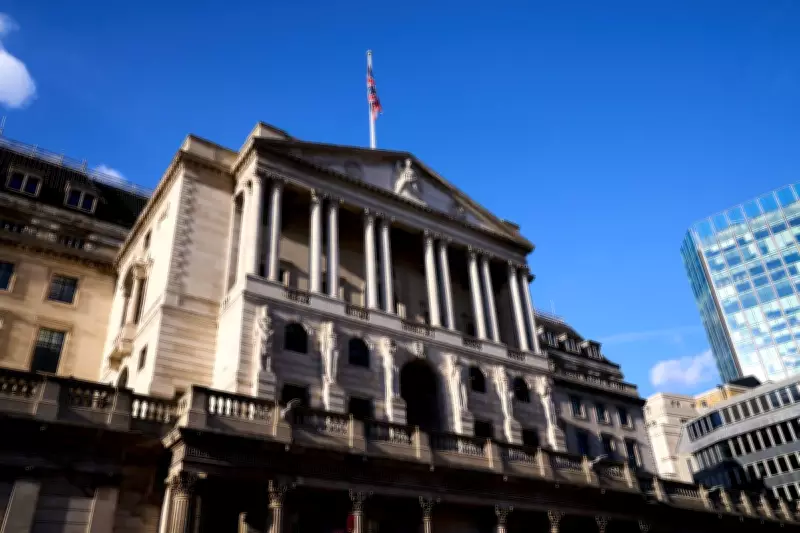
Bank of England Stands Firm on Private Credit Stress Test Timeline
In a decisive move, the Bank of England has firmly rejected calls from parliamentary peers to expedite its first-ever stress test of the private credit industry. This inaugural System-wide Exploratory Scenario, designed to assess the resilience of so-called shadow banking, will proceed according to the original schedule, with a final report expected in early 2027.
Parliamentary Pressure and Central Bank Resistance
The House of Lords' Financial Services and Regulation Committee had urged the central bank to treat the stress test as a matter of urgency. In a January report, the committee highlighted insufficient data on private markets and warned of potential systemic risks to the UK's financial ecosystem. While welcoming the Bank's initiative to mimic its biannual banking sector probes by testing major private credit firms under hypothetical scenarios, the peers pressed for accelerated progress and more frequent updates.
However, in a letter seen by City AM, Governor Andrew Bailey reaffirmed the Bank's commitment to its December-announced timeline. Bailey emphasized the need to be mindful of the constraints faced by participating firms, stating that firm engagement and analysis would largely be completed in 2026, with publication following in 2027.
The Shadow Banking Landscape Under Scrutiny
Unlike the traditional banking sector, private credit operates under lighter-touch regulation, meaning the Bank cannot compel firms to participate. Nevertheless, industry giants including Oaktree, Carlyle, and London-listed ICG have voluntarily signed up for the probe. This cooperation comes amid growing unease about the shadow banking industry's health, particularly following a series of high-profile company collapses in late 2025.
The sector faces intensified scrutiny due to its financial links to traditional banks, opaque lending practices, and efforts to attract retail investors. Recent turmoil has seen major US direct lenders like Blackrock, Blackstone, and Blue Owl gate withdrawals from flagship private credit funds after facing waves of redemption requests. Share prices for Blue Owl and Blackstone have plummeted approximately 40 percent since the start of the year, while Ares and Apollo have seen valuations drop by 34 percent and 20 percent, respectively, in 2026.
Artificial Intelligence Compounds Concerns
Adding to the industry's challenges is the disruptive potential of artificial intelligence. Public companies with AI-exposed business models have experienced significant sell-offs as investors reassess barriers to entry in sectors like software and wealth management. This trend, dubbed the 'Saas-pocolypse,' has affected several private credit players with substantial exposure to software loans.
Morgan Stanley analysts predict that default rates across the shadow banking sector could reach as high as eight percent due to AI advances. They note that software loans present particularly challenged credit fundamentals, featuring the highest leverage and lowest coverage ratios across major sectors. This complex backdrop underscores the critical importance of the Bank of England's stress test, even as its timeline remains unchanged despite parliamentary pressure.




