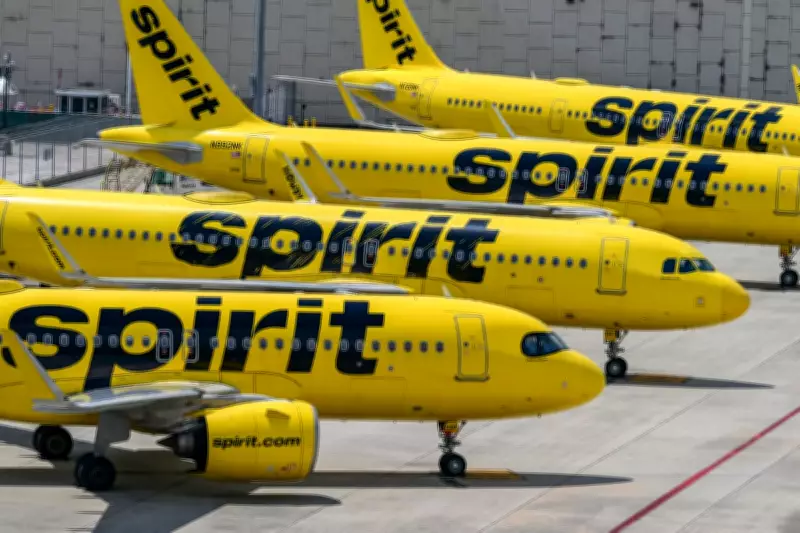
Spirit Airlines abruptly ceased operations in the early hours of May 2, 2026, grounding its fleet of bright yellow aircraft and leaving thousands of passengers stranded across the United States. The last flight landed after midnight in Dallas, Texas, marking the end of a 34-year journey for the discount carrier. The collapse has triggered a fierce political blame game between Republicans and Democrats, while the government scrambles to assist affected travelers and employees.
Government Response and Passenger Impact
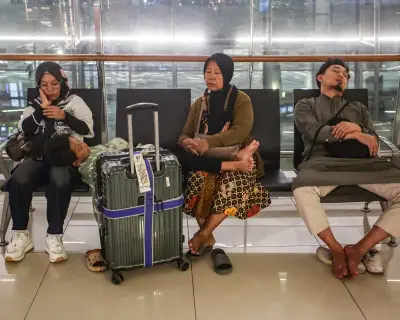
US Secretary of Transportation Sean Duffy warned passengers not to show up at airports for Spirit flights, stating, “There will be no one here to assist you.” He outlined measures for customers to obtain refunds or find discounted flights on other airlines. Spirit’s airport check-in desks sat empty nationwide, and at Orlando International Airport, departure screens displayed bright red notifications of canceled flights. Traveler Angela Moreno, booked to fly from Fort Lauderdale to Nashville for a wedding, told NBC News, “The whole family is going there from different states, so it’s very shocking. There’s many people who cannot attend the wedding as of now.” With alternative flights priced at $600, she doubted she would make it.
Political Blame Game
Secretary Duffy dismissed the war in Iran as a cause, noting that Spirit was “in dire straits long before the war with Iran.” He added that the company had filed for bankruptcy multiple times. Republicans blamed the Biden administration for blocking a $3.8 billion sale of Spirit to JetBlue, citing antitrust concerns. Representative Thomas Massie posted on X, “Biden took the unprecedented step of using the Dept of Transportation AND the DOJ to block a merger of JetBlue and faltering Spirit. That block and high fuel prices have led to Spirit’s demise.” Senator Elizabeth Warren countered, “Spiking fuel prices from Trump’s war was the nail in the coffin for twice-bankrupted Spirit airline. Republicans are desperate to shift blame from higher costs hitting families.” She also noted that the JetBlue merger was blocked by a judge appointed by Ronald Reagan.

Failed Bailout Talks
Talks to bail out the company stalled when creditors, including Ken Griffin’s Citadel LLC, Ares Management Corp, and Cyrus Capital, opposed a government plan to take 90% of the company in exchange for a $500 million bailout. The lenders made a counterproposal but no agreement resulted. Duffy stated that a deal was possible but “had to be a good deal,” and the failure was due to “a creditor issue.” He added, “From the government’s perspective, we oftentimes don’t have half a billion dollars laying around in a spare account that we can put into a bailout of an airline.”
Social Media Reaction
On social media, travelers expressed nostalgia and frustration. User @IUTruthtellers2 posted, “Goodbye SpiritAirlines. Those of us in the ‘D’ (Detroit), or previously known as your Second Hub of #DTW, will miss ya.” Reddit user AioliUpset7805 wrote, “They truly were one of the last cheap ‘get me there as fast and cheap as possible’ options. I’ll miss them.” A Spirit pilot from Las Vegas shared, “I always took great pride in knowing we were saving people money and allowing those to travel who couldn’t afford to otherwise. To shut down forever tonight has been one of the saddest experiences of my life.”
Spirit’s History and Operations
Spirit Airlines operated throughout the US, Latin America, and the Caribbean. Founded in 1983 in Detroit as Charter One Airlines, it later became known for its ultra-low-cost model. The historic Marine Air Terminal at LaGuardia Airport, Spirit’s New York hub, stood empty on Saturday, with a notice on the door declaring the airline was no more. According to aviation data firm Cirium, Spirit had around 4,000 domestic flights scheduled through May 15.