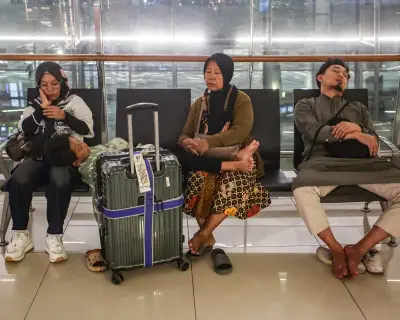
Ryanair has sent a letter to 29 European countries, including France, urging them to suspend the new Entry/Exit System (EES) until September, arguing that the system is causing excessive delays for passengers. The EES, which became fully operational on April 10, requires travelers from the UK and other non-EU countries to provide fingerprints and photographs at EU border points.
In its letter, Ryanair's chief operations officer, Neal McMahon, stated: 'Governments across Europe are attempting to roll out a half-baked IT system in the middle of the busiest travel season of the year, and passengers are paying the price, being forced to endure hours-long passport control queues and in some cases, missing flights.' McMahon added that the solution is already provided under EU law (Regulation 2025/1534), which allows governments to suspend EES until September, just as Greece has done.
The airline reported that queue times at Beauvais, Marseille, and Nantes—popular destinations for British tourists—are already ranging from one to two hours, and sometimes longer. Ryanair criticized French authorities for failing to ensure adequate staffing, system readiness, or sufficient kiosks, despite having over three years to prepare for the system's full implementation.

Greece announced last month that it would remove the EES requirement for UK citizens, citing concerns about chaos during the peak summer season. Eleni Skarveli, director of the Greek National Tourism Organisation in the UK, said the decision would 'ensure a smoother and more efficient arrival experience in Greece' and reduce waiting times. The move has been widely welcomed, given the thousands of UK travelers arriving daily on Greek islands such as Corfu, Crete, and Rhodes.
What is the EES system and how does it work?
The Entry/Exit System is a digital system that replaces physical passport stamps at border points across the European Union. Travelers from non-EU countries, including the UK, are required to use the system. When crossing into an EU country for the first time, third-country nationals must register their passport details and biometric data, including fingerprints and facial pictures, at self-service kiosks. This data, along with entry and exit records, is stored for future visits. Subsequent visits only require biometric verification, which can speed up the process. Border officials may also ask about accommodation, financial means, insurance, and return tickets.
Children are not exempt from the checks, although those under 12 do not need to provide fingerprints; however, they must still have their faces scanned.
Ryanair's plea comes as the summer holiday season approaches, with the airline seeking to avoid disruptions for its passengers, many of whom are traveling with young families. The airline has called for a suspension of the system until September, when the peak travel period subsides.