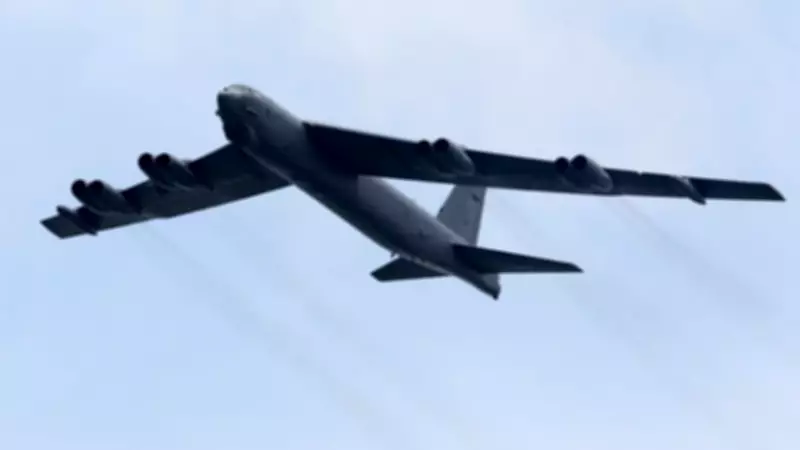
The Enduring Legacy of America's B-52 Bomber Fleet
When the United States needs to project military power across the globe, defense planners consistently turn to an aircraft that first entered service during the Kennedy administration. The Boeing B-52 Stratofortress, specifically the H model introduced in 1961, remains the backbone of America's strategic bomber force more than six decades later.
Engineering Longevity Through Modernization
Rolls-Royce has begun equipping these Cold War-era nuclear-capable bombers with advanced new engines that will extend their operational lifespan through at least the 2050s. This significant upgrade program ensures that aircraft originally designed when Dwight Eisenhower occupied the White House will continue flying well into the 21st century.
Currently, 76 B-52H bombers remain in active service with the United States Air Force, comprising approximately half of the nation's total bomber inventory. These aircraft are reportedly en route to the United Kingdom following Prime Minister Keir Starmer's authorization for American military assets to utilize British bases for defensive operations against Iran.

Unmatched Capabilities and Firepower
The B-52's enduring relevance stems from its formidable combination of payload capacity, range, and operational economics. Affectionately nicknamed BUFF (Big Ugly Fat Fella) by aircrews, the Stratofortress can carry approximately 70,000 pounds of ordnance, including precision-guided munitions, gravity bombs, mines, and various missile systems.
Key operational specifications include:
- Maximum payload of 31,751 kilograms across internal and external stations
- Capacity for up to 20 air-launched cruise missiles on the H model
- Combat radius of 8,800 miles, extendable through aerial refueling
- Maximum speed of 650 miles per hour
- Lower operating costs compared to newer bomber platforms
The aircraft maintains dual-capability for both conventional and nuclear missions, carrying everything from precision-guided conventional weapons to nuclear-armed cruise missiles. A standard crew consists of five personnel: aircraft commander, pilot, radar navigator, navigator, and electronic warfare officer.
Decades of Combat Provenance
Originally conceived as part of America's nuclear deterrent during the Cold War, the B-52 has evolved into a versatile conventional strike platform that has participated in nearly every major US military engagement since Vietnam.
Notable operational deployments include:
- Extensive carpet-bombing campaigns during the Vietnam War, including Operation Linebacker II in 1972 when B-52s delivered over 20,000 tons of explosives on North Vietnam in just 11 days
- Critical roles in Operation Desert Storm during the 1991 Gulf War and the 2003 invasion of Iraq
- Approximately 1,800 combat sorties against ISIS forces in Syria and Iraq under President Barack Obama
- Current operations against Iran ordered by President Donald Trump
The aircraft's mere presence often serves as a diplomatic instrument and strategic signal. In recent years, B-52 deployments along the Venezuelan coast preceded the capture of former president Nicolas Maduro, demonstrating how the bomber's reputation alone can influence geopolitical dynamics.
This continuous modernization program, combined with the aircraft's proven combat effectiveness and strategic flexibility, ensures that B-52 bombers will remain a cornerstone of American air power for decades to come, bridging generations of military technology while maintaining their status as one of history's most formidable aerial platforms.