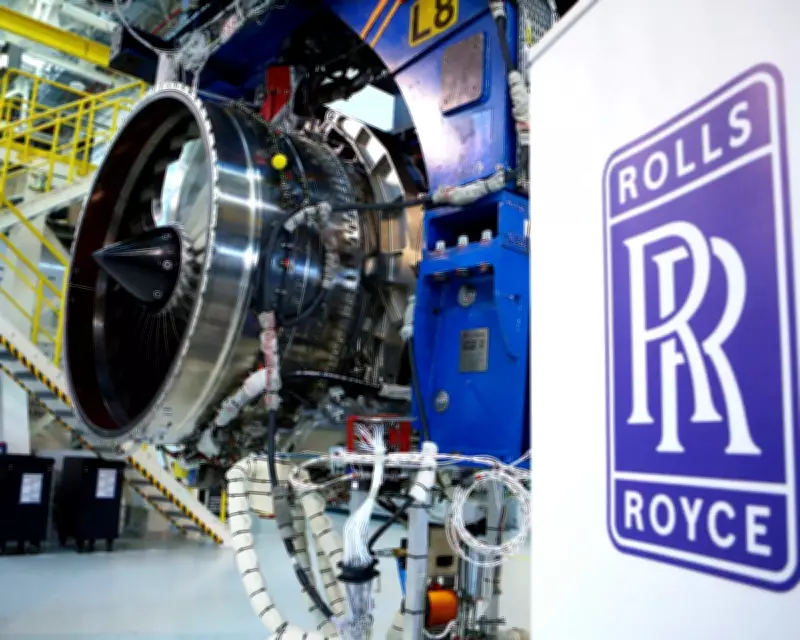
Rolls-Royce, the renowned engine-maker and defense firm, has emerged as the UK's fifth most valuable listed company, with its share price skyrocketing from 90p to nearly £13.52 under CEO Tufan Erginbilgiç's leadership. This remarkable financial turnaround, marked by a capacity to allocate £7bn to £9bn for share buybacks over the next three years, sets the stage for a contentious request: the company is seeking UK taxpayer support, reportedly up to £200m initially, to fund development of its new UltraFan engine.
The Case for Subsidies in a Competitive Global Market
Erginbilgiç argues that state subsidies are not only justified but essential in the aerospace sector, where every major player receives governmental backing. He points out that overseas rivals often secure two to three times more financial assistance, making it a standard practice to maintain competitiveness. The CEO emphasizes that such support yields significant economic returns, with the UltraFan project potentially safeguarding 40,000 jobs and boosting trade balances, as 80% of the engine's output would be exported.
Government Alignment and Industrial Strategy
The request aligns with the Labour government's "modern" industrial strategy, which explicitly named UltraFan as a priority for the state-backed Aerospace Technology Institute. Erginbilgiç notes that it would be "natural" for the government to contribute, especially since Rolls-Royce will cover the majority of costs itself. This positioning frames the subsidies as a strategic investment rather than corporate welfare, leveraging existing policy frameworks to secure advanced manufacturing capabilities.

The Implied Threat and Global Realities
Behind the request lies an unspoken ultimatum: without UK funding, production could shift overseas to countries like Germany or the US, where Rolls-Royce also operates extensively. This threat is particularly credible given the UltraFan engine's role in re-entering the narrow-body market, a strategic move away from the company's current focus on wide-body, long-haul engines. The potential loss of such a high-value program underscores the high stakes for UK industry.
Historical Precedents and Economic Justifications
State support for aerospace is not unprecedented in the UK. Taxpayers previously benefited from a £250m investment in the Airbus A320's UK-built wings, demonstrating that such interventions can yield substantial returns. However, critics argue that Rolls-Royce, having received billions in loan guarantees during the COVID-19 crisis, should finance its own research and development, given its robust cash flow and market valuation.
Ensuring Tangible Returns for Taxpayers
The key challenge for the government is to secure concrete commitments in exchange for subsidies. Business Secretary Peter Kyle must prioritize transparency and negotiate guarantees that intellectual property remains in the UK, ensuring long-term leverage over manufacturing bases. Vague promises of future "gross value added" are insufficient; tangible production pledges and job safeguards are essential to justify public expenditure.
Beyond Aerospace: Rolls-Royce's Expanding Horizons
Rolls-Royce's growth extends beyond aerospace, with opportunities in small modular reactors for nuclear energy, power systems for AI data centers, and involvement in multiple NATO defense programs. This diversification strengthens the case for subsidies, as supporting UltraFan could catalyze broader technological advancements and economic benefits across sectors.
Ultimately, while subsidies for a financially thriving company may seem paradoxical, the global dynamics of aerospace manufacturing render them almost inevitable. The UK must balance strategic investment with rigorous oversight to ensure taxpayers back a proven winner, securing both immediate jobs and future innovation in an increasingly competitive industry.