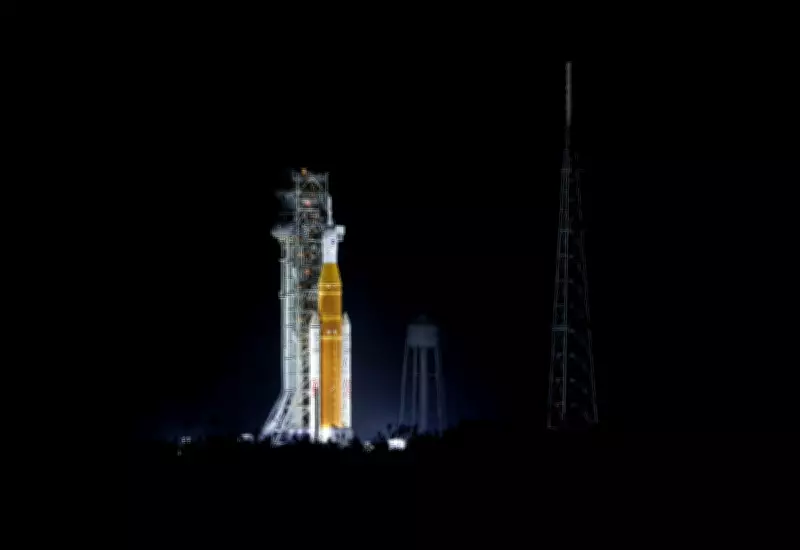
NASA Announces March 6 Launch Date for Historic Artemis II Moon Mission
NASA has officially scheduled the launch of its historic Artemis II moon mission for March 6, following a successful fueling test that addressed previous technical delays. The space agency confirmed the new target date after completing critical preparations at the Kennedy Space Center in Titusville, Florida.
Overcoming Technical Challenges
NASA Administrator Jared Isaacman highlighted "major progress" since engineers discovered liquid hydrogen leaking from the Space Launch System (SLS) rocket during earlier testing. The successful fueling test conducted on Thursday represented a significant milestone in resolving these technical issues.
"I felt like last night was a big step in us earning our right to fly. So, [it] felt really good. Very proud of the team," Artemis launch director Charlie Blackwell-Thompson stated during a Friday press conference.

Mission Details and Historical Significance
The Artemis II mission will conduct a 10-day journey around the moon without landing, carrying four astronauts: NASA astronauts Reid Wiseman, Victor Glover, and Christina Koch, along with Jeremy Hansen from the Canadian Space Agency. The crew entered their second quarantine period on Friday in preparation for the launch.
This mission will achieve several historic milestones:
- Taking humans further into space than ever before
- Flying approximately 4,700 miles (7,600km) beyond the far side of the moon
- Surpassing the distance record set by Apollo 13 in 1970
- Testing critical systems for future deep-space exploration missions
NASA emphasized that the March 6 date comes "with caveats" as significant preparatory work remains following Thursday's fueling test. The agency has several backup launch windows available in early March if needed.
Background: Starliner Investigation Findings
The successful Artemis II preparations contrast with recent challenges in NASA's commercial crew program. A damning report published Thursday detailed multiple failures with Boeing's Starliner capsule that left two astronauts stranded on the International Space Station for nine months.
NASA astronauts Suni Williams and Butch Wilmore returned to Earth in March 2025 after technical failures including faulty thrusters and helium leaks became apparent upon docking. The astronauts eventually returned via a SpaceX Dragon spacecraft in what was described as a rescue mission.
"The agency failed them," NASA Deputy Administrator Amit Kshatriya acknowledged during a Thursday press conference, describing how NASA accepted Boeing's safety assurances without sufficient scrutiny.
Correcting Course for Future Missions
Investigators identified numerous issues with the Starliner program, including hardware failures, qualification gaps, leadership missteps, and cultural breakdowns that created unacceptable risk conditions. NASA has committed to not flying another crew on Starliner until all technical causes are understood and corrected.
"Beyond technical issues, it is clear that NASA permitted overarching programmatic objectives of having two providers capable of transporting astronauts to-and-from orbit, influence engineering and operational decisions," Isaacman stated in the report.
Boeing responded to the criticism, stating the company has "made substantial progress on corrective actions for technical challenges we encountered and driven significant cultural changes across the team" in the 18 months since the test flight.
Looking Toward Artemis III and Beyond
The Artemis II mission serves as crucial preparation for Artemis III, scheduled for 2028, which will mark the first human landing on the moon since the final Apollo program flight in December 1972. NASA's renewed focus on safety and technical rigor reflects lessons learned from recent challenges as the agency prepares for this next generation of lunar exploration.
As NASA moves forward with Artemis II, the agency emphasizes its commitment to crew safety and mission success, balancing ambitious exploration goals with rigorous technical standards developed through hard-earned experience.