London's Cycling Network Expands While Safety Concerns Persist
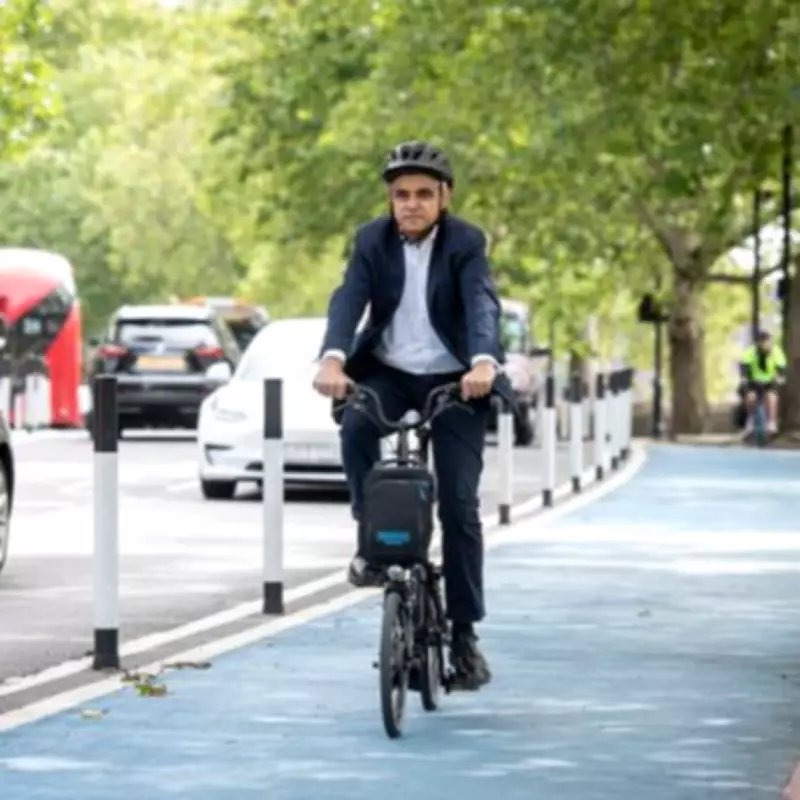
Transport for London has dramatically expanded the capital's cycling infrastructure over the past decade, adding 345 kilometers of new dedicated paths and routes. However, new research reveals that 43 percent of London cyclists still feel unsafe on the city's roads despite this significant investment in cycle lanes, junction redesigns, and improved crossings.
The Safety Perception Gap in London Cycling
The comprehensive data, obtained by law firm JMW and analyzed by the Local Democracy Reporting Service, shows London cyclists face more complex challenges than riders elsewhere in the UK. While the North West of England reports just over a third of cyclists feeling unsafe, London's figure stands significantly higher at 43 percent. This safety perception gap persists despite London's cycling revolution that has seen daily cycle journeys increase by 43 percent since 2019.
Multiple factors contribute to this ongoing concern:
- Vehicle drivers operating on narrow roads creating hazardous conditions
- Bus lanes becoming "conflict zones" where cyclists interact with large vehicles
- Unclear road markings and inconsistent infrastructure design
- Pedestrians encroaching on designated cycling areas
- Interactions with other cyclists in crowded conditions
Infrastructure Confidence Remains Low
Only 36 percent of London cyclists believe their local area has adequate cycling infrastructure, representing one of the lowest confidence ratings in the United Kingdom. This infrastructure skepticism correlates with cycling participation rates, as just seven percent of London cyclists use roads daily despite 1.5 million cycle journeys occurring across the capital each day.
Simon Munk of the London Cycling Campaign acknowledged progress while highlighting remaining challenges: "London is statistically very safe for cycling and as the network of safe, comfortable, direct cycle routes grows, more and a wider range of people are getting cycling. Daily cycle journeys now make up about half of all Tube journeys."
"But there's still a long way to go to reach the potential for cycling in London, and the kind of numbers Paris and many Dutch cities do," Munk continued. "That's because London's cycle network is still far too patchy and often too poor quality too."
Political Reactions and Public Bike Schemes
Hina Bokhari, leader of the Liberal Democrat group on the London Assembly, described the findings as exposing "a serious credibility gap." She emphasized: "When nearly half of London's cyclists feel unsafe despite billions in investment, something has gone badly wrong. A 7 percent daily cycling rate in a city of this size and investment isn't a success story, it's a failure to deliver from TfL and the Mayor."
The research also revealed concerns about public bike schemes, with only 55 percent of London cyclists considering services like Lime or Forest bikes safe for general use. Andrew Littlemore of JMW noted: "The concern about Lime bikes and similar schemes is particularly noteworthy. These services are designed to make cycling more accessible, but if users don't feel safe, we need to ask whether operators and regulators are doing enough to ensure rider safety and provide adequate training."
TfL's Response and Future Plans
A Transport for London spokesperson defended the organization's efforts: "Walking and cycling infrastructure plays an important role in making our streets safer and encouraging more people to walk and cycle across London. We're determined to ensure that everyone can cycle safely which is why we're investing more than £150 million this year to improve London's roads."
The spokesperson highlighted completed work at 46 Safer Junctions across London and noted the Cycleways network has expanded from 90 kilometers in 2016 to 435 kilometers currently. TfL plans to announce further investment strategies with London boroughs in coming weeks, aiming to address the safety concerns while continuing to expand cycling infrastructure throughout the capital.