NASA Satellite Set for Earth Re-Entry with Minimal Risk
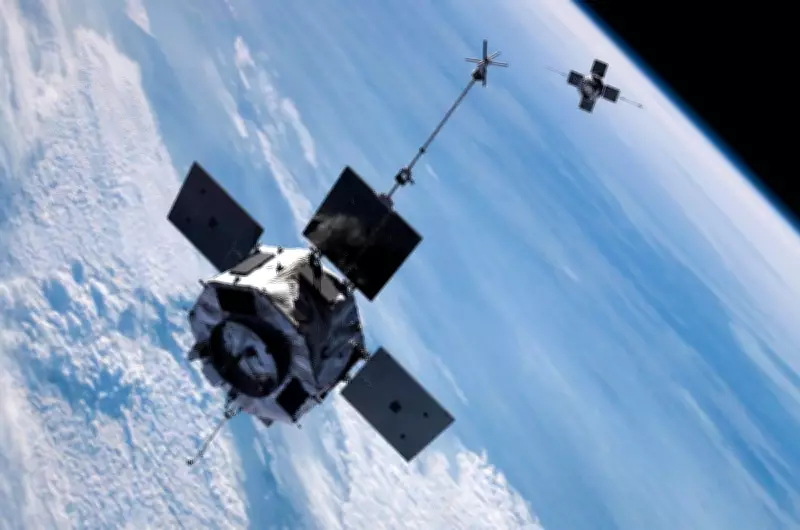
Parts of a massive NASA satellite are expected to crash to Earth on Tuesday evening, according to warnings from the US space agency. The 600kg Van Allen Probe A, one of twin probes launched in 2012, is estimated to re-enter Earth's atmosphere at approximately 7:45 PM EDT. While the spacecraft will mostly burn up during re-entry, some components are predicted to survive, though the risk to individuals on the ground remains extremely low.
Low Probability of Harm from Falling Debris
The US military's Space Force has calculated the chance of someone being harmed by the debris at 1 in 4,200. In a statement released on Monday, NASA and Space Force confirmed they will continue to monitor the re-entry and update predictions, noting an initial uncertainty of plus or minus 24 hours in the timing. Debris falling from space is not an uncommon occurrence, with reports indicating that over 5,400 tons of material have survived re-entry over a 40-year period.
However, the odds of being struck are significantly reduced because about 71% of Earth's surface is covered by water. Historical data supports this low risk; for instance, a 2011 report highlighted that the overall chance of anyone being injured by space debris is 1 in 3,200, with individual probabilities being far lower. Mark Matney, a scientist at NASA's Johnson Space Center, emphasized that "the odds that you will be hit are one in several trillion, so quite low for any particular person."

Rare Incidents of Space Debris Impact
Despite the low risks, there have been isolated cases of space debris reaching the ground. In January 1997, Lottie Williams of Tulsa, Oklahoma, was struck on the shoulder by a small, blackened metal fragment while walking in a park. Although never formally identified as space junk, the timing and location aligned with the re-entry of a Delta rocket stage, making Williams the only known person to be hit by manufactured space debris. She was not injured in the incident.
In a separate event, a meteorite crashed through a house roof in Germany on Sunday, part of an estimated 15,000 to 17,000 meteorites that reach Earth annually, though most land in oceans. This highlights the broader context of extraterrestrial objects entering our atmosphere, with the Van Allen Probe A re-entry being a more controlled, albeit rare, occurrence.
Background on the Van Allen Probes
The spacecraft in question, Van Allen Probe A, was launched alongside its twin, Van Allen Probe B, from Cape Canaveral, Florida, on August 30, 2012. Their mission was to investigate the Van Allen radiation belts, regions of charged particles trapped by Earth's magnetic field. The probes were deactivated in 2019 after running out of fuel, which prevented them from orienting towards the sun.
Early predictions suggested the probes would re-enter Earth's atmosphere in 2034, but these estimates proved inaccurate. While Probe A is set to return this week, Probe B is not expected to re-enter before the end of the decade. This event underscores the ongoing challenges in tracking and predicting the trajectories of decommissioned satellites, as space agencies work to mitigate risks from orbital debris.