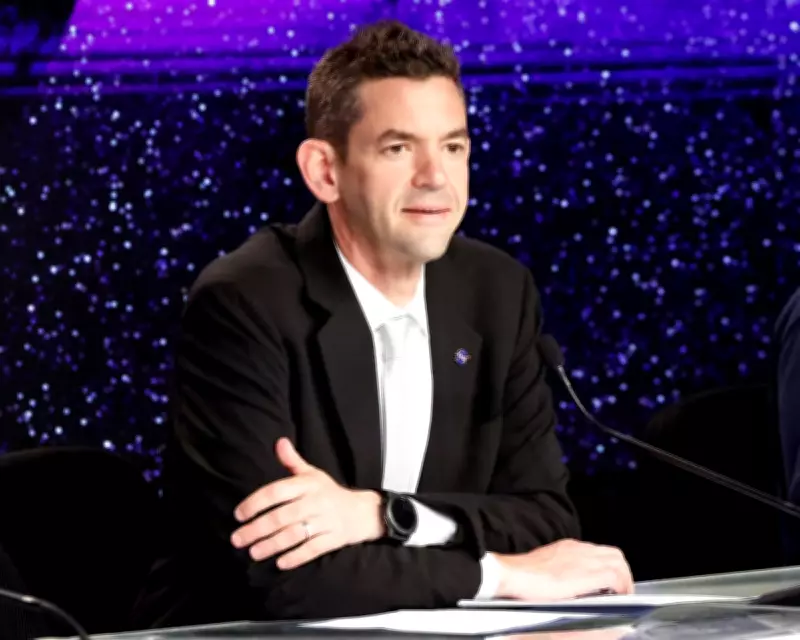
NASA Administrator Jared Isaacman has declared that the search for alien life is a core motivation behind the space agency's ambitious missions, emphasizing that the odds of discovering evidence we are not alone in the universe are "pretty high." Speaking in a press conference at Kennedy Space Center in Cape Canaveral, Florida, on April 1, Isaacman outlined how this quest influences NASA's strategic planning.
Alien Life Search at the Heart of NASA's Mission
In an interview with CNN's Meet the Press, Isaacman explained that investigating the existence of extraterrestrial life "goes to the heart of many things that we do at NASA." He stated, "Our job here is to go out and try and unlock the secrets of the universe." One of the fundamental questions driving scientific and exploration efforts is "are we alone?" Isaacman noted this inquiry is inherent in every NASA endeavor, from lunar missions to deep space exploration.
Artemis II Mission Progress and Lunar Milestones
Isaacman's comments come four days into NASA's Artemis II mission, which marks the first lunar circumnavigation since 1972. The Orion spacecraft, carrying four crew members, is currently closer to the moon than to Earth, with distances of 110,700 miles and 169,000 miles respectively as of Saturday. The capsule is set to loop around the moon's far side on Monday evening, a critical milestone, before slingshotting back toward Earth for an expected arrival on Friday.

On CBS's Face the Nation, Isaacman highlighted that astronauts are prepared for the communication blackout during the lunar loop, a standard part of their training. The primary objective of this phase is to gather data from Orion's life support systems, as this is the first time humans have been aboard the spacecraft. "Learning as much as we can about Orion is critically important," he emphasized.
Future Missions and Lunar Exploration Plans
Looking ahead, Isaacman detailed NASA's upcoming missions. Artemis III is scheduled for launch in mid-2027, where the spacecraft will be tested with lunar landers. This will be followed by Artemis IV in 2028, which aims to transfer crew to landers and return American astronauts to the moon's surface. Isaacman also pointed to plans for a potential moon base on the south pole, incorporating telescopes to aid in the search for alien life.
Qualified Optimism on Alien Encounters
Despite his optimism, Isaacman qualified his statements by noting his personal experiences. Having been to space twice, he said, "I didn't encounter any aliens up there. I have not seen anything to suggest that we have been visited by any intelligent life forms out there." However, he added, "When you think about it, we got 2 trillion galaxies out there. Who knows how many star systems within each of it? I would say the odds that we will find something at some point to suggest that we are not alone are pretty high."
Technical Challenges and Toilet Troubles
In a lighter moment, Isaacman addressed technical issues aboard Orion, specifically the $30 million titanium vacuum-based Universal Waste Management System (UWMS) toilet. The crew reported a blinking fault light on the system, which uses suction to separate waste, venting urine into space and storing fecal matter in canisters. NASA has since fixed the toilet to normal operations.
Isaacman humorously noted, "Throughout the history of human spaceflight... the toilet working is almost a bonus capability." He explained that despite backups and secondary systems in place, perfecting this capability remains a challenge. "Nailing this capability is one that we need to certainly work on," he said, assuring that the astronauts are currently okay and well-prepared for such situations.
The Artemis II mission continues to gather valuable data, with the crew, including mission specialist Christina Koch, observing the moon from Orion's windows. As NASA pushes forward with its lunar and deep space exploration, the search for alien life remains a driving force, blending scientific curiosity with practical mission objectives.