NASA's Artemis Moon Mission Faces Delays as Private Contractors Press Forward
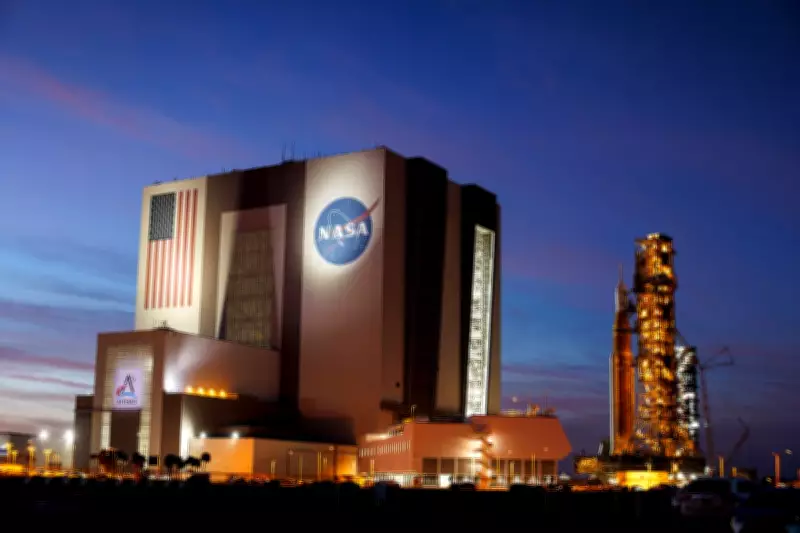
The Space Launch System (SLS) rocket with an Orion capsule, part of the Artemis II mission, stands ready at the Kennedy Space Center in Titusville, Florida. This powerful vehicle represents humanity's renewed push toward lunar exploration, yet significant challenges have emerged in the ambitious timeline.
Restructuring the Lunar Return Strategy
NASA recently announced a major restructuring of its Artemis program, moving the first human lunar landing attempt from Artemis III to the later Artemis IV mission, now scheduled for 2028. This decision came after technical issues pushed the program billions of dollars over budget and years behind schedule. The space agency faced criticism for attempting too much too soon, prompting this strategic shift with significant implications for commercial partners.
Justin Cyrus, chief executive of Lunar Outpost, learned about this development during a surprise press conference called by NASA administrator Jared Isaacman. His Colorado-based company represents the many private contractors working on crucial Artemis program components.

Private Sector Persistence Amid Program Changes
Despite NASA's program restructuring, companies like Lunar Outpost continue advancing their technologies. The company's Mobile Autonomous Prospecting Platform (Mapp) rover, a compact but technologically advanced vehicle essential for future long-term lunar habitation, will now accompany Artemis IV astronauts to the moon's surface.
"Humans will be back on the moon for the first time in over 50 years and one of our rovers will be alongside, which is a pretty awesome feeling," Cyrus stated. "For us, selfishly, that's a pretty exciting prospect. The broader announcement I'm 100% on board with - higher cadence, more missions going to the moon."
Overcoming Lunar Landing Challenges
Lunar Outpost's journey hasn't been without obstacles. The Mapp rover successfully reached the lunar surface in March aboard Intuitive Machines' Athena lander, becoming the first commercial exploration vehicle to touch down. However, the lander toppled during descent, trapping the rover inside. Despite being fully functional and ready for operation, Mapp's batteries slowly depleted while confined within the damaged spacecraft.
"It got to the moon, it survived the tough landing, and unfortunately, we just couldn't get it out of the garage," Cyrus explained. "It's a point of pride that we survived a tough landing, but at the same time it makes it hurt just a little bit worse."
Advancing Multiple Lunar Technologies
Since that setback, Lunar Outpost has worked diligently to prepare Mapp for its next opportunity. The company, founded in 2017 by Cyrus and two aerospace colleagues, develops multiple rover systems alongside other critical technologies:
- The Eagle lunar terrain vehicle (LTV), described as "the most capable crewed and cargo transport ever built" for human spaceflight
- Power- and oxygen-generating systems for human use in space
- Robotic arms to assist with moon base construction
The company maintains focus despite the highly publicized challenges facing NASA's Artemis program. "If my workforce is watching what's going on each and every day, worrying about how it's going to impact their schedules, they wouldn't be getting much done," Cyrus noted.
The Future of Public-Private Space Partnerships
Lunar Outpost currently has five missions scheduled for the moon, with potential announcements about the Eagle LTV partnership with NASA expected in coming weeks. This step-by-step approach over the next five years demonstrates how private companies are becoming essential partners in space exploration.
"It's kind of a step-by-step vision over the course of the next five years, and I think it's going to be fun," Cyrus said. "In fact, I think it's going to be an absolute blast."

The Artemis program's delays highlight the immense challenges of returning humans to the moon, but private contractors continue proving that public-private partnerships can sustain momentum even when government timelines shift. As NASA works through its technical and budgetary challenges, companies like Lunar Outpost maintain progress on the technologies that will enable sustained human presence on the lunar surface and eventually Mars.