NASA's $30 Million Artemis II Toilet Glitch Fixed, Marking Space Sanitation Leap
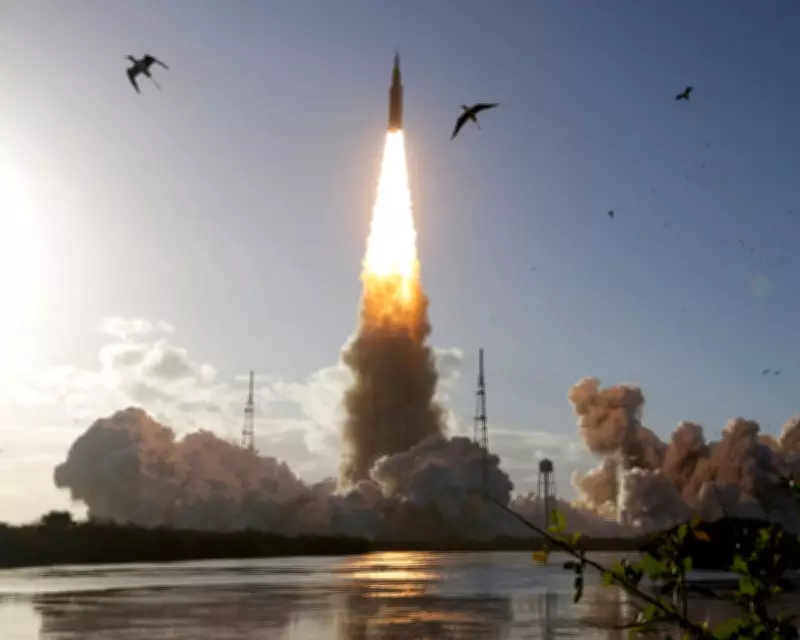
NASA's Artemis II mission blasted off on Wednesday, carrying a state-of-the-art toilet designed to address longstanding complaints about previous space sanitation arrangements. The $30 million Universal Waste Management System (UWMS) represents a significant advancement in deep space toilet technology, though it faced an initial hiccup with a fault light indicating an out-of-order status.
Quick Resolution to Toilet Fault
Fortunately for the four astronauts embarking on the 10-day mission, mission control swiftly resolved the issue. Officials confirmed, "Happy to report that toilet is go for use. We do recommend letting the system get to operating speed before donating fluid, and then letting it run a little bit after donation." This quick fix ensured the crew could proceed without significant disruption, highlighting the robustness of modern space systems.
Historic Context of Space Sanitation
The development of the UWMS comes after years of effort to improve upon primitive historical setups. During the Apollo missions, astronauts used a condom-like device for urine collection and bags taped to buttocks for solid waste, a system prone to leaks and crew dissatisfaction. One mission transcript even recorded an alarmed crew member noticing "a turd floating through the air." While NASA reports acknowledged these methods met basic engineering objectives, they "must be given poor marks" for crew comfort.

Advanced Features of the New System
The UWMS on the Orion spacecraft introduces several innovations:
- A private toilet cubicle with a door, a first for space shuttles, accessed through the floor near the entry hatch.
- Handrails and foot tethers to secure astronauts in microgravity.
- A funnel and hose for urine, and a seat with suction to collect faeces into a bag, which is then compressed into a canister.
- Insulation and ear protection due to the noisy suction process.
Mission specialist Jeremy Hansen from the Canadian Space Agency noted, "We're pretty fortunate as a crew to get a toilet with a door on this tiny spacecraft. The one place during the mission where we can go and actually feel like we're alone for a moment."
Waste Management for Short and Long Missions
On the Artemis II mission, urine will be vented daily, and faecal waste stored for disposal upon Earth return. In contrast, longer missions like those to the International Space Station involve recycling almost all liquid waste into drinkable water. This distinction underscores the tailored approaches to waste management based on mission duration.
Broader Implications for Space Exploration
The toilet system is more than a luxury; it is critical for NASA's Artemis programme, which aims to establish a permanent presence in space. Sustainable waste handling is essential to prevent health risks and avoid contaminating space with Earth microbes. David Munns, professor of the history of science and technology at the City University of New York, emphasized, "Actually thinking about not only toilets but the entire life support systems is one of the foundations of long-term living in space. Having the ability to deal with waste is mission-critical."
This advancement marks a pivotal step in ensuring astronaut well-being and supporting ambitious goals for extended space habitation, blending practical necessity with cutting-edge technology.