Middle East Conflict Triggers Global Travel Chaos
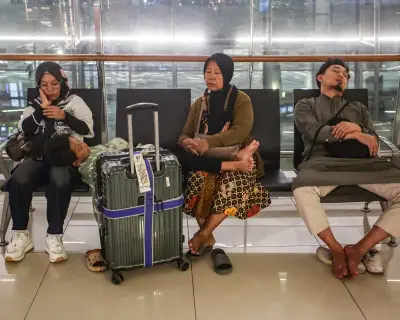
The ongoing war in the Middle East has plunged global aviation into a state of unprecedented disruption, with thousands of flights cancelled and airspace closures leaving travelers stranded across the region and beyond. One travel industry expert has starkly described the situation as "one of the worst shutdowns in aviation history", highlighting the severe impact on international travel hubs.
Widespread Airspace Closures and Flight Cancellations
According to data from Flightradar24, most airspace in the Middle East remains closed, affecting key countries such as Iran, Israel, Iraq, Kuwait, Bahrain, Syria, and Qatar. While some limited operations have resumed, the closures have forced hundreds of thousands of travelers to alter their plans, particularly those transiting through major hubs like Dubai, Abu Dhabi, and Doha.
Ian Petchenik, head of communications at Flightradar24, provided alarming statistics: "On a normal day, Doha would see between 720-730 flights, which is nearly all of Qatar Airways' capacity." Currently, that number has plummeted to near zero due to the airspace shutdown. Similarly, Dubai, which typically handles around 1,250 flights daily, saw only 161 flights on a recent Thursday.

Impact on Major Airports and Airlines
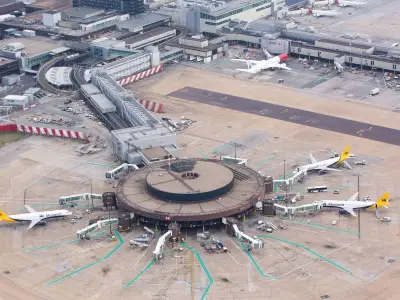
Airports in the region have issued urgent advisories to passengers. Hamad International Airport in Qatar has suspended all flight operations, while Dubai Airports and Abu Dhabi International Airport are operating on a limited basis, restricting access to confirmed travelers only. The overall daily flight cancellations are estimated at 3,500 to 4,000, though this figure is slowly decreasing.
The disruption extends beyond local carriers to major airlines like Emirates, Etihad, and Qatar Airways, affecting routes globally. Paul Charles, founder of the PC Agency, noted that airlines are scrambling to reposition aircraft and crew, leading to significant logistical challenges. "The airspace closures have caused turmoil among airlines because a lot of their planes are out of place, and cabin crew and pilots are in the wrong locations," he explained.
Innovative Solutions and Safety Measures
In response, airlines are devising alternative routes to bypass the conflict zone. For instance, British Airways has rerouted some flights from Singapore to London via America instead of the usual direct path. Charles emphasized that airlines are only operating through "safe corridors" that are guaranteed by all parties involved, ensuring passenger safety remains paramount.
However, concerns persist about airspace compression, where closures force aircraft into congested and less efficient routes. Petchenik warned that further escalation could exacerbate this issue, particularly if countries like Azerbaijan or Saudi Arabia close their airspace, severely limiting available flight paths.
Potential for Further Escalation
The travel industry remains on high alert as the conflict continues. Charles reiterated the gravity of the situation, calling it "one of the worst and most unexpected shutdowns in aviation history," underscoring the critical role of the Middle East in global air travel. With the UK Foreign Office advising against all but essential travel to several popular destinations, the outlook for travelers remains uncertain, with risks of prolonged disruptions if hostilities intensify.