Middle East Conflict Threatens Easter Holiday Travel Plans
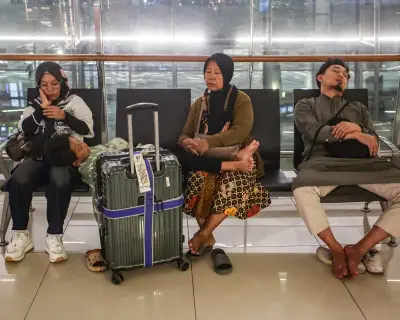
The latest escalation in the Middle East conflict is threatening to plunge travel into chaos comparable to the Covid-19 pandemic. US-Israel joint airstrikes on Iran and the country's retaliation over the weekend have pushed regional tensions over the boiling point into active conflict. With airstrikes spilling into neighboring Gulf states, airspace and airport closures, and the evacuation of thousands of British nationals, many travelers are feeling far from confident about upcoming Easter holiday plans.
Travel Uncertainty Looms
As the volatile situation rapidly changes, uncertainty is looming over the Easter holidays next month. Bernard Lavelle, principal aviation consultant at BL Aviation, told Capital Post: "At the moment, we don't know how long the situation is going to last. We are still five weeks from the holidays, and it would be nice to think it would all be over, but we cannot rule out that there will be challenges for anyone travelling to that area, or if you need to travel through those airspaces."
He predicted that holidaymakers are likely to turn to UK destinations, the Canary Islands, Greece, and Turkey instead, despite Turkey's proximity to Iran. "There were concerns over the drone incidents in Cyprus, although there are no restrictions on travelling there, and the other is Turkey," Lavelle explained. "But the holiday hotspots in Turkey are hundreds of miles from the border with Iran, and there has been no indication at all of any issues in that area."

Flight Price Concerns
Iran has closed the geopolitically sensitive Strait of Hormuz, which handles approximately 20% of the world's oil supply. Some tankers have been hit with missiles near the Strait, and plans are being drawn up for military convoys to accompany tankers. While airlines have some buffers against oil price changes, a prolonged closure of the Strait of Hormuz could have knock-on effects on fuel and petrol prices, eventually impacting flight costs.
Lavelle noted that the price of an oil barrel remains far from the peak during the Covid-19 pandemic. "Last time I looked, it was trading at about $85 a barrel. Back during Covid times, it was at about $100 a barrel, so it is still well below that kind of a high. And if it stays at that for a week or two, it is not going to make a huge amount of difference. But if it stays like that for a longer period, that will start going back into the prices for airlines."
Potential Travel Alternatives
Surprisingly, the conflict might have the opposite impact on some routes, with airlines launching offers to boost demand if people become hesitant to fly. "If there is no demand, while they've got supply in terms of seats, companies like Ryanair might have offers for £1 just to get people on board," Lavelle suggested.
Ryanair's CEO, Michael O'Leary, said the budget airline has seen a surge in bookings for short-haul routes within Europe for Easter holidays. O'Leary has stated that Ryanair has already bought fuel at $67 per barrel for the next 12 months through hedging, a common practice for airlines to pre-buy fuel at an agreed price for months ahead, giving them protection from global price upheaval.
Factors Affecting Flight Prices
The two biggest factors affecting flight prices are fuel and labor costs. Seasonality also plays a major role, meaning the difference between flying during holiday seasons versus off-peak periods. To avoid seasonal surge pricing, travelers should consider mid-week flights and early morning departures.
Fuel costs account for approximately 25-35% of airline expenses, and price levels have been steadily increasing since the end of the coronavirus pandemic. Fuel prices are particularly sensitive to global upheaval and conflicts, especially when they put oil production facilities or transportation routes at risk, as seen with Iran closing the Strait of Hormuz.
Passengers with flights already scheduled to the region should not cancel them immediately but instead wait to see what their airline decides. Travelers should stay updated on official Foreign, Commonwealth & Development Office advice and communicate with their tour operators about any changes to their Easter holiday plans.