Middle East Air Travel in Chaos as Iran Conflict Grounds Flights
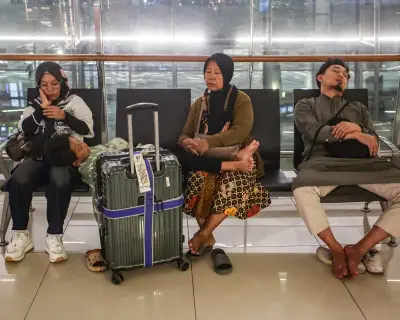
The ongoing conflict between the United States, Israel, and Iran has triggered unprecedented travel chaos across the Middle East, with major airports shuttered and thousands of passengers stranded in transit hubs. Aviation experts warn that the disruption could last for weeks as airlines struggle to reroute flights and manage the massive backlog of travelers.
Major Hubs Paralyzed by Conflict
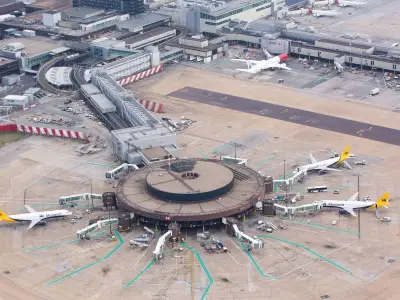
Dubai International Airport, one of the world's busiest transit points with over 95 million passengers annually, and Doha's Hamad International Airport, handling more than 54 million travelers, have been closed for days following the military escalation. The sudden closure of these critical aviation hubs has created a domino effect throughout global air travel networks.
"This is not unprecedented. The scale of it is," said John Cox, a retired airline pilot with extensive experience in aviation disruptions. "We're talking about Abu Dhabi, Doha and Dubai, they're major hubs internationally ... with major airlines that move people from Europe to Asia."

Airlines Scramble to Rebuild Networks
While airlines maintain specialized "irregular operations" teams to handle disruptions, experts say the current situation presents unique challenges. The sheer volume of affected passengers, combined with limited alternative routes and already-full aircraft, creates what aviation professionals describe as a "complex puzzle" that will take weeks to resolve.
Dr. Ian Douglas, an aviation management expert, predicts the situation will remain "messy for the next month" at minimum as airlines work to rebook stranded passengers and coordinate with partner carriers. "There aren't many spare aircraft, there aren't spare crews, so it really is down to what can I fit on my network," Douglas explained.
Financial Toll Mounts for Airlines
The economic impact on Middle Eastern carriers is staggering. With aircraft leases costing millions of dollars monthly and grounded fleets generating no revenue, airlines face substantial financial losses. Emirates, Qatar Airways, and Etihad Airways have suspended numerous routes, while other carriers like Qantas are implementing creative solutions such as adding fuel stops to increase passenger capacity.
"Just think about the crews who are dislocated, sitting in hotels," Douglas noted. "Aircraft that are a couple of million dollars a month to lease that are sitting on the ground doing nothing, generating no income."
Passenger Impact and Recovery Timeline
Hundreds of thousands of travelers remain stranded on either side of the Middle East with limited options for returning home. While some flights have resumed on a limited basis, the situation remains fluid and subject to sudden changes based on security developments.
Ahmed Abdelghany, a professor of operations management at Embry-Riddle Aeronautical University, emphasized the uncertainty facing both airlines and passengers: "Nobody can predict when this war will end. So there's a lot of uncertainty in the system, not only on the demand side but on the supply side."
Even after the immediate conflict subsides, experts warn that passenger confidence may take longer to recover. "People might still say 'I'm not going to travel in risky airspace, missiles are flying, you know? I'm going to stay home,'" Abdelghany added.
The Road to Recovery
Despite the current chaos, aviation professionals express confidence in the industry's ability to recover. Cox described airline operations as "a symphony of motion" that requires dedicated coordination. "These folks are so good at it," he said of airline disruption teams. "They're extremely professional ... There's a saying: 'It's the difficult we do immediately, the impossible takes slightly longer.'"
The recovery process will involve:

- Coordinating aircraft and crew availability across global networks
- Rerouting flights through alternative airspace corridors
- Managing passenger accommodations and rebookings
- Gradually restoring full flight schedules as conditions permit
As airlines work around the clock to rebuild their operations, passengers face continued uncertainty in what has become one of the most significant aviation disruptions in recent Middle Eastern history.