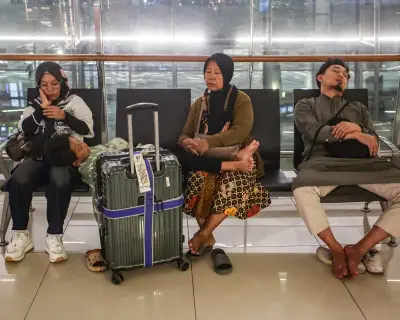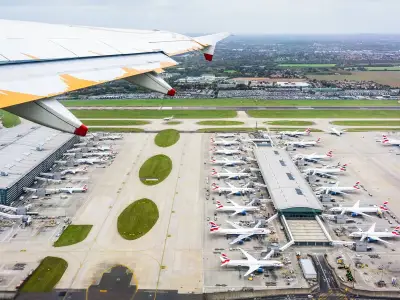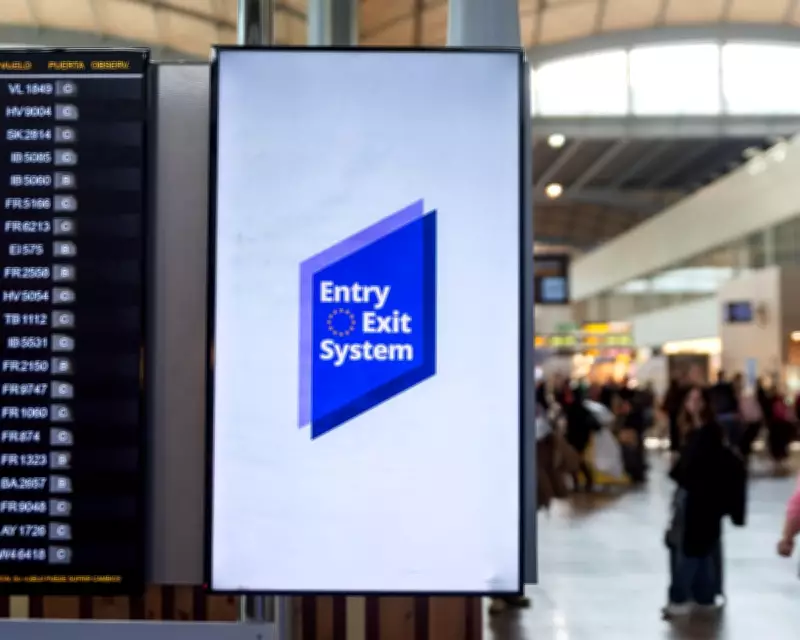
The European Union's Entry-Exit System (EES) has been fully operational since April 10, but its implementation is causing significant disruptions at airports across the continent. Reports indicate that travelers are facing delays of up to three hours at border checks, leading industry bodies to call for urgent action to suspend the new requirements.
Widespread Delays Across European Airports
According to the Airports Council International (ACI), passengers in countries such as France, Germany, Belgium, Italy, Spain, and Greece are experiencing prolonged waiting times. Olivier Jankovec, director of ACI Europe, warned the Financial Times that the situation could become "simply unmanageable" during the peak summer months. He emphasized that queueing times are already severe during busy periods, even as travel volumes are just beginning to increase.
System Requirements and Implementation Issues
The EES, which applies in the Schengen area—comprising 25 EU states plus Iceland, Liechtenstein, Norway, and Switzerland—mandates that non-EU travelers, including those from the UK, register personal information and biometric data at border crossings. While the system has been phased in since October, its full launch has exacerbated delays. For instance, over 100 passengers missed an easyJet flight from Milan to Manchester due to passport desk holdups, as reported by the BBC.

In response to these challenges, airport representatives and the European Commission convened a meeting to address the problems. The ACI has requested extended exemptions and the authority to fully suspend EES checks when waiting times become excessive. Jankovec argued that airports need the flexibility to halt registrations to prevent chaotic border control scenarios.
Conflicting Reports on System Performance
The European Commission maintains that the EES is functioning well in most member states, with an average registration time of 70 seconds per passenger. However, the ACI disputes this, claiming that the process can take up to five minutes. A Commission spokesperson acknowledged technical issues in a few countries but assured that they are being resolved, stressing that member states are responsible for on-ground implementation.
Prior to the full launch, travelers from the UK to France were exempt from biometric requirements due to delays in France's technology development. This highlights the ongoing struggles with data processing and infrastructure readiness.
Broader Context: Fuel Shortages and Industry Criticism
The EES delays coincide with concerns over potential jet fuel shortages in Europe, triggered by geopolitical tensions such as the blockade of the Strait of Hormuz. The ACI has warned the EU of impending systemic shortages, noting that Europe relies heavily on Middle Eastern imports for its jet fuel supply.
Industry leaders have voiced strong criticism of the EES. Michael O'Leary, CEO of Ryanair, described the system as "a shit show and a shambles," attributing it to Brexit repercussions and calling for a postponement until October. He reported queues of up to four hours at some airports, underscoring the severity of the disruptions.
As the summer travel season approaches, the effectiveness of the EES remains under scrutiny, with stakeholders urging for solutions to mitigate the impact on passengers and airport operations.