Dubai's Influencer Paradise Confronts Reality of Regional Conflict
When Iranian missiles targeted Dubai in retaliation for US-Israeli attacks, the city's carefully curated image as a safe haven for the wealthy faced unprecedented scrutiny. Mike Babayan, a 23-year-old finance professional turned influencer from Los Angeles, was enjoying a hookah lounge when explosions rocked the night. "Everyone just went back to their hookah and food a minute later," Babayan recalled, capturing the surreal disconnect between luxury living and regional warfare.
The Show Must Go On: Influencers Document War and Wealth
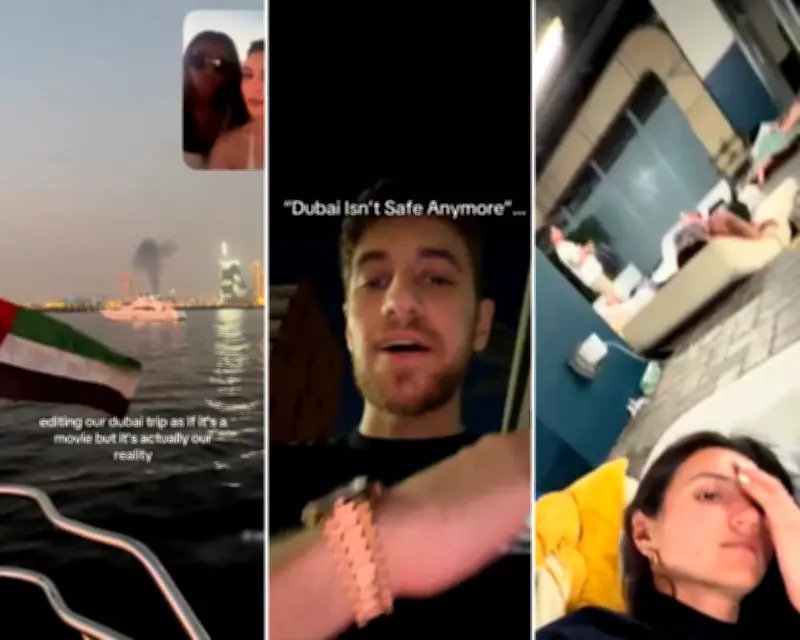
Dubai's influencer community responded to the crisis in their signature style, flooding social media with contradictory content that mixed party scenes with missile footage. Will Bailey, a British travel influencer with nearly 500,000 followers, filmed falling missiles from a beach club where the DJ continued playing thumping beats. Another visiting influencer captured the attack from a yacht party, while a British entrepreneur complained about canceled flights and meetings in a since-deleted video that sparked criticism.
Babayan, who documents his daytrading success and luxury lifestyle to nearly 150,000 TikTok followers, shifted focus to combat misinformation while still showcasing his $60,000 watch. "I feel like that's more important, not having to look over my shoulder every two seconds, compared to the chances of a drone hitting me," he argued, maintaining that Dubai remained safer than New York, London, or Los Angeles despite the attacks.

Reinforcing Normalcy Amid Regional Turmoil
Dr. Sreya Mitra, an associate professor of mass communication at the American University of Sharjah, noted that Indian social media influencers in Dubai felt compelled to counteract sensationalized coverage from Indian news channels. "These influencers are reinforcing a narrative of normalcy," Mitra explained. "They'll say, 'Hey, it's 2am and I'm here in the Ramadan market or downtown Dubai, and it's safe.'"
The United Arab Emirates reported three deaths and 68 injuries from the strikes, significantly fewer than neighboring countries. The government claimed to have destroyed or intercepted most missiles and drones, though the Fairmont The Palm hotel and airports in Dubai and Abu Dhabi sustained damage. Some influencers downplayed the danger entirely, with one Ukrainian creator posting a montage of Emirate leaders with the caption: "We are calm. We are protected. We are in safe hands."
The Contradictions of Dubai's Influencer Economy
Dr. Zoe Hurley, author of "Social Media Influencing in The City of Likes: Dubai and the Postdigital Condition," described how Dubai has strategically cultivated its influencer ecosystem. "Dubai and the UAE in general have very strategically used the idea of creators and influencers to promote the country," Hurley said. "They strategically deploy digital assets to hold up a mirror to the world and provide a place of affordable destination as an alternative to the American dream."
This carefully managed image comes with significant regulation. Professional content creators must obtain operating licenses costing up to $4,000 and are required by the UAE's media council to "respect" the state, its politics, and religious beliefs in their posts. The "safest place in the world" branding often promoted by influencers exists alongside reports of migrant worker exploitation and extensive civilian surveillance systems.
Disaster Tourism in the Digital Age
Peter Loge, an associate professor of media and public affairs at George Washington University, compared the flood of war content to "disaster tourism" for the digital age. "These content producers are saying, 'Hey, here's a quick video, it's exploding, it's scary,'" Loge observed. "But you can't do more. That is not what social media is built for, and that's not what people are on TikTok to learn about."
Mia Plainer, a 23-year-old social media planner from London who found herself sheltering in a hotel garage during the attacks, filmed what she called the "juxtaposition" of war and luxury. "There's this narrative of, 'Oh look at all these influencers crying about how war's going on and they're not used to it,'" Plainer said. "But I think it opens your eyes to how anyone and everyone is in the same situation, no matter your status."

By Tuesday, normalcy had largely returned for visitors like Plainer, though the UK prepared evacuation plans for citizens in the Gulf and the US urged Americans to leave 14 Middle Eastern countries including the UAE. As flight availability remained uncertain, Plainer summarized the prevailing attitude: "The plan is just, life goes on, and to enjoy ourselves as much as possible as we can whilst we're here."
The weekend's events revealed the fragile nature of Dubai's carefully constructed safety narrative, exposing how quickly geopolitical realities can intrude upon even the most insulated luxury lifestyles. As influencers continue to document their experiences, they participate in what Loge calls "meaning-making" about events that defy simple social media encapsulation, revealing the complex interplay between digital personas and regional instability.