NASA's Artemis II Mission Successfully Launches, Ushering in New Era of Lunar Exploration
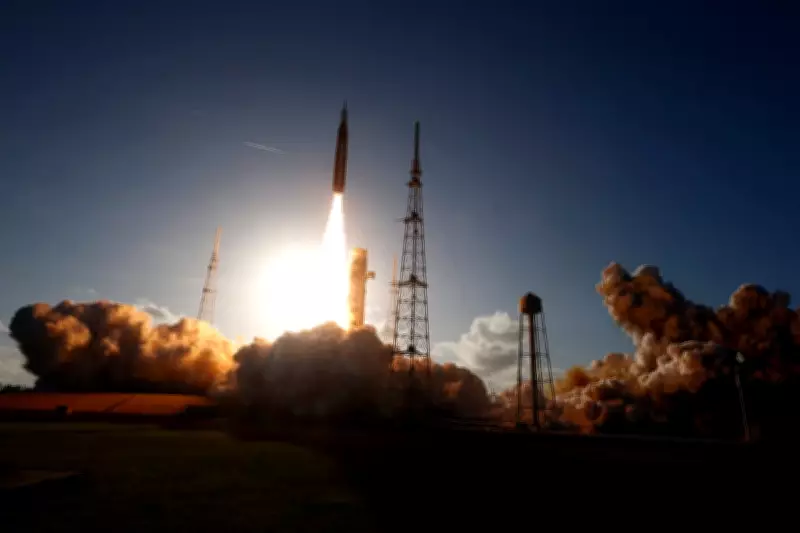
In a historic moment for space exploration, NASA's Artemis II mission lifted off from the Kennedy Space Center in Cape Canaveral, Florida, on Wednesday evening, US time. This launch represents the first time in nearly 54 years that astronauts are being sent to the moon, marking a significant milestone since the Apollo 17 mission of December 1972. The event signifies the initial step in a renewed effort to return humans to lunar orbit and beyond.
Historic Launch Details and Mission Trajectory
The Artemis II mission, comprising the powerful Space Launch System (SLS) rocket and the Orion crew capsule, embarked on its journey with a flawless launch. Currently, the rocket is orbiting Earth and will continue to do so until Thursday, when a critical translunar injection burn is scheduled. This maneuver will propel the spacecraft on the remainder of its extensive 386,242-kilometer voyage to orbit the moon, setting the stage for future manned lunar landings.
Crew and Global Participation
The mission features a diverse crew of astronauts, including commander Reid Wiseman, pilot Victor Glover, and mission specialists Christina Koch and Jeremy Hansen from the Canadian Space Agency. Prior to launch, the crew was seen greeting supporters and family members, with moments of levity and emotion captured as they prepared for their historic journey. Spectators gathered at various locations, such as the A Max Brewer Bridge in Titusville, Florida, and the Canadian Space Agency in Quebec, to witness the event, highlighting global interest in this pioneering space endeavor.

Pre-Launch Preparations and Public Engagement
In the days leading up to the launch, extensive preparations were underway at the Kennedy Space Center. Journalists set up cameras, and space enthusiasts, including children wearing Artemis-themed caps, flocked to viewing areas to catch a glimpse of the next-generation moon rocket. The SLS rocket with the Orion spacecraft stood poised at Launch Pad 39B, symbolizing the culmination of years of planning and technological advancement by NASA and its international partners.
Implications for Future Space Exploration
The successful launch of Artemis II not only revives human exploration beyond lower Earth orbit but also paves the way for sustained lunar missions and potential future missions to Mars. This achievement underscores NASA's commitment to advancing space science and fostering international collaboration in the quest to unlock the mysteries of the cosmos.