Artemis II Crew Prepares for Lunar Slingshot as Historic Mission Enters Second Day
Four astronauts are preparing to leave Earth's orbit and slingshot toward the moon as NASA's Artemis II mission enters its critical second day of operations. This high-stakes ten-day voyage represents the first time in half a century that humans will venture beyond Earth's immediate vicinity and return to the lunar region.
Historic Launch and Mission Objectives
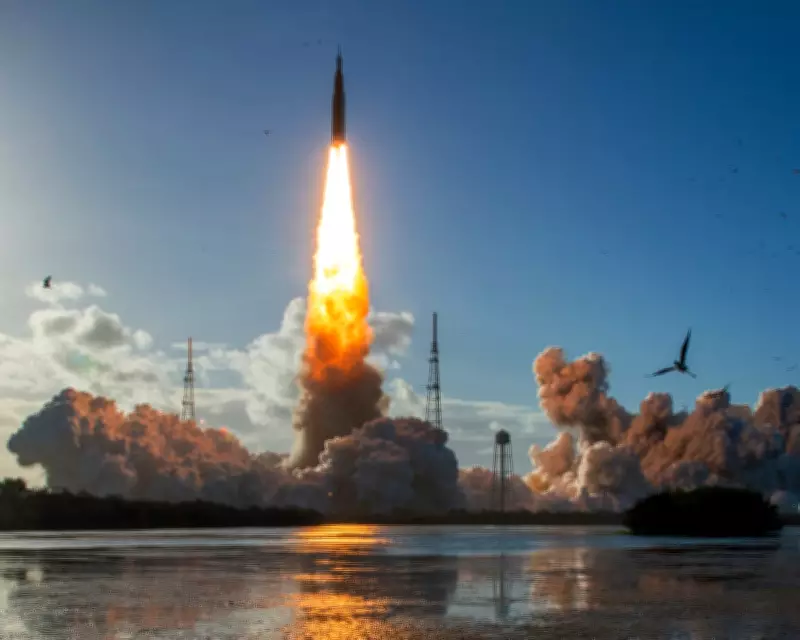
The crew of three Americans and one Canadian launched successfully from the Kennedy Space Center in Florida on Wednesday, witnessed by tens of thousands of spectators who gathered to see NASA's most powerful rocket, the Space Launch System, propel the Orion spacecraft toward the heavens. The scenes evoked memories of the Apollo launches from the 1960s and 1970s that first put humans on the lunar surface.
After approximately three and a half hours of post-launch rest on Thursday, mission control awakened the Artemis II crew and instructed them to prepare for a crucial engine burn. This one-minute firing will adjust the spacecraft's orbital path to position it for the upcoming translunar injection maneuver.

Critical Maneuvers and Technical Operations
NASA officials have confirmed that if all systems remain healthy aboard the Orion spacecraft, mission controllers will later command a six-minute translunar injection burn. This critical engine firing will send the capsule on its 240,000-mile journey to the moon, where the crew will loop around the celestial body's far side before using lunar gravity to slingshot back toward Earth.
During this trajectory, the four astronauts will become the farthest-traveling humans in history, surpassing all previous distance records from our planet. Mission specialist Christina Koch will achieve the additional distinction of becoming the first woman to fly around the moon.
Testing Systems and Addressing Challenges
Much of the Artemis II mission serves as a comprehensive test of systems for future lunar expeditions. The crew has already completed a proximity operations demonstration, manually maneuvering the capsule to assess its handling capabilities for future docking procedures with lunar landers.
Mission commander Reid Wiseman reported spectacular views of Earth from approximately 38,000 nautical miles, describing the entire planet as visible through the spacecraft windows. However, the mission has encountered minor technical issues including temporary communication problems, reports of a slightly cold cabin temperature, and a blinking fault light with the onboard toilet system.
Future Artemis Missions and International Space Race
The Artemis program represents NASA's ambitious plan to return humans to the lunar surface this decade and establish a permanent presence. Artemis III will conduct additional docking tests in Earth's orbit, while Artemis IV, currently targeted for 2028, aims to land astronauts on the moon's south pole region.
Washington finds itself in a renewed space race as China targets a planned crewed mission to the same lunar region as early as 2030. NASA's long-term vision includes building a sustainable lunar base that can support continuous human habitation, with the Artemis missions serving as crucial stepping stones toward eventual human exploration of Mars.
The mission's name carries symbolic significance from Greek mythology, where Artemis serves as goddess of the moon and twin sister to Apollo, the sun god for whom NASA's original lunar program was named. This connection underscores the program's continuity with America's historic space achievements while pointing toward future exploration milestones.