Artemis II Crew Successfully Breaks Earth Orbit, Begins Moon-Bound Journey
The four astronauts of NASA's Artemis II mission have achieved a critical milestone in space exploration, successfully firing their spacecraft's engine to break away from Earth's orbit and begin their historic journey toward the moon. This momentous event commits NASA to the first crewed lunar flyby in more than half a century, marking a significant step in humanity's return to deep space exploration.
Powerful Engine Burn Propels Crew Toward Lunar Destination
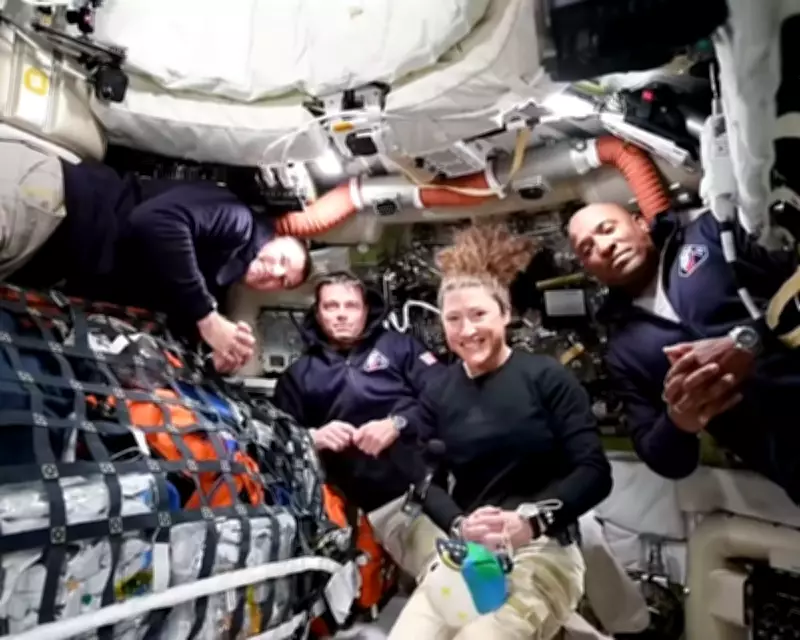
On Thursday, the Orion capsule's engine ignited with tremendous force, generating enough thrust to accelerate a stationary vehicle to highway speed in under three seconds. The burn lasted just under six minutes, propelling astronauts Reid Wiseman, Victor Glover, Christina Koch, and Jeremy Hansen on their three-day voyage toward Earth's natural satellite. Mission control in Houston confirmed the successful maneuver, with astronaut Jeremy Hansen reporting, "The crew is feeling pretty good up here on our way to the moon. Humanity has once again shown what we are capable of."
Historic Mission Achieves Multiple Firsts in Space Exploration
Artemis II represents a series of groundbreaking accomplishments in human spaceflight. The mission features the first person of color, the first woman, and the first non-American astronaut on a lunar mission. If all proceeds according to plan, the crew will venture further from Earth than any humans in history, traveling more than 250,000 miles from our planet. This mission also serves as the inaugural crewed flight of NASA's new Space Launch System rocket, which lifted off flawlessly from Kennedy Space Center in Florida one day prior to the orbital burn.

Free Return Trajectory and Safety Protocols Ensure Mission Security
Now that the astronauts are moonbound, they are committed to a "free return" trajectory that utilizes the moon's gravity to slingshot around the lunar surface before returning to Earth without additional propulsion. The crew members wear specialized suits that function as comprehensive survival systems, capable of maintaining oxygen levels, temperature controls, and proper pressure for up to six days in the unlikely event of cabin depressurization or leaks.
Daily Life Aboard Orion Includes Exercise and Problem-Solving
The astronauts spent their initial hours in space conducting system checks and addressing minor technical issues on the spacecraft, which has never before carried human passengers. These included resolving a communications problem and repairing a malfunctioning toilet system. Each crew member will dedicate thirty minutes daily to exercise using the spacecraft's flywheel device to combat muscle and bone deterioration that occurs in zero-gravity environments. The mission's second day began with the crew playing John Legend and Andre 3000's "Green Light," symbolizing the go-ahead they received for their critical engine burn.
Strategic Importance and Future Lunar Ambitions
The ten-day Artemis 2 mission serves as a crucial precursor to planned lunar landings in 2028. NASA's Space Launch System is designed to enable repeated returns to the moon, with the ultimate goal of establishing a permanent lunar base that can support further exploration. The current era of American lunar investment has frequently been framed as competition with China, which aims to land humans on the moon by 2030. NASA Administrator Jared Isaacman acknowledged this dynamic during a post-launch briefing, stating, "Competition can be a good thing. And we certainly have competition now."
Crew Reflects on Earth's Beauty and Mission Significance
During a press conference, the astronauts shared their experiences adapting to life in space and reflected on the profound significance of their mission. Commander Reid Wiseman described the breathtaking view of Earth from their unique vantage point, saying, "You can see the entire globe from pole to pole, you can see Africa, Europe, and if you look closely, the northern lights. It was the most spectacular moment and it paused all four of us in our tracks." The Artemis program represents both a technological achievement and a symbolic renewal of humanity's commitment to exploring beyond our planetary boundaries.