Air New Zealand Unveils World-First Economy Sleep Pods for Ultra-Long-Haul Travel
In a groundbreaking move for the aviation industry, Air New Zealand has announced the launch of its Skynest sleeping pods, specifically designed for economy passengers on ultra-long-haul flights. This innovative offering, set to debut on the Auckland-New York route from May 2026, introduces a novel way for travelers to rest during the grueling 17-hour journey.
Skynest Pods: A Closer Look at the Features and Rules
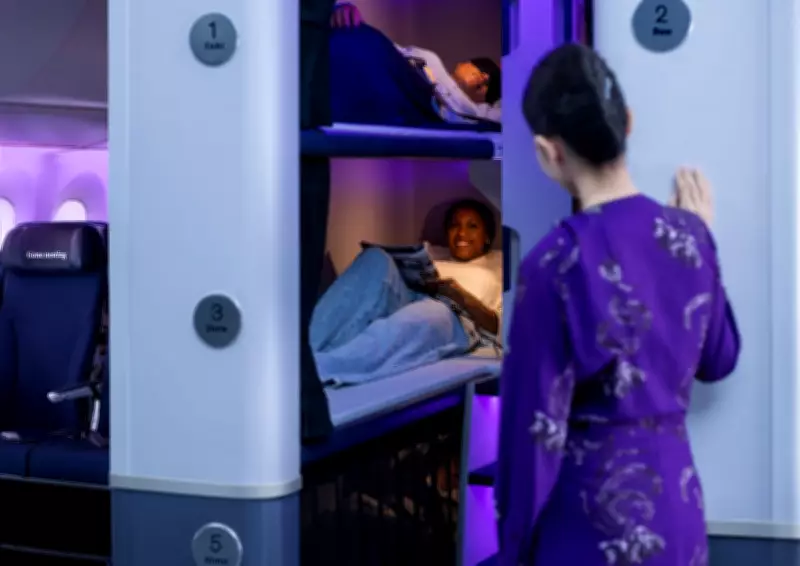
The Skynest consists of six full-length, lie-flat sleeping pods ingeniously integrated into the aisle of the airline's new Boeing 787-9 Dreamliner aircraft. Each pod is equipped with fresh bedding, a privacy curtain, ambient lighting, and a comfort kit that includes eye masks, skincare products, earplugs, and socks. However, passengers should note that the pods are compact, with no room to sit up, and are designed for single occupancy only.
Key restrictions include a prohibition on "double-bunking," eating snacks, or smuggling children into the pods. The airline has also issued guidelines encouraging passengers to "go easy on perfumes and potions" to accommodate diverse sensitivities. Interestingly, snoring is permitted, with the airline humorously noting that earplugs are provided for all users as a precaution.

Booking Details and Pricing Structure
Both premium and economy passengers must purchase traditional seats for the flight but can opt to book a four-hour session in the Skynest for an additional fee starting from NZ$495 (approximately $292 or £215). Initially, only two sessions will be available per flight, and passengers are limited to booking one slot each. Reservations open on 18 May for services commencing in November 2026.
Nikhil Ravishankar, Air New Zealand's chief executive, emphasized the importance of this innovation for a remote nation like New Zealand. "By giving more people the chance to properly rest on ultra-long-haul flights, it helps make travel to and from New Zealand more manageable," he stated, highlighting how enhanced comfort could boost tourism by making long journeys more bearable.
Industry Context and Competitive Landscape
Air New Zealand's Skynest initiative, first announced in 2020, builds on its existing Skycouch offering, which allows families or groups to convert a row of economy seats into a makeshift bed with special footrests. This move aligns with a broader trend in the aviation sector, where airlines are increasingly introducing perks for economy passengers on long-haul routes.
For instance, United Airlines has revealed plans to enable passengers to transform a row of three seats into a lie-flat space by 2027, while Qantas will feature a "wellness zone" on its upcoming Sydney-London flight, set to become the world's longest commercial route starting in June. These developments reflect a growing focus on enhancing passenger experience in the competitive airline market.
Challenges and Economic Considerations
Despite these innovations, the aviation industry faces significant headwinds. In the UK, demand and spending have declined for the first time in five years, attributed to rising fuel costs and disruptions from geopolitical conflicts, such as the US-Israel war on Iran, according to Barclays bank. Air New Zealand itself has suspended its full-year earnings outlook and raised fares due to volatility in jet fuel markets and Middle East tensions, making it one of the first carriers to announce price increases. In April, the airline cut approximately 4% of its flights, affecting 1% of its passengers.
As airlines navigate these challenges, the success of added perks like the Skynest—often at extra cost—in enticing passengers back to air travel remains uncertain. However, Air New Zealand's pioneering approach underscores its commitment to improving long-haul comfort, potentially setting a new standard for economy class travel worldwide.