Chaos Erupts at Abu Dhabi Airport as Brits Face Stranded Ordeal
British nationals found themselves trapped in a harrowing situation at Abu Dhabi International Airport over the weekend, with one traveller describing the scene as "pretty chaotic" after flights to London were abruptly cancelled. The disruption unfolded on Saturday, February 28, amid escalating tensions in the Middle East, leaving passengers in a state of confusion and fear.
Sirens and Missile Warnings Create Panic
Fay McCaul, a 41-year-old British woman who was scheduled to fly from the United Arab Emirates capital to London that day, recounted the alarming moments when sirens began blaring throughout the airport. She reported that passengers received urgent text messages on their phones, instructing them to "stay away from windows because of potential missile strikes." McCaul emphasized the lack of communication, stating, "It was just taking ages to board, with no announcements, so we didn’t know what was going on." She added that the airline seemed equally unaware of the unfolding events, contributing to the chaos.
Stranded Passengers Endure Hours of Uncertainty
Following the initial panic, McCaul and others were grounded at the airport for hours without any updates. Eventually, some were relocated to hotels to await further developments, though space quickly became scarce. McCaul considered herself fortunate to secure accommodation, noting that others were being sent to Dubai, a two-hour drive away. From her hotel, she could hear explosions in the distance, heightening the stress of the situation. Despite the turmoil, her seven-year-old son remained unaware of the danger, enjoying the hotel pool, while McCaul grappled with exhaustion from the constant uncertainty and lack of information.
Repatriation Efforts and Flight Resumptions
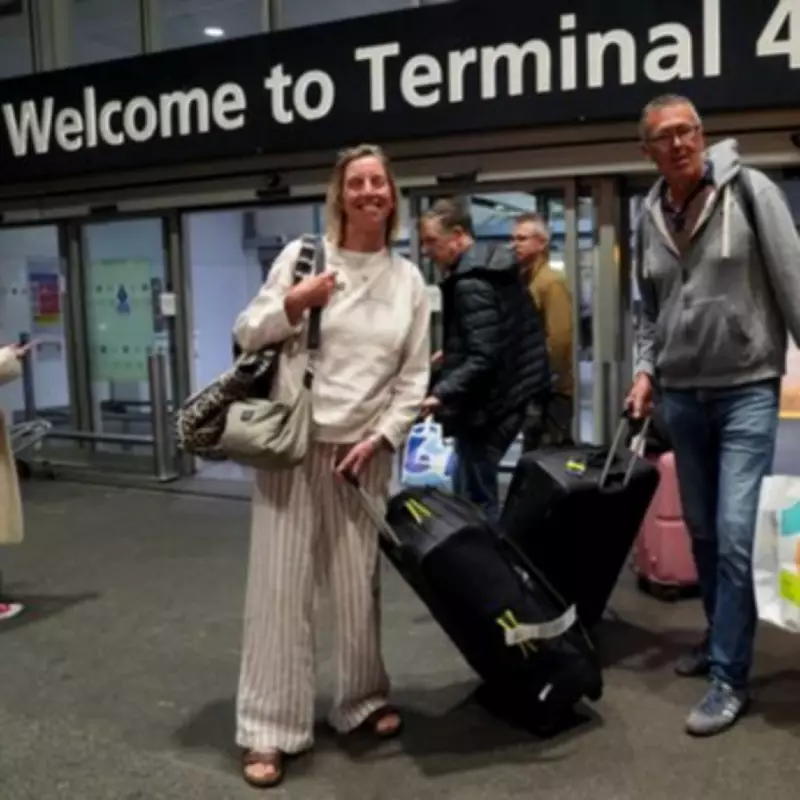
In a bid to clear the backlog of stranded travellers, Etihad Airways managed to operate 15 flights from Abu Dhabi within a three-hour window on Monday, March 2. One of these, flight EY067, landed at London Heathrow Airport's Terminal 4 at 7:25 PM after a delayed departure, carrying relieved UK nationals. Among them was McCaul, who expressed "unbelievably relieved" sentiments upon reuniting with her partner at arrivals. She highlighted the ongoing plight of those still stuck, hoping they would receive assistance soon.
Broader Impact on Travel in the Region
The incident is part of a larger wave of flight cancellations across Middle Eastern airports due to the intensifying conflict between Iran and US-Israeli forces. Airlines like British Airways and Virgin Atlantic have cancelled or rerouted numerous flights, with Etihad suspending all scheduled commercial services to and from Abu Dhabi until Wednesday, March 4. The airline has advised passengers not to travel to the airport unless directly contacted, as only repositioning, cargo, and repatriation flights may operate under strict safety approvals.
Government Response and Support for Citizens
Foreign Secretary Yvette Cooper revealed that approximately 300,000 British citizens are currently in Gulf countries targeted by Iran, with 102,000 having registered their presence. Sir Keir Starmer assured the Commons that the government is exploring all options to support nationals, urging them to register and monitor updated travel advice. Potential repatriation plans could involve land travel to Saudi Arabia for onward flights, though details remain under coordination by the Foreign Office.
As the situation evolves, travellers like Lindsay Elvidge, who was diverted from Doha to Abu Dhabi, expressed gratitude for escaping quickly, acknowledging that it "could have been a hell of a lot worse." The ordeal underscores the unpredictable nature of global conflicts and their immediate impact on civilian travel, leaving many to navigate a landscape of fear and uncertainty.