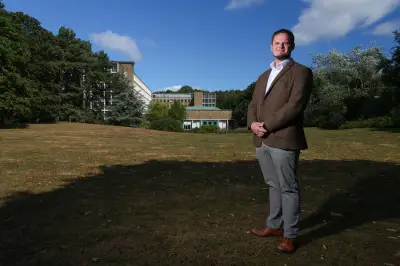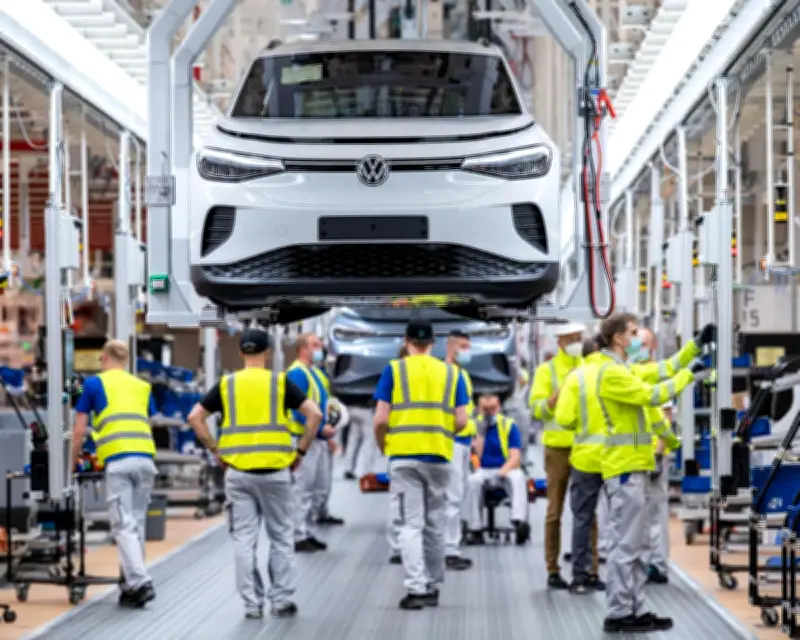
Volkswagen chief executive Oliver Blume has confirmed plans to cut 50,000 more jobs, even though the carmaker's supervisory board rejected his proposal to shut four factories in Germany. In a detailed address to staff on Monday, Blume outlined what he called "the most comprehensive realignment in the company's history," comprising 12 initiatives, approximately 150 pages, and 45 individual resolutions for change.
Blume defends controversial restructuring plan
Blume told employees that despite "some decidedly controversial decisions" in the proposal, he perceived "broad support on the supervisory board" for his analysis of the group's future and the need for action. Last Thursday, the board spent hours hearing Blume's previously leaked proposals, while staff protested at all Volkswagen, Audi, and Porsche sites across Germany.
Addressing concerns about job security, Blume—who has positioned himself as a Volkswagen insider—said he was "doing everything in his power" to keep the company competitive enough to survive. He promised to enter into "constructive discussions" with staff. Blume joined Audi at 28, working as a planner in its body shop and paint operations, before rising through the ranks to head Porsche and then taking on leadership of the entire group in 2022.
"I can fully understand how deeply the current situation affects people within the company, as well as everyone in its immediate circle. I have spent my entire professional life with the group," he said.
Second phase of job cuts necessary
Blume stated that the 2024 programme to reduce the workforce by 50,000 jobs was already being implemented in a "socially responsible manner," involving voluntary redundancy packages and partial retirement arrangements. The company has already cut 37,000 jobs through these schemes, but a second phase of cuts aimed at reducing overheads is now necessary, he added. He said company benchmarking placed its overheads at 20% above comparable companies. "Since half of our overhead costs result from personnel costs, a theoretical calculation—assuming no change in labour costs—would result in the elimination of approximately 50,000 positions worldwide," he explained.
Production cutbacks and factory uncertainties
Blume confirmed that the future of four factories remains uncertain: three Volkswagen plants in Emden, Hanover, and Zwickau, and the Audi plant in Neckarsulm, where production is scheduled to end between 2031 and 2034. He told staff that "smart solutions are always better than closing a plant" but that "Germany cannot turn a blind eye" after the car market was flooded with unsold cars from both China and Europe.
The group intends to reduce annual car production from a pre-pandemic level of 12 million to 9 million. In the past two years, Volkswagen has already cut production by 2 million, with another 500,000 units to be cut in China, where the carmaker faces intense local competition. Blume said the company "must continue on this path" of reducing overheads by 20% at its factories, including cutting half of its model lineup, especially variants of different brands.
Alternative factory options explored
The company is also exploring alternative options for factories to secure jobs. Blume said advanced discussions are underway about transforming the Osnabrück factory from automotive to defence production. Over the weekend, reports emerged that a Volkswagen plan to manufacture vehicles supporting Israeli defence company Rafael—designed to protect jobs at Osnabrück—had been blocked by Qatar's sovereign wealth fund, which holds a 10% stake in VW.
Union opposition
IG Metall, the main staff union, had no comment on Blume's latest remarks but previously criticised the plans. Christiane Benner, chair of IG Metall, said the proposals were unacceptable, particularly as the union had already made concessions. "Instead of taking this achievement as a model, the board is confronting employees with new downsizing plans. Understandably, the resulting anger and uncertainty are immense. We need new ideas and concepts for utilising plant capacity, sensible considerations from the company," she said.